


What differs the most between working on features and shorts is which software editing you use. Owner of Fourwind Films’ Justin Joseph Hall suggests Premiere for faster turnaround time and Avid for longer projects. He also gives us some tips about folder structures and file labeling. Specifically that organization skills are extremely important in post-production. Know your camera. Know your codec. You wanna make sure that things will sort in a logical manner in order not to cause yourself a lot of work towards the end of the post-production process.
Read MoreBlack Media Matters
Episode #24 - Welcome to another COVID film list Feature & a short Black Media Matters which focuses on the importance of black voices within the film industry and how diversity within the cinema space benefits the art form. For so long black talent has been suppressed within the industry but when a diamond shines so bright, one can’t help but notice it in the rough; Paul Robeson who began making films in 1925 with Body and Soul. Josephine Baker who was the first black woman to star in a film in 1934 with Zouzou. And perhaps one of the most influential black filmmakers, Spike Lee who made his mark as a staple director with his first feature film, She’s Gotta Have It.
With so many gifted black filmmakers & actors, it can be hard to narrow it down to a mere listicle; but in this episode Justin Joseph Hall and Laura Davi hone-in on some of their favorite films which also happen to focus on stories that revolve around black lives, experiences, and issues. (Spoiler alert: Spike Lee is mentioned more than once on the feature films list and throughout the podcast.)
Short films discussed include Hair Love, Child of Resistance, 3 Brothers: Radio Raheem, Eric Garner and George Floyd, Dock Ellis & the LSD No-No, and Halfway Home: A Father’s Story.
To donate to the Connecticut Children with Incarcerated Parents, please check out their website here.
Feature films include The Butler, 13th, If Beale Street Could Talk, Malcolm X, Pursuit of Happyness, and Do the Right Thing.
And perhaps just as important as the filmmakers themselves are the actors & actresses that help bring the craft to life. These artists, plus additional filmmakers mentioned by Brian Trahan during this episode, are as follows:
Charles Burnett (Director) - Nothing but a Man
Viola Davis (Actress) - Fences
Jordan Peele (Writer/Director) - Get Out
Oprah Winfrey (Actress) - The Color Purple
Thandie Newton (Actress) - Crash
Melvin van Peebles (Writer & Actor) - Classified X
Debbie Morgan (Actress) - Eve’s Bayou
Thanks for tuning-in! Stay safe.

Credits for podcast:
Produced by Fourwind Films
Host: Justin Joseph Hall
Contributor: Laura Davi
Brian Trahan - Sound Mixer, Additional Music
Theme song of Season 4 is Loopster by Kevin MacLeod.
Contagion Films
Episode #23 - Welcome to a totally COVID kind of Feature & a short. Fourwind Films has decided to dedicate a podcast to talking about the best of the contagion films seen by our accountant Laura Davi, and your host, Justin Joseph Hall who has been called a movie encyclopedia. We redirect our documenting of our small film events to bring you our second film list episode!
The definition of an epidemic an outbreak of a disease that occurs over a wide geographic area and affects an exceptionally high proportion of the population. We are doing this episode because our lives have been stagnant and we’re looking for ways to cope. Films are a quick way for humans to process other people’s minds. So what will this list do for you? If you watch these films, you may help understand the conditions of contagions in society through the medium of film. These are the films we think are the best at communicating what life might be like during the time of a contagion.
First we discuss the BEST SHORT and FEATURE FILMS since STAY AT HOME ORDERS March 22nd in New York
Tusalava
This animation film appears all over YouTube. A great few minutes to take a step back and reflect.
The Shawshank Redemption
Frank Darabont watched Goodfellas (1990) every Sunday while shooting this film and drew inspiration from it, on using voice-over narration and showing the passage of time.
Place Beyond the Pines
Compelling two part story about family and mystery with hunky lead actors, Bradley Cooper and Ryan Gosling.
Portrait of a Lady on Fire
We loved this film so much we actually watched another film from Céline Sciamma’s earlier work as she’s been making films over the past two decades. The real similarities I noted in her style is her use of music. The absence of a score until the music is so utterly embedded in the moment or feeling of the film. The silence let’s the music drive emotion more when it is present and Céline has mastered this art in Portrait of a Lady on Fire. Also, best title ever.
BEST CONTAGION FILMS - Movies that teach us about possible scenarios of human spread contagion
Fast Spreading Contagion Films list
Philadelphia
TriStar the studio actually felt there was a need for this film, not so much about the disease, but to have Jonathan Demme have a homosexual main character was essential in the director and studio’s eyes.
Dallas Buyers Club
This is one of those “based on a true story” that isn’t quite accurate but is more of a conglomeration to express the mood of the times. Based off of the man Ron Woodroof, but the film budget was incredibly low and they shot the film on twenty-five shoot days.
High on Crack Street: Lost Lives in Lowell
Everyone knows the crack epidemic. Wordlwide 585,000 people died as a result of drug use in 2017. COVID-19 is 232,180 at the moment. This story is visceral, not only is my favorite film by Episode 21 guest, Jon Alpert who was a producer and cinematographer on the film. Jon and the team with Downtown Community Television captured Christian Bale’s character Dicky Eklund. It’s only an hour and packs an unbelieveable wallop
Thriller
The death count of zombies is unknown and presumed to be zero. But this metaphor for disease and/or stupidity is a favorite in the film genres. This film is my short, very closely followed by One Cut of the Dead that Thomas introduced me to in our 2010’s Fresh Air Award Episode. Director of Blue’s Brother’s SNL spinoffs, John Landis spent half-a-million dollars in the 1980’s making this 13 minute film.
Requiem for a Dream
Based on a book written by Hubert Selby, Jr. in 1978. Greeks, Egyptians, Sumarians, Chinese, Americans, Germans all have encountered this seemingly endless contagion in our society. Darren Aronovsfy makes this disease live through music and compression of time. He orchestrates everything you may notice in drug use, especially heroin use.
These are our top Contagion films, please write us at info@fourwindfilms.com or shout out to us on social media for the films we overlooked @fourwindfilms

Host, Justin Joseph Hall
Credits for podcast:
Produced by Fourwind Films
Host: Justin Joseph Hall
Contributor: Laura Davi
Brian Trahan - Sound Mixer
Theme song of Season 4 is Loopster by Kevin MacLeod.
Christian Felix: Book Club, Blue Collar
Episode #22 - Christian Felix is an actor from Chicago now based in New York City. He now regularly does a specific kind of acting in diversity training, which is one of the coolest jobs you’ve never heard of previously. No matter what you say about Christian, he is definitely a professional storyteller. On top of him expressively recounting amazing adventures , he’s a spectacular listener. This is what makes him successful throughout his years and his willingness to be professional in all setting yet still have fun. The exact person you want on any filmset.
Christian’s theme for the episode is how film sets can be fun and funny or incredibly contentious and still create great works of art. The short film Book Club by VARIETY SHAC Christian brought is a film where he was a background actor with hilarious comedians (Chelsea Peretti and Fred Armisen to name a couple) where his main job was not to laugh. He talks about other television sets such as the show Blacklist that were more stressful and lead us directly into his feature choice Blue Collar.
Blue Collar had three lead actors who were in a tif during the time of shooting. Richard Pryor, Harvey Keitel, and Yaphet Kotto were all told they were the lead and drugs and feuds lead to a rough set life as Christian explains in descriptive detail. The story centers around worker’s unions and the fight of the worker against the larger system is a story that continues to be retold and relived throughout the test of time.
If you want to hear more of Christian, please check out our podcast We Don’t Even Know where he co-hosts with Shonali Bhowmik.

Credits for podcast:
Produced by Fourwind Films
Brian Trahan - Sound Mixer, extra music
Theme song of Season 4 is Loopster by Kevin MacLeod.
Jon Alpert: When Life Hands You Lemons, Papa
Episode #21 - This episode features Jon Alpert, Oscar-nominated and Emmy-award winning documentary journalist. Prestigious award ceremonies aside, Alpert has been making films for over forty years and has stories for DAYS. Highlights include the story of how he was chosen as the director for the first Sundance film by Robert Redford, and another dives into how he and his partner Keiko Tsuno managed to get breaking footage in Vietnam during the war. As a co-founder of DCTV he shares how the Chinatown documentary incubator offered film equipment to anyone who wanted to tell stories about the community. Alpert’s career was birthed out of supporting his community, and he continues to prioritize doing so to this day.
The films he curated for the episode are both extremely personal. The short film by Jasmine Barclay is called, “When Life Hands You Lemons.” It tells the story of how she was houseless for all of high school without most people in her life having any idea. For the feature, Jon chooses his most personal documentary, “Papa.” Jon also shares how this film got made by working with documentary legend Sheila Nevins
Jasmine was part of the DCTV program “ProTV.” The free school teaches underprivileged high schoolers how to make film. Link to donate.

Credits:
Photography - Justin Joseph Hall, Piper Werle, Laura Davi
Host - Justin Joseph Hall
Location - Downtown Community Television Center
Production Assistant - Laura Davi
Production Company - Fourwind Films
The 2010's Fresh Air Award
Episode #20 - Welcome to a totally different kind of Feature & a short. Inspired by the podcast format of Filmspotting’s Best of episodes and award shows, Fourwind Films has decided to dedicate a podcast to talking about the best of the 2010 decade. We’ve picked a panel of four people who love films to discuss their favorite films of the decade. At the end the group will be begin a Fourwind tradition giving out the Fresh Air Award for the film that pushed cinema forward the most as an art form during its decade.
The four cinephiles in the panel to discuss films from 2010-2019 are Justin Joseph Hall, Thomas Kelsey, Jasmine Szympruch, and Elizabeth Yoo. They all are New York based cinephiles. For each below category each panel member presented 5 films. The group chats movies around a table in a normal New York apartment, heaters, fridge noises, sleepy dog and all.
First the panel discusses the best shorts of the decade. To prevent spoilers below is the link to all the nominations. Read the description to see who nominated them:
Best shorts of the 2010
Second the panel jumps to discuss the best features of the decade. Below is the link, read the description to see who nominated them:
Third the panel is giving away our first Fresh Air Award for the film that pushed cinema forward the most as an art from. We plan to give away a Fresh Air Award each year for our final episode for the entire following decade. This is our way to honor commercially successful experimenting in film. Below is the link, read the description to see who nominated them:
2010’s Fresh Air Award Nominees - Letterboxd list
Justin Joseph Hall nominees
Get Out (2017)
Wawd Ahp (2014)
Exit Through the Gift Shop (2010)
The Lobster (2015)
Over the Garden Wall (2014)
Thomas Kelsey nominees
"This Is America" - Childish Gambino (2018)
Nanette (2018)
One Cut of the Dead (2017)
Kick-Ass (2010)
Black Swan (2010)
Jasmine Szympruch nominees
The Artist (2011)
Beasts of the Southern Wild (2012)
World of Tomorrow ~Short~(2013)
The Act of Killing (2013)
I Am Not Your Negro (2016)
Elizabeth Yoo nominees
Lemonade (2016)
Under the Skin (2013)
A Separation (2011)
Get Out (2017)
World of Tomorrow (2015)
To find Fresh Air Award winner click on this link!
Hope you enjoy, please share with us your lists, comments, arguments, and for sure films that we left out via social media @fourwindfilms
Thanks for listening, Season 4 to come shortly!
Credits for Season 3 podcast:
Produced by Fourwind Films
Hosted by Justin Joseph Hall
Brian Trahan - Sound Mixer
Theme song of Season 3 is Johnny's Tune In Waltz by Salitros Ridin’ Rainbow
Interlude music by Sun Nectar
Thank you to Laura Davi, Daria Huxley, and Thomas Kelsey for helping throughout Season 3 of the podcast. Thank you to Cisco Bradley & Jennie Romer by hosting us at New Revolution Arts for one podcast.

Piper Werle: Veronica, The Last Unicorn
Episode #19 - Piper Werle is a writer and producer who loves the genre of fantasy in films. Her script’s dialogue always tickles your ribs and catches you off-guard. She uses the themes of fantasy and integrates them with accessible progressive ideas.
Piper’s short she contributed was her first film she had written and produced for the silver screen after many years writing for the stage. The short is called Veronica after the lead character’s name. It’s about the descendants of the mythical Greek Sirens. Piper uses practical effects and movie magic to bring the audience into the fantasy realm. The story is about dating a topic nearly anyone can relate to.
The Last Unicorn, the feature Piper brought, has a star studded cast including Mia Farrow, Angela Lansbury, Jeff Bridges, & Alan Arkin. It follows the story of a unicorn alone in the world who travels through the forest and to different kingdoms. It is also a fantastical story and has lots of hints at being created in the 1980’s. The animation style really has beautiful depictions of nature and its script includes funny names and silly quotes throughout the entirety of the movie.
Piper’s laugh is contagious so enjoy! Check out more of her work in our upcoming short Prologue, which she also wrote and worked as the Production Designer.

Piper Werle - Writer/Producer
Host - Justin Joseph Hall
Sound Mix & Additional Music - Brian Trahan
Theme song of Season 4 is Johnny's Tune In Waltz by Salitros’ Ridin’ Rainbow.
Jay Giampietro: the thing that kills me the most!, Private Practices: The Story of a Sex Surrogate
Episode #18 - Jay Giampietro is a director and editor who is a huge fan of films and sports. He is super easy to talk to and it seems always maintains a positive vibe towards anything unique. His unique lens really focuses on New York awkward single males and we think it’s safe to call him a true auteur. He is prolific and makes a short film at least once a year. We’ve shown Hernia at our annual Holiday Mixer several years ago.
This time for the short Jay presented his most recent film the thing that kills me the most! Sticking to odd New York area male characters. It is a very pretty experimental film that uses light in a unique way and takes documentary audio and montages it for new experience in motion picture.
Private Practices: The Story of a Sex Surrogate is a very 1980’s documentary with minimal soundtrack and tons of intrigue. Jay being a student of film history and the odd that is out there in the world chose to bring this film that captures one’s attention watching nervous men have sex with a young sex therapist for money.
Check out more of Jay’s work through is production company Magic Square Films.
Episode hosted by Justin Joseph Hall.
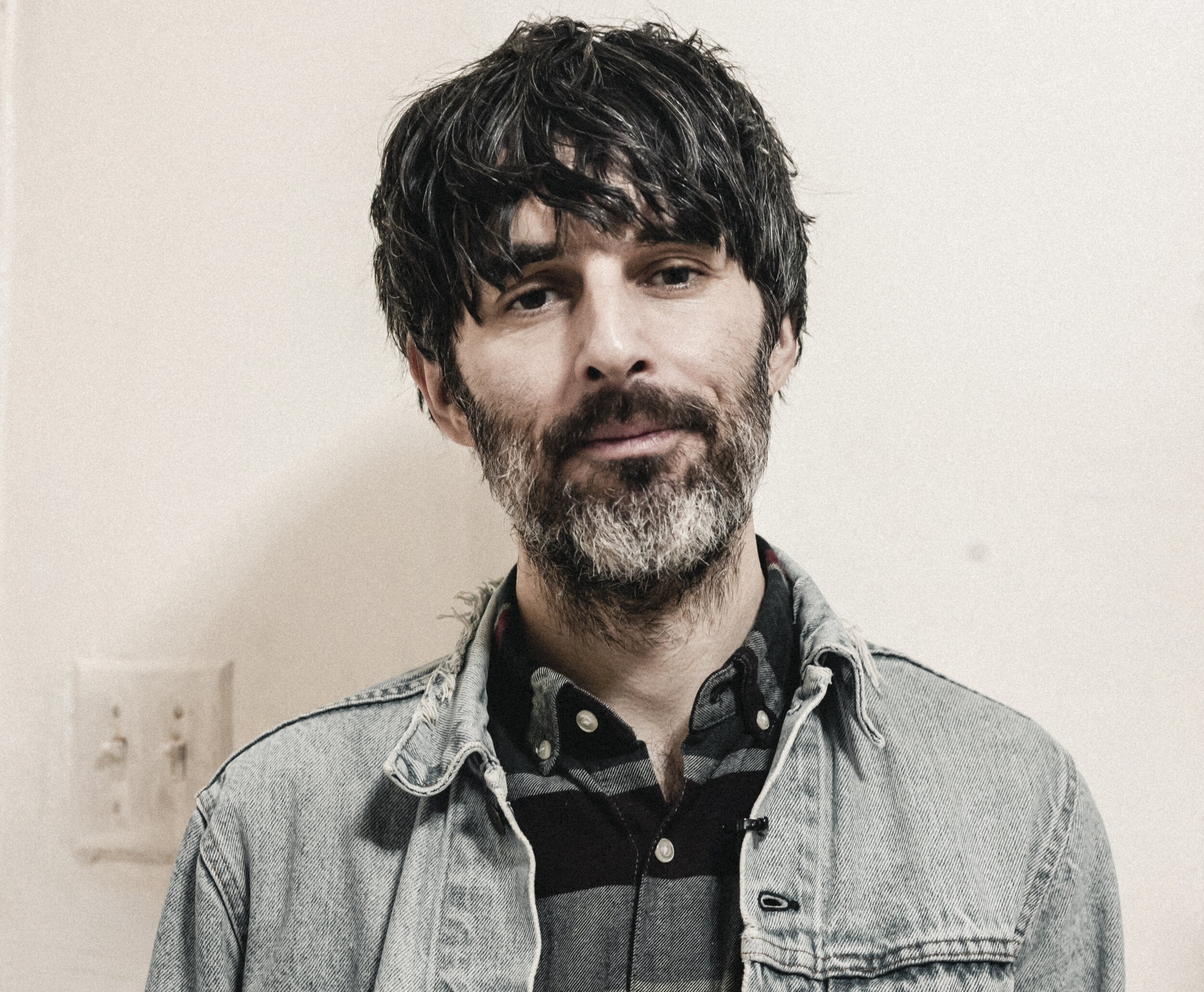
Jay Giampietro - Director/Editor
Credits:
Host - Justin Joseph Hall
Sound Mix & Additional Music - Brian Trahan
Theme song of Season 4 is Johnny's Tune In Waltz by Salitros’ Ridin’ Rainbow.
Justin Joseph Hall: Wasp, Rock & a Hard Place
Episode #17 - Justin Joseph Hall our owner from Minnesota has been working hard in post-production at DCTV this year. For this episode that was recorded on his birthday he decided to share how vérité documentaries can be made and aspects of using documentary style camera work can be used in narrative filmmaking.
Justin started with Andrea Arnold’s famous short film Wasp. It is entirely shot in handheld form with little or no music. It follows a family in real time evoking well-known vérité cinema techniques brought forth to documentary filmmaking by folks like the Maysles brothers in the 1960’s and beyond. It is a short intense drama about family responsibilities colliding with personal freedoms.
The feature Justin brought forth was Downtown Community Television’s Rock and a Hard Place that they made for HBO Documentaries in conjunction with Dwayne ‘The Rock’ Johnson. The film is a vérité documentary by the legendary modern vérité directors Jon Alpert and Matthew O’Neill and was the first documentary Justin Joseph Hall had worked on with DCTV. He began as an assistant editor and many of the montages in the film for editor David Meneses.
To learn more about Justin’s work in conjunction with DCTV, please check out FRONTLINE: Life on Parole and the new series Axios on HBO.
Episode hosted by Daria Huxley.
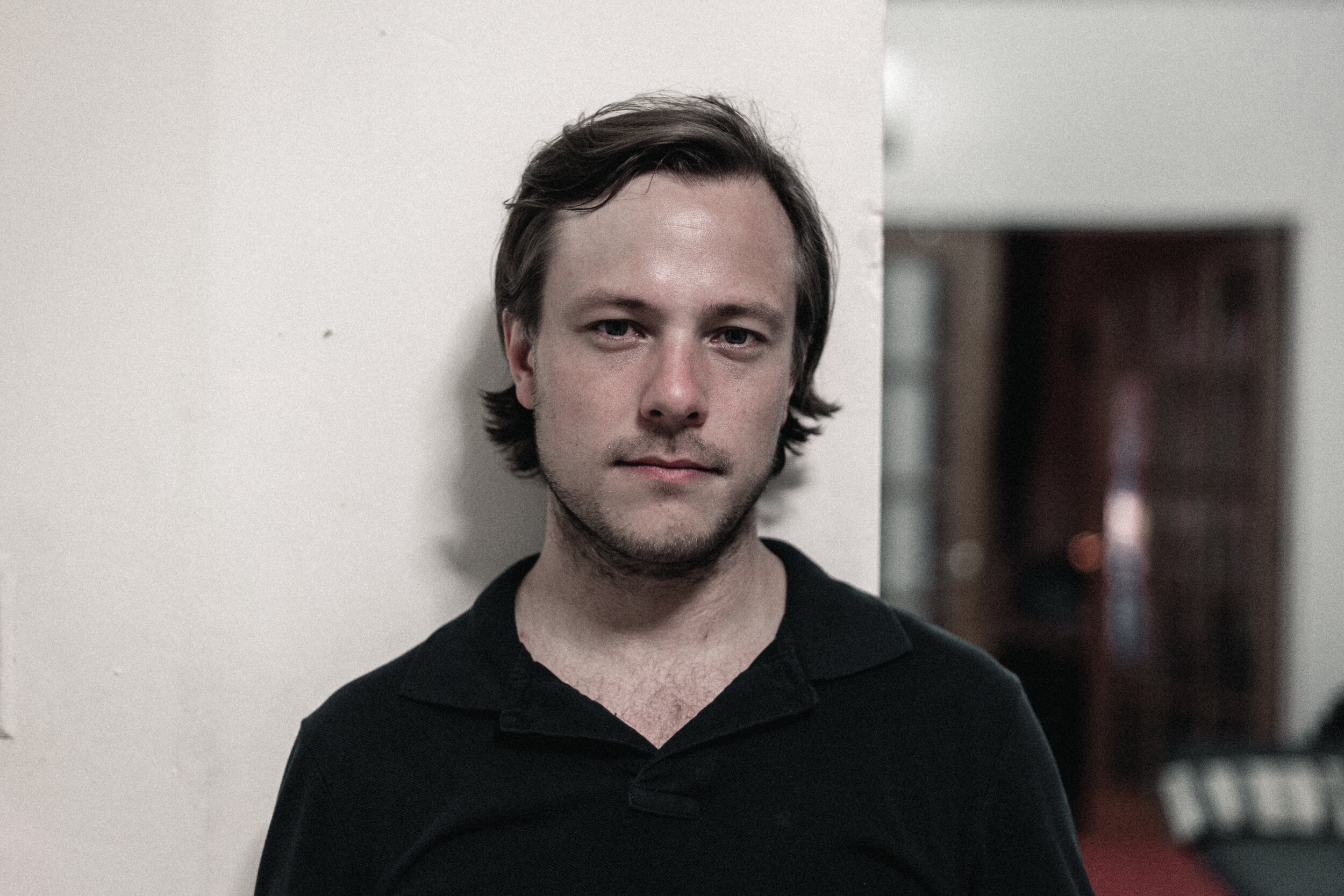
Justin Joseph Hall - Assistant Editor
Host - Daria Huxley
Sound Mix & Additional Music - Brian Trahan
Theme song of Season 4 is Johnny's Tune In Waltz by Salitros’ Ridin’ Rainbow.
Ace Allgood: Chromium Hook, Network
Episode #16 - Ace Allgood is a producer based in Minnesota who is always down to give advice to up-and-coming filmmakers. He actually advised Fourwind Films' owner Justin Hall to move to NYC! We went all the way to the Land of 10,000 Lakes to record our first episode outside of Brooklyn, NY, and to learn more about Ace's multi-decade career.
Ace brought The Chromium Hook, a film he produced that “breaks all the rules of short films.” He shares how the film was able to cast a very famous actress, why Minnesota is an amazing place to make film, and what he considers the elements of successful collaboration.
The feature film is the classic 1976 film, Network, which features Faye Dunaway. It won best screenplay in 1976, and Ace believes that it speaks to social issues that are also relevant today.
To learn more about Ace’s work, check out his former production company Channel Z here. You can also visit Channel Z's social media pages: Facebook | Twitter
Episode hosted by Justin Joseph Hall.

Ace Allgood - Producer
Credits:
Host - Justin Joseph Hall
Sound - Brian Trahan
Location - Dakota Hall’s apartment
Inga Moren: Luz Marina, I'm So Excited!
Episode #15 - Inga Moren is a joy to have in the edit studio. She’s a vibrant character who knows how to articulate her thoughts and feelings on any subject. She works as an editor, writes, and directs experimental film. She’s also worked on camera crews, post-production processing, and so much more. Originally from Colombia, she currently makes money from Universal Studios.
Inga brought her new film Luz Marina an experimental short that explores the cults of modern day and the popularity of reality television that we have lived with since the turn of the century. The film moves through spaces and ideas rapidly presenting scenes that bridge the audience from idea to idea, almost like a dream in fast-forward.
Afterwards we were pleasured with the viewing experience of a Pedro Aldomovar film, I’m So Excited! A silly, colorful, and melodramatic film. It recounts several characters on a plane voyage. The story jumps in-between from pilots in the cabin, to the stewards, and the passengers. The film is filled with drinking and bold characters.
Inga’s knowledge of film history and unique vision on what the medium can be helped make this episode especially introspective, not only on the films she presented, but also of the possibilities of using film as a storytelling device itself.
Episode hosted by Justin Joseph Hall.
Credits:
Host - Justin Joseph Hall
Production Company & Location - Fourwind Films
Olga Loginova: Volte, Sacred Leaves
Episode #14 - As the appointed contributor, Director, Producer and Cinematographer Olga Loginova is an incredible collaborator and artist who speaks poetically and with no filter. She recently graduated from Columbia where she learned to make scientific documentaries. Originally from Belarus with Russian roots, she has chiseled her vision of a storyteller through rigorous training in Germany, China, and the U.S.A., as well as by traveling and reporting across continents.
Our screening took place in Bushwick, Brooklyn, at Fourwind Films’ headquarters where for the short, Olga presented the stunning film Volte (2017), directed by Monika Kotecka and Karolina Poryzala. Volte is a truly moving, 10-minute coming-of-age documentary from Poland. Olga talks about how she resonates with the film because “as a child I danced, and very soon I became too tall. I was lagging behind because I was too big, too big, too big.” This film is made in the Slavic school of teaching “where every shot is perfect.” Olga describes this film as “the difference between trying to document something and art. This is art.” This Eastern European documentary that was picked up by The New York Times Op-Docs.
For the second film of the event, Olga presented her very own feature Sacred Leaves. The documentary is about the wonders of the Amazon rainforest and the constant destruction it faces for human profit. Olga talks about how her interest in the Amazon grew from how climate change in Brazil changes people’s lives as it does in her own ancestral lands of Siberia. There are countless adventure stories from her seventeen days of shooting. She discusses characters who come “once in a century,” and what surprised her most. She shot the film before the wildfires hit, and offers insight into the many sources of deforestation that led to the rainforest’s current state. She plans to return to Brazil in the winter to show the film.
For Sacred Leaves, we served caipirinhas and pão de queijo.
Olga herself is a character who comes once in a lifetime, and we were thrilled to have her international talents. Enjoy the episode.
Episode hosted by Justin Joseph Hall.

Olga Loginova - Director/Cinematographer
Credits:
Host - Justin Joseph Hall
Production Company & Location - Fourwind Films
Transcript:
00;00;02;00 - 00;00;29;00
Justin Joseph Hall:
Welcome to Feature & a short. My name is Justin Joseph Hall and this is a podcast presented by Fourwind Films. Feature & a short is a monthly screening hosted by us where an appointed contributor presents their chosen feature motion picture and a short movie. There's only one condition for the screening. The presenter must have been directly involved with one picture and not the other. This time, we have the lovely Olga Loginova
00;00;29;00 - 00;00;30;00
Olga Loginova:
Hi guys!
00;00;30;00 - 00;00;34;00
Justin Joseph Hall (as narrator):
who decided to bring her first feature that she finished called Sacred Leaves.
00;00;34;00 - 00;00;37;00
Olga Loginova:
It's a term. It's a Brazilian term, actually. “Folhas Sagradas.”
00;00;38;00 - 00;01;00;00
Justin Joseph Hall (as narrator):
Olga is a producer, director, cinematographer. She's done pretty much everything. But she uses natural light better than most people I've seen in documentaries. And the short that she brought is Volte, which is an Eastern European documentary that was picked up by The New York Times Op-Docs. It's a nice short, ten-minute piece about young women and horses.
00;01;00;00 - 00;01;57;00
Olga Loginova:
It took my breath away. I think it's so beautiful and so well-made. It's something that I would aspire to do. It's a coming-of-age documentary made by two Polish filmmakers, Monika Kotecka and Karolina Poryzala. They're both graduates of the uh, National Film Academy in Łódź. And well, this is one of the best filmmaking schools in the world. I tried to get in there like years ago. This is the best.
Legitimately, Poland is uh such a treasure for filmmakers. The cinematographer had a degree in Social Science and the screenwriter was a zoologist. And so, they kind of merged and they made this beautiful, beautiful short that also premiered at the IDFA. I think it was selected by Sundance Lab. It's chosen by Op-Docs and, uh, many other festivals just, like, so, and I hope you like it. And it's made by women filmmakers. I didn't even know that. Yeah, and I'm not gonna say another word about it. Enjoy.
00;01;57;00 - 00;02;01;00
Justin Joseph Hall (as narrator):
So after the short, we had a small discussion on what happened.
00;02;01;00 - 00;02;41;00
Olga Loginova:
So, I was going through different descriptions of the film on different websites and uh the one that is on Polish Institute website is kind of, I don't know, it kind of captures it, but it's uh observational and creative portrait about sacrifice, frustration, physical limits and endurance. Uh, and it shows how the team must accept that Zuzia’s position is basically untenable, that she has just grown too big. And so as a child, I danced. And uh, very soon I became too tall, I’d at, always being, like, lagging behind because you're too big, too big, too big. Really, it's not the reason why I chose this film, but I kind of know how it feels.
00;02;41;00 - 00;02;42;00
Audience:
I felt connected to it
00;02;43;00
Olga Loginova:
Yeah.
00;02;43;00 - 00;02;45;00
Audience:
because uh growing up in Russia, you always feel the pressure
00;02;46;00
Olga Loginova:
Yeah.
00;02;46;00 - 00;02;48;00
Audience:
to be born to be the best.
00;02;48;00 - 00;02;56;00
Olga Loginova:
You feel that, like, it's you. What a difficult career. Like, talking about the subjects, though. The girl is 12. So
00;02;56;00
Audience:
Yeah.
00;02;56;00 - 00;03;47;00
Olga Loginova:
at 12, she's too big and, like, her emotions were not the emotions of a child in a way. But again, for me, like, what, I'm kind of jealous of this film to be honest. Because again, like every shot here is beautiful and I, like, I wish every shot in my film, like. I know how to frame or, like, you know, I've been learning cinematography and the cinematography is unparalleled. Sometimes you are somewhere and you just don't have time. It's so perfect, and like, this perfection eludes you. And then you see something that is, like, perfect from the beginning, end to end. And it's like, “ugh!” I think it's very much also Slavic school of documentaries, the Russian school as well, like where every shot is perfect. That’s taught. And again, this speaks to Łódź school. Pawel Pawlikowski, the one who made Ida and Cold War, he’s a graduate of that school.
00;03;47;00 - 00;03;49;00
Justin Joseph Hall:
That was one of the most beautiful shorts I’ve seen in a long time…
00;03;50;00 - 00;03;56;00
Olga Loginova:
I'm telling you, Poland is incredible. Krzysztof Kieślowski, um, Zanussi. They're all Polish.
00;03;56;00 - 00;03;58;00
Justin Joseph Hall:
Kieślowski’s now my favorite one.
00;03;58;00 - 00;03;59;00
Olga Loginova:
I love Kieślowski.
00;03;59;00 - 00;04;01;00
Justin Joseph Hall:
I mean, it's beautiful, but it…
00;04;00;00 - 00;04;05;00
Olga Loginova:
Watch Blue, Red, White. Blue, White, Red. Those are amazing and uh
00;04;04;00
Justin Joseph Hall:
Yeah.
00;04;05;00
Audience:
Yeah.
00;04;05;00 - 00;04;20;00
Olga Loginova:
The Secret Life of Veronica is amazing, it’s just, it’s the great films. They’re fantastic.
Um, so how do you capture the audio if you're not in their faces? And I don't think there was a boom, so I think it was a long lens, I can assume.
00;04;21;00
Justin Joseph Hall:
Yeah.
00;04;21;00
Olga Loginova:
I don't know…
00;04;22;00 - 00;04;25;00
Audience:
And most all of the editing. How they integrated the horses,
00;04;26;00
Olga Loginova:
Yeah!
00;04;26;00 - 00;04;29;00
Audience:
the sounds with the music, anything with it, you know?
00;04;29;00
Audience:
Yeah.
00;04;30;00 - 00;04;44;00
Olga Loginova:
And that shot of a girl, Zuzia, just like her stare. And you can hear the hooves of the horses and the music and it's like, ah! But this is the difference between just trying to document something and makes art, because this is for me, is art.
00;04;45;00 - 00;04;49;00
Justin Joseph Hall:
Well, it is like a documentation too, and it has a whole arc…
00;04;48;00 - 00;05;00;00
Olga Loginova:
Yeah, it’s like a feature film, but just, it’s like there is a catharsis, there is this drama. This is the second time I watch it, actually, but I've been thinking about it, like, for over a year.
00;05;00;00
Justin Joseph Hall:
Yeah.
00;05;01;00 - 00;05;05;00
Justin Joseph Hall (as narrator):
Then leading into her film, Olga had a few words to say.
00;05;05;00 - 00;05;49;00
Olga Loginova:
I just graduated from Columbia and my specialty was science documentaries. In a way, it is a student project because I did have to follow and work with my advisor and science is supposed to be a big part of it. It's ethnobotany. And uh sometimes it gets in the way of narrative. While I did everything on my own, more than ever I realized that filmmaking is a team effort and it's not an effort of one person. Uh, it’s not perfect. I love it very much and I think it tells an important story. It will change in the course of the next six months, but I hope you like it. My soul is in it, like everything I can do is in this film. I think it's my best work.
00;05;49;00 - 00;06;10;00
Justin Joseph Hall (as narrator):
During the showing of Sacred Leaves, we had a few less things to eat and a few more things to smell. As her film is set in Brazil in the rainforest, there were some unique things that I’ve never seen before, and I don't think most of the audience had either. On top of that, we had Caipirinha and Pão de queijo for everyone to snack on.
00;06;11;00 - 00;06;14;00
Justin Joseph Hall:
Does anybody want a Caipirinha before we start?
00;06;14;00
Audience:
(chatter)
00;06;17;00 - 00;06;25;00
Justin Joseph Hall (as narrator):
In the end, after the movie was over, because this was a unfinished product for her feature, she had a few questions for the audience and we discussed it a little bit.
00;06;26;00 - 00;07;04;00
Olga Loginova:
So, the reason why I did this film was kind of also personal. My family's from Siberia, from the, like, the heart of Siberia, and generations of women in my family were doing the same thing. They were going to Taiga and collecting herbs and barks and oils, and they were treating their family and the whole community. So when I had to choose a topic, I had two topics and I went for this, for ethnobotany and how deforestation affects medicine. So yeah, I think this aspect has really shown how climate change and deforestation in Brazil would change people's lives.
00;07;04;00
Audience:
Yeah.
00;07;05;00
Audience:
Defores… yeah.
00;07;06;00
Audience:
Yeah.
00;07;06;00 - 00;07;07;00
Audience:
What did you shoot it on?
00;07;07;00 - 00;07;08;00
Olga Loginova:
C100 Mark II.
00;07;08;00 - 00;07;10;00
Audience:
Okay. Those are nice. Especially for run and gun.
00;07;11;00 - 00;07;13;00
Audience:
How long were you th, how long was the shoot?
00;07;13;00 - 00;07;14;00
Olga Loginova:
I had 17 shooting days.
00;07;14;00 - 00;07;15;00
Audience:
Oh okay.
00;07;15;00 - 00;07;16;00
Justin Joseph Hall:
And you were there?
00;07;16;00 - 00;07;17;00
Olga Loginova:
21 days.
00;07;17;00 - 00;07;18;00
Audience:
Fun trip.
00;07;18;00 - 00;07;19;00
Olga Loginova:
Oh, it was a fun trip.
00;07;19;00 - 00;07;21;00
Audience:
Who you were traveling with? The crew, were you just
00;07;21;00 - 00;07;22;00
Olga Loginova:
It was just me.
00;07;22;00 - 00;07;25;00
Audience:
you, and you weren't scared that you were, like, going to have your camera broken or?
00;07;25;00 - 00;07;56;00
Olga Loginova:
Oh, I was very scared. It was my personal camera. I took the, the school's tripod which was the worst tripod ever. He was so light. It would move from, like, the air movement. It was like, but also it fit my suitcase and I had very little money so I had to save on every bag.
I, I have a question for you. I think, personally, the whole first scene, it's like probably not as well shot as the rest of the film, but it's kind of important because it gives the introduction to the main character. Did it bother you that the camera was shaking?
00;07;57;00 - 00;07;58;00
Justin Joseph Hall:
I didn't notice.
00;07;58;00
Daria Huxley:
I didn’t know.
00;07;59;00 - 00;08;03;00
Justin Joseph Hall:
The only thing I, the only thing I did notice but there was the one where you did a stabilization.
00;08;03;00
Olga Loginova:
Yeah.
00;08;04;00 - 00;08;05;00
Justin Joseph Hall:
That was a lot.
00;08;05;00 - 00;08;09;00
Audience:
Uh, I just paid more attention on, like, this huge sky shot.
00;08;10;00 - 00;08;12;00
Justin Joseph Hall:
Yeah. It was nice. Lightning’s always fun to watch.
00;08;12;00 - 00;08;13;00
Olga Loginova:
Oh yeah. Yeah.
00;08;13;00
Justin Joseph Hall:
(laughter)
00;08;13;00 - 00;08;15;00
Olga Loginova:
And I was lucky to be there.
00;08;15;00 - 00;08;16;00
Audience:
Do you have a translator?
00;08;16;00 - 00;08;17;00
Olga Loginova:
I hired a translator
00;08;17;00
Audience:
Okay.
00;08;17;00 - 00;08;19;00
Olga Loginova:
there because I don't speak Portuguese.
00;08;19;00
Audience:
Yeah, I was like.
00;08;20;00 - 00;08;23;00
Olga Loginova:
Yeah, but she was very moody and she would not translate, but
00;08;23;00
Audience:
Ah.
00;08;23;00 - 00;08;24;00
Olga Loginova:
it's a different story.
00;08;24;00 - 00;08;26;00
Audience:
Bad translator. Bad.
00;08;26;00 - 00;08;31;00
Olga Loginova:
The first scene I edited, I edited it for 3 weeks because I didn't understand the words.
00;08;31;00
Audience:
(laughter)
00;08;31;00 - 00;08;34;00
Olga Loginova:
So, but that, also that scene is the best scene in the film.
00;08;35;00
Justin Joseph Hall:
Yeah.
00;08;35;00 - 00;08;37;00
Olga Loginova:
So honestly, we don't need to understand what's going on.
00;08;38;00
Audience:
(laughter)
00;08;40;00 - 00;09;26;00
Olga Loginova:
American woman, Patricia, uh 20 years ago maybe, she studied forestry and then she went to Brazil and she wanted to do normal research. She worked with a big organization and she needed to count the trees and how much they bloom. And she met this woman from a village and they started talking, and actually, they started working together. And when uh Patricia wrote a book, together with Gloria, they would go from village to village and they talk to people in the villages saying, “Hey, you sell your trees?” Because this is what, it’s like,
of course, sometimes just like the big farming industry moves in and cuts everything and then there is a legal, illegal deforestation. But very often, a guy with money comes to the village. Everyone has their own patch of forest. And then the guy says like, “Hey, here is $1,000.”
00;09;27;00
Audience:
Yeah.
00;09;27;00 - 00;09;48;00
Olga Loginova:
And they say, “Yeah, take it.” But the forest costs much more. The trees are amazing. They bring everything, not just the medicine but also food. And if there, there is no fruit, they attract game. So one tree of ???? attracts, like, 50 whatever coxinha, the little pigs, they're very cool. Well, you know (laughs). Yeah, so they lose everything.
00;09;49;00 - 00;09;51;00
Audience:
I really like that man, the…
00;09;51;00 - 00;09;52;00
Olga Loginova:
Yeah, he’s a legend.
00;09;52;00 - 00;09;53;00
Audience:
How did you get involved?
00;09;54;00 - 00;10;02;00
Olga Loginova:
Oh my god. It's like, again, pre-production, it was like a detective story. He lives there, he’s now a naturalized Brazilian.
00;10;02;00
Audience:
Wow.
00;10;03;00 - 00;10;32;00
Olga Loginova:
He's like Charles Darwin with better character. He's this interdisciplinary scientist who's a geneticist, archaeologist. I think people like him, like, they come, like, once in a century. He kind of teaches generations of ethnobotanists and um if you do research of the field, you kind of come across the big names and you ki-kind of try to get in touch with them. So, he was one of the names. Patricia is the main one. It took me 4 months to find her. I was calling like hundreds of people.
00;10;32;00 - 00;10;34;00
Justin Joseph Hall:
What were you most surprised about when you went down?
00;10;37;00 - 00;10;40;00
Olga Loginova:
Me, like as a human, by
Justin Joseph Hall:
Huh? Poverty.
00;10;42;00
Olga Loginova:
poverty.
00;10;42;00 - 00;11;14;00
Olga Loginova:
I like, so I grew up in a country that was not rich. Especially Bela-, uh, I think Russia is, like, more affluent than Belarus. In Belarus, we’re like shit. But then you go to Brazil and you see a favela where people… well in Brazil only 30% of people have sanitation. They don’t have sewage. You know, when people have nothing, and what they have to do to survive, you kind of, it’s, or that when people have nothing but they manage not only to survive but be happy. When you’re always, like, I always complain about stuff.
00;11;16;00
Daria Huxley:
New Yorkers.
00;11;16;00
Olga Loginova:
Yeah.
00;11;17;00
Audience:
Yeah.
00;11;17;00 - 00;11;18;00
Olga Loginova:
So that surprised me the most. Uh, but everyone also uses, like, oils and barks
00;11;24;00
Audience:
Oh, yeah.
00;11;24;00 - 00;11;25;00
Olga Loginova:
and you open the medicine cabinet.
00;11;25;00 - 00;11;26;00
Audience:
Yeah, yeah.
00;11;26;00 - 00;11;30;00
Olga Loginova:
This is what you use. There, like people don't have roads, well they do have roads, but
00;11;30;00
Audience:
Yeah.
00;11;30;00 - 00;11;33;00
Olga Loginova:
their main road is the river, the Amazon.
00;11;33;00
Audience:
Yeah.
00;11;33;00 - 00;11;37;00
Olga Loginova:
And sometimes you live in one spot, and it takes you 3 days to get to a hospital.
00;11;38;00
Audience:
Yeah.
00;11;38;00 - 00;11;41;00
Olga Loginova:
So if there is no copaiba; you’re dead.
00;11;41;00
Audience:
Yeah.
00;11;42;00
Olga Loginova:
Because
00;11;42;00 - 00;11;43;00
Audience:
What’s copi— What’s that?
00;11;43;00 - 00;11;48;00
Olga Loginova:
Copaiba, it’s this oil that uh Justin gave us. This is antiseptic and antibiotic and
00;11;48;00 - 00;11;49;00
Audience:
Oh okay.
00;11;49;00 - 00;11;52;00
Olga Loginova:
it treats cuts and wounds. Uh, like I brought andiroba and
00;11;52;00
Justin Joseph Hall:
Yeah.
00;11;52;00 - 00;11;53;00
Olga Loginova:
copaiba too.
00;11;53;00
Audience:
Oh, cool.
00;11;54;00 - 00;11;56;00
Olga Loginova:
And se- and sexual potency tonic
00;11;56;00
Audience:
Yeah.
00;11;56;00 - 00;11;57;00
Olga Loginova:
accidentally.
00;11;57;00
Audience:
That is
00;11;58;00 - 00;11;59;00
Olga Loginova:
Accidentally.
00;11;58;00 - 00;11;59;00
Audience:
I know you, Olga.
00;12;00;00
Audience:
(laughter)
00;12;00;00 - 00;12;01;00
Olga Loginova:
No, it’s like, you know
00;12;01;00 - 00;12;02;00
Audience:
…accidents…
00;12;02;00
Olga Loginova:
(laughs)
00;12;03;00
Audience:
(laughter)
00;12;03;00 - 00;12;10;00
Olga Loginova:
Like we get home and I’m like, “Can you please read me what it’s about?” And she’s like, “Okay. It's like sexual potency for men.”
00;12;11;00
Audience:
For men.
00;12;11;00 - 00;12;13;00
Olga Loginova:
“Good, good for a prostate.” And I'm like, “Great.”
00;12;13;00
Audience:
(laughter)
00;12;14;00
Olga Loginova:
“Great.”
00;12;14;00 - 00;12;15;00
Daria Huxley:
That's great for you.
00;12;15;00 - 00;12;18;00
Olga Loginova:
So if anyone needs something, it's like still in my fridge.
00;12;18;00
Audience:
(chatter)
00;12;18;00 - 00;12;20;00
Audience:
I’ll, I’ll let you know if my prostate!
00;12;23;00 - 00;12;27;00
Olga Loginova:
Yeah, no. Like, I've never been in a, like in a place as dangerous as that.
00;12;27;00 - 00;12;28;00
Daria Huxley:
Why was it dangerous?
00;12;28;00 - 00;12;49;00
Olga Loginova:
In Belém, you cannot be outside. You cannot shoot from a car with the windows open. You cannot stay in the streets after 5:00 p.m. That, that mark—, you're getting robbed or killed. That market that I shot at, people were screaming that I should get away because I'm a white, tall person, foreigner with an expensive camera.
00;12;50;00
Audience:
Target.
00;12;51;00 - 00;12;59;00
Olga Loginova:
And I made a big mistake. So initially, I wanted to work with a woman translator. I thought it would be more comfortable for me. She was freaking out every 5 minutes. I,
00;12;59;00
Daria Huxley:
The woman?
00;13;00;00 - 00;14;45;00
Olga Loginova:
yeah. I was like, it would be much better if I had a man bodyguard, or I don’t know. And like the two guys in this um witchcraft store at the, like in the entrance, they were all waiting for me and so actually they were like, they blocked me there and they, they would not allow me to leave. And then when my translator showed up because I was filming in the store alone, they kind of left and I'm like, something is off. She's like, “We cannot stay here. It's already 5, we need to leave.” Because every mo-moment, it’s getting more dangerous. And um, the moment we started moving, they just jumped out of the next door and, like, it was a very weird feeling. It’s like your safety is compromised and it's kind of your integrity is compromised. Luckily, there was a cop, undercover cop in that store. He escorted us to the car and they kind of like, he started talking loudly and so they left. So the, the feeling of danger that you cannot see, because you don't see like people with guns, but you know that you are being watched. And uh yeah, that was very uncomfortable.
So, I stayed in the house owned by my translator’s mother. So it was like a household. And like, first there was a metal gate and then there was a house, and it had like metal bars and all the windows were barred. And like, then there was another metal, like, basically everything was in cages. And I think it's very, very common in Latin America but for me, like to see bars everywhere and like you need to use two locks to lock yourself in because somebody can come and kill you and it's just like, okay, cool. That was very strange. That was a very new experience. I just tried to be very fast and I knew that I would not have a second take.
Daria Huxley:
Mmm…
Olga Loginova:
That was that.
00;14;46;00 - 00;14;47;00
Daria Huxley:
Well, you do some research, like where
00;14;47;00 - 00;14;48;00
Olga Loginova:
Oh, yeah.
00;14;47;00 - 00;14;48;00
Daria Huxley:
is that window…
00;14;49;00 - 00;14;53;00
Olga Loginova:
Yeah, well, some of it. Yeah, like 50% of it worked, 50% didn’t.
00;14;54;00 - 00;14;56;00
Justin Joseph Hall:
Where exactly were you, like what’s the…
00;14;56;00 - 00;15;01;00
Olga Loginova:
I was in the poorest state. It’s Belém, it’s the capital of Pará state.
00;15;01;00
Justin Joseph Hall:
Okay.
00;15;02;00
Audience:
Would you do it again?
00;15;02;00 - 00;15;03;00
Olga Loginova:
I would do it again in a heartbeat. Again. Next time, I'm going to Nigeria.
00;15;06;00
Audience:
Yeah.
00;15;07;00 - 00;15;10;00
Olga Loginova:
And I want to go back to Brazil in the winter to show them the film.
00;15;11;00 - 00;16;02;00
Justin Joseph Hall (as narrator):
Thank you so much for listening to Feature & a short. We just want you to be aware that if you would like to attend one of the screenings, please just write us at info@fourwindfilms.com or hit us up on social media at @fourwindfilms on almost any platform, that's f-o-u-r-w-i-n-d-f-i-l-m-s. And in addition we also have merchandise for sale for our narrative projects. And we have hats and different things for sale. So head to our website if you'd like to check that out. We've been doing traveling shows, so even if you're outside of New York City and you want to attend the show, contact us because we're likely heading to Minneapolis and Seattle and hopefully we'll be able to do that more in the future. So, thank you for listening to us. And we'll see you next time. Ciao.
Andi Obarski: Overslept, Thelma
Episode #13 - As the appointed contributor, Cinematographer Andi Obarski brings a great mixture of lightheartedness and practical insight to us not only on this podcast, but also on set. She is a hard worker and a team player more knowledgeable than most.
Our screening took place at New Revolution Arts where for the first film, Andi presented the short film “Overslept” which is part of an internet series called “Countdown”, created by Nathan Breton and Joseph Killeen. The unifying element between each short in Countdown is a character dealing with a serious time constraint. Andi describes the series as “scrappy, Brooklyn indie filmmaking at its finest.” She chose this 4 ½ minute short because there is no dialogue which created a welcome challenge for her as the film's cinematographer. The audience talks with Andi about the type of lighting used, bystanders who didn’t know they were on a film set, Andi’s feelings about what ended up on the cutting room floor, and more.
For the second film of the event, Andi presented the feature Thelma (2017), an LGBTQ supernatural thriller directed by Joachim Trier. Andi chose the film for its stunning cinematography, and also because “it’s kinda gay. I like that. I like gay things.” We do too, Andi. We do too.
During the film, we served red wine, orange juice and tea.
RSVP or inquire at info@fourwindfilms.com about hosting Feature & a short or attending one of our podcast viewing parties.
Episode hosted by Justin Joseph Hall.

Andi Obarski - Cinematographer
Transcript:
00;00;03;00 - 00;00;34;00
Justin Joseph Hall:
Hi, welcome to Feature & a short, a podcast made by filmmakers for filmmakers. This is Justin Joseph Hall, owner of Fourwind Films. By the way, if you want to be at the live event, please sign up for our email or write us on social media and we will add you to the list. Currently, we are just showing in New York, Brooklyn mainly, and in Los Angeles but you have to RSVP ahead of time. This week, we have Andi Obarski,
00;00;34;00 - 00;00;36;00
Andi Obarski:
I'm Andi. I have no connection to film whatsoever.
00;00;36;00
Audience:
(laughter)
00;00;38;00
Andi Obarski:
I’m a DP.
00;00;39;00 - 00;01;13;00
Justin Joseph Hall (as narrator):
Uh, who I used to work with at a rental shop, at Hello World. Andi is, like, an amazing human being, always in a good mood and is there to answer questions and do whatever is needed to make whatever you're making better. She's well-rounded in, in lighting and grip and she's been working as a cinematographer for the last couple of years.
So for this month's screening, Andi brought Overslept, a short film which is actually part of an internet series called Countdown, which uses a countdown device as it’s through line connection between the different pieces.
00;01;13;00 - 00;01;42;00
Andi Obarski:
So this is about four-and-a-half, five-minute short film that was shot in a day (laughs). Um, actually it's Sam's apartment, another friend of ours. But yeah, it's scrappy, Brooklyn indie filmmaking at its finest. So they're mostly character-driven uh short films and they all have their own individual styles. Most of them are comedies, actually. This is probably the outlier. This is like the most serious one of them. I like shooting comedy, but this is a little bit more dramatic than what we usually go with.
00;01;42;00 - 00;01;53;00
Justin Joseph Hall (as narrator):
If you'd like to see more on the series, just probably google “Countdown, Overslept.” That's how I usually find it. After Overslept was finished, we asked Andi a few questions.
00;01;53;00 - 00;01;54;00
Audience:
What made you choose this one?
00;01;55;00 - 00;02;06;00
Andi Obarski:
Um, I think it's the most interesting to me as a cinematographer because it's the most visual, there's no dialogue in it. Like, it's all told through frames and cuts and actions which I really like.
00;02;06;00 - 00;02;10;00
Audience:
How many of the artificial lights did you guys use? It seems to be really natural.
00;02;10;00 - 00;02;23;00
Andi Obarski:
It is. Yeah. We used um in the opening scene, we put a HMI outside. I think I might have had, like, two Astros or something, but other than that it was mostly, like, just picking the time of day.
00;02;22;00 - 00;02;24;00
Audience:
Nice, nice job.
00;02;24;00 - 00;02;27;00
Andi Obarski:
Thank you. I try to not do so much if I don't have to.
00;02;27;00 - 00;02;30;00
Justin Joseph Hall:
Did you bounce around a lot later, is it mostly?
00;02;31;00 - 00;03;06;00
Andi Obarski:
Honestly. Um, yeah, we have, I mean there was like one gaffer grip person, I had one GE person and then one AC. So it was mostly like, honestly the, the most challenging was making morning lights, in that really white bedroom where everything bounced around. I, there was no way I could put a lights out, the unit outside of the window, which is what my ideal situation would have been. So in this, like, I guess the bedroom was about the size of this room, but it was a lot to fit, you know, a queen-sized bed and, like, basically a book light that we'd made to mimic morning light.
00;03;07;00
Audience:
How many days did you…?
00;03;09;00
Andi Obarski:
We shot this in one day.
00;03;10;00
Audience:
Uh, huh.
00;03;10;00 - 00;03;13;00
Andi Obarski:
Yeah, it was a very long day (laughs).
00;03;13;00 - 00;03;14;00
Audience:
How many hours?
00;03;14;00 - 00;03;20;00
Andi Obarski:
Oh, yeah. He, he was really good and he kept it under 12, including lunch. And then we had beer around the fire.
00;03;20;00
Audience:
(laughter)
00;03;20;00
Andi Obarski:
(laughs)
00;03;21;00
Andi Obarski:
Sorry?
00;03;22;00 - 00;03;41;00
Andi Obarski:
When we did this shot of her running outside again, we did that like seven times and he used the first or second. Um but if you listen to it, he, she passes this group of women who just say, oh my god! Because there's a car that's tracking a woman running, we have the AD running behind her. So it just looks like we're trying to kidnap her.
00;03;43;00
Audience:
(laughter)
00;03;43;00 - 00;03;47;00
Andi Obarski:
So these poor, these women are like, oh my god, are you okay?
00;03;47;00
Audience:
(laughter)
00;03;48;00 - 00;03;51;00
Andi Obarski:
And then we had to explain to them, yes, we're shooting a movie. Uh (laughs), but it was.
00;03;52;00
Audience:
(laughter)
00;03;53;00 - 00;04;01;00
Andi Obarski:
But yeah, it was all one day and we just, the director and I, like, are very meticulous. We storyboarded the hell out of this. Like, we knew exactly when we wanted to shoot.
00;04;01;00 - 00;04;03;00
Audience:
You feel you okay with the time you had?
00;04;03;00 - 00;04;11;00
Andi Obarski:
I mean, I always wish I had more time, but yeah, especially considering we shot a scene that you didn't even see. So, actually the
00;04;11;00
Audience:
Oh really?
00;04;11;00 - 00;04;38;00
Andi Obarski:
Yeah, that, I was talking about the, the button that happened at the end. That had the most artificial light because we, like, chained up their, their, like, dining leg and we rig that, we put that on a dimmer, we did all this other stuff with the lamp light that was in there. So, the most time that we spent lighting was in a scene that wasn't even used in a short film which is kind of ridiculous if you think about it. And I think he's going to, like, do something with it now. But I was like, damn it, we spent so much fucking time planning this.
00;04;38;00
Audience:
(laughter)
00;04;39;00 - 00;04;47;00
Andi Obarski:
And, like, we shot it and it was part of our day and we could have spent more time on something else. But if it's not, if it doesn't enhance the story, I guess it doesn’t need to be in the film, you know (laughs).
00;04;47;00
Audience:
(laughter)
00;04;47;00
Andi Obarski:
Yeah.
00;04;48;00 - 00;04;50;00
Audience:
Do you produce it as well as?
00;04;51;00 - 00;05;12;00
Andi Obarski:
I mean, as much logistical things as I can in regards to communicating with the rental houses. Um, but beyond that it was mostly Nathan who would, you know, talk to the locations, made sure everything was, like, kosher when we, when we started shooting. But no, I was mostly involved in the coloring. He's like a pretty sound editor, so he, he pushed through a piece pretty quickly.
00;05;13;00 - 00;05;20;00
Justin Joseph Hall:
How did you work with color when you… like, you seem like you did… cause you just came from going outside.
00;05;20;00 - 00;06;01;00
Andi Obarski:
Yeah, yeah, yeah. I think it depends, I think, you know, we didn't really have a choice of lenses on this. We just, we shot on um a Dragon with Zeiss CP.2’s which are, like, kind of soft and contrasty. I think I might have had, like, a ⅛ Black Pro-Mist. So I knew that I wanted there to be a lot of shadow, and I wanted there to be, like, soft, creamy blacks. Um, but it's really, you know, depends on the film and the look that I go into it with the director. You know, he's pretty good about thinking what he wants ahead of time and we're able to, like, kind of achieve that look, you know. Um, yeah! All of them were colored by the same colorist too which is very advantageous.
00;06;03;00 - 00;06;10;00
Justin Joseph Hall:
Do you, do you like, with the colorist, do you like um sit with them the first day or do you let them come up with a new look? Or…
00;06;10;00 - 00;06;22;00
Andi Obarski:
Sure, yeah. He definitely did like a clean up pass. He was like, I'll do a, I'm, I'm totally cool with that just to, like, kind of get everything on the playing field. If I give rough notes, then I can come in and see, you know, what they've done.
00;06;22;00
Justin Joseph Hall:
Yeah.
00;06;23;00 - 00;06;40;00
Andi Obarski:
You know, if I'm working with the colorist for the first time, I like to be able to, like, know… their ability as to what, you know, interpreting what I can say via email or via the phone. Totally respect colorists and I have zero desi-desire to ever do their job, you know, like.
00;06;39;00 - 00;06;40;00
Audience:
Why, why is that?
00;06;40;00 - 00;06;50;00
Andi Obarski:
Ah, ‘cause I like to move and I like to, like, operate. And I like to be ergonomic and, like, sitting in a chair for 12 hours sounds like the fucking death of me. But I love going to coloring sessions and telling people what to do
00;06;51;00
Audience:
(laughter)
00;06;51;00 - 00;06;53;00
Andi Obarski:
But I don't want to know what (laughs),
00;06;53;00
Audience:
(laughter)
00;06;54;00 - 00;07;06;00
Andi Obarski:
I don't want to know how to do the program, but I like to think that I shot it in a way that was, there was really only one shot that I was like, I have to, like, push this. Um and it, you might have noticed it, it was when she was walking.
00;07;06;00 - 00;07;07;00
Audience:
Yeah, yeah, yeah.
00;07;07;00 - 00;07;12;00
Andi Obarski:
Is, it's very, it's very grainy and I was like, fine, it works. It’s very, it’s the RED…
00;07;13;00
Justin Joseph Hall:
I didn’t notice.
00;07;14;00 - 00;07;18;00
Andi Obarski:
Okay, well then that's good. If it didn't detract from the story, then there you go. Um.
00;07;18;00
Audience:
Oh…
00;07;20;00 - 00;07;22;00
Andi Obarski:
Oh, no. No. Yeah, we could talk about it, I can talk about this all day, so.
00;07;22;00 - 00;07;23;00
Audience:
Yeah, yeah, I'm going to talk with you later.
00;07;23;00
Andi Obarski:
Okay.
00;07;24;00 - 00;07;26;00
Justin Joseph Hall:
Do you like, I know you shoot RED all the time, um, what do you like about it, like, like better or what do you like about it, what do you not?
00;07;31;00 - 00;07;47;00
Andi Obarski:
I mean, it depends. I don't, I pick it if it's good for the projects. Like, I'm not married to one format or camera or the other. It totally depends on the story. I actually really liked the Dra-the Dragon and then we, we upgraded our camera to the EPIC-W and it's just, I don’t know, it's fine.
00;07;48;00
Audience:
Yeah.
00;07;48;00
Andi Obarski:
It's a camera.
00;07;48;00 - 00;07;56;00
Justin Joseph Hall:
So what do you think is different about the, the RED versus other. Like what do you get on it that's unique versus another camera.
00;07;58;00 - 00;08;37;00
Andi Obarski:
Do you really want to have that conversation (laughs)? It's like a whole, whole thing. I don't know, the, the colors tend to, you know, arc a certain way. There seems to be a little bit more, at least in this new sensor to me, tends to be a little bit green. I do like, it can operate very well in low light if you know how to, like, expose for it properly. It has an amazing amount of latitude, you can do a ton with it in post which can be advantageous and disadvantageous according to, like, whatever you, you know, choose. You know, I like its high-speed capability. But unfortunately at the end of the day, cinematography has become such a game of, like, “oh, do you have an Arri or do you have a RED? Like, what do you have? And so it's totally, like, if you don't have one, then you have the other…
00;08;37;00 - 00;08;38;00
Audience:
It’s just a tool.
00;08;38;00 - 00;08;52;00
Andi Obarski:
Exactly, but for producers that don't know the difference between the tools and or the capability of the DP to be able to do something over the other with one, then it's like, so. I don't have one preference over the other. I could give two shits about what kind of camera I have.
00;08;52;00 - 00;09;16;00
Justin Joseph Hall (as narrator):
After that, Andi presented her feature film which is called Thelma from 2017. It's a sci-fi classified as a horror, although it's more of a slightly experimental drama. Very cool film that everyone took in deeply. Very interesting subject matter, semi-magic realism. Very cool.
00;09;16;00
Justin Joseph Hall:
Did you say anything about the…
00;09;17;00 - 00;09;27;00
Andi Obarski:
Oh, it's good. I like it. I like the color scheme uh of it and uh it's a little gay, so that’s kind of cool too.
00;09;27;00
Audience:
(laughter)
00;09;28;00 - 00;09;29;00
Andi Obarski:
You know, I like gay things (laughs).
00;09;29;00
Audience:
(laughter)
00;09;30;00 - 00;09;55;00
Andi Obarski:
It's just like a thriller. It's like a thriller, but it's not scary, but it's cool. It's a little like if you've ever seen Let the Right One In along the same visual veins of that. It's spooky, it's supernatural. There's a um film critic I like who comes out every year with this, like, best film of best top 25 films. And he, like, edits it together in, like, such a way that you get excited about cinema. Like, every year, his name’s…
00;09;55;00
Justin Joseph Hall:
Was his name Urlich?
(chatter)
00;09;57;00 - 00;10;08;00
Andi Obarski:
Yes! Exactly! Yeah. He does, he works for Slate, I think. Um, but I love watching his stuff and this was on the movies, one of his lists from 2017. And I was like, this is amazing.
00;10;08;00
Audience:
Yeah.
00;10;09;00 - 00;10;23;00
Justin Joseph Hall (as narrator):
During the film, we served red wine, orange juice and tea at the appropriate moments. After, we had a very curt discussion about the contents of the film and then went home as everybody was processing.
00;10;23;00 - 00;10;25;00
Andi Obarski:
It’s a lot slower than I remember it being (laughs).
00;10;26;00 - 00;10;28;00
Audience:
Maybe that’s definitely like a really exciting first…
00;10;29;00 - 00;10;30;00
Andi Obarski:
It’s very visual.
00;10;30;00 - 00;10;32;00
Audience:
I could see how…exciting… the second time.
00;10;34;00
Andi Obarski:
Did you guys like it?
00;10;35;00
Audience:
That was a good movie, I really liked it.
00;10;36;00
Andi Obarski:
Cool.
00;10;37;00
Daria Huxley:
It kind of gives me chills, though.
00;10;39;00
Andi Obarski:
Cool. I'm glad you guys liked it.
00;10;40;00
Andi Obarski:
Dead markish?
Justin Joseph Hall:
(laughs)
Andi Obarski:
Dead markish.
00;10;43;00
Audience:
(laughter)
00;10;44;00
Andi Obarski:
I think my post discussion is going to sleep.
00;10;45;00
Audience:
Oh, yeah.
00;10;46;00
Audience:
(laughter)
00;10;47;00
Audience:
…
00;10;48;00 - 00;11;34;00
Justin Joseph Hall (as narrator):
Thank you so much for listening. Write us on social media, wherever you get your podcasts. Just let us know what you like about the show, what you'd like to hear more of, what you guys want to hear more from actors, cinematographers, post-production people, animation. Just reach out and let us know and you can reach us either at info@fourwindfilms.com or pretty much any social media site @fourwindfilms. That's f-o-u-r-w-i-n-d-f-i-l-m-s. And this episode was actually hosted by New Revolution Arts, so thanks to Cisco Bradley and Jenny Roemer for bringing us into their space. Thank you much and see you soon. Or you can hear me soon. That's more likely what’s gonna happen.
Mack Williams: Freddie Gibbs - "Michael Jackson's Return to Gary, IN," What About Bob?
Episode #12 - Georgia native Director and Animator Mack Williams makes everyone laugh for hours with his stories and film choices as the appointed contributor. Mack is a graceful director and animator who makes working feel like play. His versatility in the commercial world as well as on creative content is always a notch above the rest. He works on a creative level with a fine knowledge for quality post-production on lower budgets. On top of that, Mack makes an incredible drinking partner.
Our screening took place in Bushwick at Fourwind Films’ headquarters where for the first film, Mack presented a short animated documentary that he directed Michael Jackson’s Return to Gary, IN (2013). It’s based off a true story told by Freddie Gibbs for the Pitchfork series FRAMES. Mack graces us with his knowledge of animation workflow as well as stories of creating various cartoons for Cartoon Network, Pitchfork, and Showtime.
For the feature, Mack presented “What About Bob?” (1991), directed by Frank Oz. Mack discusses Richard Dreyfuss’ role in the film and why he makes it great. During the film, we served fried chicken, corn on the cob, and mashed potatoes for everybody to enjoy.
For more info on Mack, check out the Facebook page for his company Pig Apple.
Additional music credits to Sun Nectar. Theme music by Salitros’ Riding Rainbow.
Credits:
Host - Justin Joseph Hall
Location & Production Company - Fourwind Films

Mack Williams Director/Animator & Simon
Transcript:
00;05;00;00 - 00;41;00;00
Justin Joseph Hall:
Hi, my name is Justin Joseph Hall, owner of Fourwind Films. This is Feature & a short, which is a monthly screening hosted by Fourwind Films, where an appointed contributor presents their chosen motion picture and a short movie. There is only one condition for the screening selection. The presenter must have been directly involved with one picture, but not the other.
This week, our presenter is Mack Williams, a director and animator who is currently working on Our Cartoon President. Mack is the most gracious and easy person to work with who always finds a solution and makes your product better than you thought it could be.
00;41;00;00 - 00;44;00;00
Mack Williams:
Yeah. I, I'm, I’m Mack. Hey, I like your shoes.
00;44;00;00
Audience:
(laughter)
00;46;00;00
Audience:
Actually, me too.
00;47;00;00 - 00;56;00;00
Mack Williams:
It was kind of a weird situation, as like, I went to school to study and studied animation and then I immediately got a job out of college being an animator and then I’ve done that ever since, so.
00;56;00;00
Audience:
(laughter)
00;56;00;00 - 00;01;18;00
Mack Williams:
I'm very weird in that way. I started out, uh I worked for a show on Adult Swim called uh Sealab 2021 and then we worked on a show called Frisky Dingo for Adult Swim. And then I was on the creative team that developed Archer and then I directed the first season of Archer. Archer started in a house that was about twice as big as the apartment we're in right now.
00;01;18;00
Audience:
(laughter)
00;01;19;00 - 00;01;25;00
Mack Williams:
And there was like six of us that made the pilot uh and then I moved to New York and became a freelancer.
00;01;26;00 - 00;01;30;00
Maggie Adelaye:
Since you're background in anima-animation or is it, it just like in production but you ended up in animation?
00;01;31;00 - 00;01;56;00
Mack Williams:
I've done a little bit of, like, live action production here and there. Um, but my background is almost totally like comedy, adult-oriented animation. And then when I moved to New York, I actually ended up doing like tons and tons of motion graphics and things like that, just because that's what the freelance market here is more like. Animation in New York is actually, there's a lot of preschool shows here and there's a few, like, comedy shows, uh, I saw in L.A. mostly and then Atlanta.
00;01;56;00
Audience:
Archer’s…
00;01;57;00 - 00;01;58;00
Mack Williams:
Archer's in Atlanta. Yep.
00;01;58;00 - 00;01;59;00
Audience:
Are you from, from Atlanta or are you?
00;01;59;00 - 00;02;01;00
Mack Williams:
Yeah, I'm from Georgia. I grew up about four hours south-
00;02;01;00
Audience:
I was born in Atlanta
00;02;02;00
Mack Williams:
of Atlanta.
00;02;02;00
Maggie Adeleye:
I’m from Still Mountain.
00;02;03;00 - 00;02;04;00
Mack Williams:
Oh, okay. All right. You should go sign my petition because it's got a lot of signatures, like 50,000 signatures. It's to add Outkast riding in a Cadillac next to the Confederate generals.
00;02;14;00
Audience:
(laughter)
00;02;16;00
Mack Williams:
It's like, I just strive to bring balance to the force.
00;02;20;00 - 00;02;25;00
Mack Williams:
But, but yeah, no. Or, or destroy it; or destroy it. It's fine with me too also.
00;02;25;00
Maggie Adeleye:
Either way.
00;02;26;00
Audience:
Yeah.
00;02;27;00 - 00;02;41;00
Justin Joseph Hall (as narrator):
Mack brought a short film he did a while back for Pitchfork in a series called FRAMES where they interviewed a few artists. The particular picture that he brought was an interview of Freddie Gibbs, and it's entitled “Michael Jackson's Return to Gary, Indiana.”
00;02;41;00 - 00;03;45;00
Mack Williams:
I did a series of uh shorts for Pitchfork, the music website, and uh all of them are, uh, mostly storytelling shorts where a musical artist comes on and tells a brief, very funny story about something that happened to them. And this is just like an animated version of this, and this one is uh the rapper Freddie Gibbs. He's talking about um, he's from Gary, Indiana, which is the hometown of The Jackson 5 and Michael Jackson grew up there. Uh, and so this is a story about a time that Michael Jackson came back to Gary, Indiana, to visit. And this was a huge, huge event in the community.
The storytelling animated thing, like, that's like a real go-to quick content idea that you can see on, like, tons of websites and so Pitchfork was getting into that. And so when I'm directing shorts like this, I usually have my hand in little bit of all of it, but then I, you know, I try to hire freelancers who are better than me at their given task so that it improves the total product. They always provided me the audio uh
00;03;45;00
Audience:
Okay.
00;03;46;00 - 00;04;59;00
Mack Williams:
first, like there was never a written version. I would just edit it further without telling them usually, I don't, because I would, like, cut it unnoticeably tighter, like, to them, but I was, like, saving me 20 seconds of animation or something. And they just like doing with hip-hop artists better, because they felt like hip-hop artists told better stories and based on the ones they did, I think that's unquestionably true.
Like I did one with Danny Brown that’s really, really funny. And I did one with the GZA, which was more about like the birth of hip-hop in the Bronx. So that one was really interesting. Actually if you go on YouTube, my username is macklikeatruck, and I have a playlist with all of them but I sent Justin a few of them to pick which one he liked best because they all are kind of special to me.
These are like my very favorite things I've worked on, I think, because I got to do them, not by myself, but like I was coming into my own as a director where I wasn't really supervised by anyone because, um, the guy who produced all these is a guy named R.J. Bentler, who actually isn't with Pitchfork any longer but he was sort of their Head of Video, and he's one of my very favorite people I've ever been fortunate enough to work with. But anyway, they paid for me to go to Sundance and, like, show my short that I made. It was sponsored by Dell, so I had to make it on a Dell computer
00;04;59;00
Audience:
(laughter)
00;05;00;00 - 00;05;10;00
Mack Williams:
and I'm a hardcore Apple guy. Then, I got to show my short that I made and, like, give a brief presentation about how cool it was I made it on a Dell computer.
00;05;11;00
Audience:
(laughter)
00;05;12;00 - 00;05;15;00
Mack Williams:
Um, and then I got to keep the computer. And I gave it, I gave, it to my sister. And so I had a really, really great run with Pitchfork. I don't know if, when I'll get to do those again.
00;05;23;00 - 00;05;26;00
Justin Joseph Hall:
What do you actually, like, when you go into it, do you get the audio for everything?
00;05;26;00 - 00;05;34;00
Mack Williams:
After I listen to it, I would think about what I, what I wanted to do and then when I have a conversation with R.J., the producer, and talk about, like, what he kind of was already thinking about
00;05;34;00
Audience:
Oh, okay.
00;05;34;00 - 00;06;26;00
Mack Williams:
because he had really great ideas also. And so, a lot of times he would kind of steer my direction. But one of the things especially, I did a run of like 3 or 4, and if you look at them visually they're all very different. They look very different. That was intentional because I felt like this was an opportunity for me to really come into my own as a director, and I wanted them to all look different and to be animated in a different way or different style so that I could like- well, two things, one so I could show what I could do, but also so I could play around and see what I like to do.
I think I sent you one that was Danny Brown, and that one's just like a straight-up parody of Hanna-Barbera cartoons with like, where the characters are all cats and dogs and stuff, and uh it was it, it was like a parody of Top Cat which was a very terrible Hanna-Barbera cartoon that was like a third-rate Snagglepuss-type character. I’m kind of throwing Top Cat shade, but that’s fine.
00;06;27;00
Audience:
(laughter)
00;06;27;00 - 00;07;00;00
Mack Williams:
Um, and then I did one where, with Waka Flocka Flame that was a parody of, like, the old Peanuts animated specials. Um and then like, you saw the Melvins one which was, you know, just black and white, more like. It was, the idea of it was like, it’s written, it was like doodles on your school paper in high school was sort of like my aesthetic idea for that one. And they all, and like the Freddie Gibbs one, it looks different than all those ones I just mentioned. Um and that was, that was intentional and that was very much R.J., he was very, very supportive of, like, me doing things a little different.
00;07;00;00 - 00;07;04;00
Justin Joseph Hall (as narrator):
We watched “Michael Jackson’s Return to Gary, Indiana,” and then we had a quick discussion.
00;07;05;00 - 00;07;17;00
Justin Joseph Hall:
Like, your animation is, is, it's not natural world movements. It's, it's a little cartoony and I always like, like, sort of has a joke and just the, just the movements that they have. What makes you steer away a little bit from realism?
00;07;18;00
Mack Williams:
Oh.
00;07;18;00 - 00;07;20;00
Justin Joseph Hall:
And what makes you go more towards it?
00;07;20;00 - 00;07;28;00
Mack Williams:
I have a very good answer for why I avoid doing more animation like what you're talking about and it’s, and it’s talent. It's that I would be really shitty at it.
00;07;28;00
Audience:
(laughter)
00;07;29;00 - 00;09;02;00
Mack Williams:
Um I mean, I, my, my, everything you guys saw that I did is, is all done in uh After Effects and there's some traditional, like, 2D frame-by-frame animation in there but very little. For the most part, I do what's called limited animation, which means that um I'm trying to do things on a low budget quick turnaround quickly and get the most I can out of like the fewest number of drawings that I have to make. Um, and that's sort of what I started my career doing because Sealab was totally in After Effects, Frisky Dingos totally in After Effects.
Archer now is, like, four different types of software that they put all together but when we started, it was just After Effects. Um, on Our Cartoon President now that I'm working on directing, we actually have quite a lot of traditional 2D-animated uh stuff, but it's mostly um, uh hand gestures and more brief actions. The reason we are able to use more hand-drawn animation is we have tons and tons of super amazing, talented animators that work with us. 14 now.
If you're talking about like, like Rick and Morty or something like that where they ship the animation overseas to Canada or to Korea or something like that, like, I mean it's, I don't know, dozens and dozens of, of traditional hand-drawn animators. But uh for, for me, in the shows that
I've worked on which are limited to have 14, that's like amazing. You know, 12, you're drawing 12 frames a second or 24 in some cases. Um, our shows, we uh, do at 12. All the Looney Tunes and stuff that you watched as a kid, like those are all 12 frames a second.
00;09;03;00
Audience:
Oh really?
00;09;03;00 - 00;09;07;00
Mack Williams:
Yeah, yeah, yeah. Lots of people do stuff on like, uh, threes or fours. Like we call
00;09;08;00
Audience:
Oh, okay.
00;09;08;00 - 00;09;13;00
Mack Williams:
it on, like, like we say on two, “on twos” means like every 2 frames of 24,
00;09;14;00
Audience:
Yeah.
00;09;14;00 - 00;09;48;00
Mack Williams:
there is some motion. Depending on what you're doing, you do stuff on threes, do stuff on fours, and also that's like if you were doing like a really low budget independent short that you wanted to do it, uh, you know, 8 frames a second or whatever, it's still look really fucking cool if you did it well. It doesn't, animation is very very forgiving in that way. It's absolutely a stylistic choice. Um, the first season of Cartoon President, a lot of it is on 24 frames because we're using this new software that didn't really play well with 12 frames. Um, but now we've, we've kind of got it figured out and all the character stuff is 12 frames.
00;09;48;00 - 00;09;53;00
Maggie Adeleye:
As far as I know that the, the, the Cartoon President they started on, uh, (unintelligible) show.
00;09;53;00
Mack Williams:
Yup.
00;09;54;00
Maggie Adeleye:
But the night one.
00;09;55;00 - 00;10;37;00
Mack Williams:
This new piece of software, Adobe Character Animator came out and they got the idea somehow, hey, let's do an interview with an actual cartoon character because the whole idea behind uh Character Animator is to do, you could do like live streaming animation. You build the puppets and then you sit in from a we- a webcam and animate the puppet that way, and you can make it do certain things, you preset animations. And so they started doing that uh on The Late Show and Colbert was interviewing Cartoon Trump. And then at some point someone uh said, well what if we made this into its own show? And uh Tim was like, no, that's impossible, we can't do that. Uh (laughs) and they were like, too late, we just sold it to Showtime.
00;10;37;00
Audience:
(laughter)
00;10;39;00 - 00;11;29;00
Mack Williams:
And, uh, so then I was brought in with, uh, by Tim with another director, Steve Connor, uh, our director, Karyl Goretzki, and a whole bunch of other people to figure out how to make a half-hour animated show in 11 weeks with this brand new piece of software no one's ever used before. And we were like, you guys have Slack? Like, you guys like Slack? So we had like, yeah so we’re, we’re, we’re, I'm like in a Slack channel literally chatting with, like, the people who invented Adobe After Effects who also invented this software and telling them, like, what's wrong with their software and what features we need. We would run into issues with the software where we're trying to do something and it just won't do it. And like, we can tell them about these things and they'll be like, okay, well hold on, we just wrote a script that does all of that for you with a push of a button.
00;11;29;00
Audience:
Yeah.
00;11;29;00 - 00;11;42;00
Mack Williams:
Okay, now, okay, there's a bug that does this. Okay, well, give us two days. All right, now the bug is fixed and it doesn't do that anymore. Adobe wants to be associated with hit shows. It's a mutually beneficial relationship for sure.
00;11;43;00 - 00;11;48;00
Justin Joseph Hall:
I guess the other question is like, what do you see as a trope that gets annoying when you see other people do? Because you say that, um.
00;11;48;00 - 00;12;09;00
Mack Williams:
I don't know that there's anything in particular that annoys me. I will say that um, let's say you're animating a series like I'm on now, like Our Cartoon President. Well, the Cartoon President lives in the White House and he works in the Oval Office, and we get to reuse those backgrounds every episode and we reuse all the gestures and the facial expressions
00;12;09;00
Audience:
Yeah.
00;12;10;00 - 00;12;26;00
Mack Williams:
he does every episode. When you're doing a series of these storytelling things, every single bit of it is brand new and used only once every time you do this. And so guess what? It costs more per episode
00;12;26;00
Audience:
Yeah.
00;12;27;00 - 00;12;32;00
Mack Williams:
than like a ten episode animated series about the same characters would cost per episode.
00;12;33;00 - 00;12;43;00
Justin Joseph Hall:
But you also do the, the video editing afterwards, right? Like, like you do the animations and I assume that they're, they have handles on them and then you edit it a little bit?
00;12;43;00 - 00;13;06;00
Mack Williams:
In animation, it's very expensive. If you want to add two-second handles to every single shot, that can add up to a lot of work and time. So you really do your editing in the animatic stage. So you have a storyboard, you cut that storyboard to the audio. In an ideal world, although I've rarely ever worked on a project where it worked out this way, that's where you lock, lock your edit. Um, lock.
00;13;06;00
Audience:
(laughter)
00;13;07;00 - 00;13;15;00
Mack Williams:
Um, I'm making quote fingers for the podcast audience. Certainly there are sometimes more edits made, but usually, like, it's what it is by that point.
00;13;16;00 - 00;13;30;00
Justin Joseph Hall (as narrator):
Mack’s second film that he brought was his favorite film which is What About Bob?, one of the most iconic performances by Bill Murray in his entire career. It is really goofy and they used to play it on television all the time.
00;13;31;00 - 00;13;38;00
Mack Williams:
This is 100%, this is legit not a joke, my very favorite movie. And it's because I've watched it a numerous times on TBS.
00;13;39;00
Audience:
(laughter)
00;13;39;00 - 00;13;47;00
Mack Williams:
as a kid, seriously. Like, me and my friend Joey in um middle school in, like, high school. Like, I don't even know how many times I've watched this movie.
00;13;48;00 - 00;14;17;00
Justin Joseph Hall (as narrator):
Coincidentally, the two films that Mack brought featured the same food which was fried chicken. So while we were showing What About Bob?, we brought out fried chicken, corn on the cob, and mashed potatoes for everybody to enjoy. This was the first time that there was no alcohol served in either of the films shown on Feature & a short, but we had libations around anyway. After the viewing, there was a small discussion on Bill Murray versus Richard Dreyfuss.
00;14;17;00 - 00;14;23;00
Mack Williams:
It's one of the few Bill Murray movies where Bill Murray is not the most funny person in the movie, in my opinion.
00;14;23;00 - 00;14;24;00
Justin Joseph Hall:
You don't think so?
00;14;24;00 - 00;14;27;00
Mack Williams:
Richard Dreyfuss, this was Richard Dreyfuss’ finest performance.
00;14;28;00 - 00;14;30;00
Justin Joseph Hall:
I, uh, just say, tell us what I tell you the other day.
00;14;31;00 - 00;14;32;00
Thomas Kelsey:
Scene was terrible.
00;14;33;00 - 00;14;36;00
Mack Williams:
No, I love it. It's so, he's so over-the-top.
00;14;36;00
Audience:
(laughter)
00;14;37;00 - 00;14;44;00
Mack Williams:
Everything about Richard Dreyfuss in this movie is so ridiculously over-the-top and outrageous and I love it.
00;14;44;00 - 00;14;50;00
Justin Joseph Hall (as narrator):
After, the discussion got pretty lively and called it night.
00;14;50;00
Mack Williams:
Showtime rules.
00;14;51;00
Mack Williams (robotic voice):
but HBO sucks.
00;14;52;00
Audience:
(laughter)
00;14;54;00
Mack Williams (robotic voice):
Showtime rules, but HBO sucks.
00;14;56;00
Audience:
(laughter)
00;14;59;00
Mack Williams (robotic voice):
Showtime forever.
00;15;00;00
Audience:
(laughter)
00;15;01;00
Mack Williams (robotic voice):
Um, that was…
00;15;04;00 - 00;15;33;00
Justin Joseph Hall (as narrator):
Thank you for listening to Feature & a short. We have a great guest for you again next month. If you have any comments and want to write us or figure out how to come to a live taping of this show, just hit us up on social media and that is @fourwindfilms. That is f-o-u-r-w-i-n-d-f-i-l-m-s. We'll speak to you again shortly. Peace.
Shonali Bhowmik: The Hike, Valley Girl
Episode #11 - Nashville native Shonali Bhowmik graces us with her humor and interesting stories as the appointed contributor. As an Actress, Director and Producer, she’s one of the most charismatic people you will ever meet and is always working on various artistic endeavors. She’s incredibly thoughtful. She also has an incredible network of friends and collaborators that surround her at all times.
She’s a frequent collaborator with us for the live podcast she hosts with Christian Felix called We Don’t Even Know, and is the director, lead actor, writer and producer of Sardines Out of a Can, a short movie Fourwind helped create before Fourwind was even a company.
Shonali is also well known in the internet comedy world for the group Variety SHAC which began as a comedic quartet consisting of Shonali, Heather Lawless, Andrea Rosen, and Chelsea Peretti. Our screening took place in Bushwick at Fourwind Films’ headquarters where for her short picture, Shonali presented the SHAC’s latest release, The Hike (2018), which explores the SHAC members meeting up to go on a hike after not seeing each other in a while. During the discussion Shonali celebrates women in film, and sheds light on Variety SHAC’s influences on various comedians in the industry.
For the feature, Shonali presented the Martha Coolidge film Valley Girl (1983). She discusses the casting process for the film that lead to Nicolas Cage playing the lead male. During the film, we had American food which included hot dogs, corn dogs, sushi with peanut butter, and we topped it all off with some prom punch. The episode is a laugh riot and full of references to movie inspired snacks.
Episode hosted by Justin Joseph Hall.

Shonali Bhowmik - Actress/Director/Producer
Credits:
Host - Justin Joseph Hall
Location & Production Company - Fourwind Films
Soundtrack - Salitros Ridin’ Rainbow
Transcript:
00;00;07;25 - 00;01;02;28
Justin Joseph Hall:
Welcome to Season 3 of Feature & a short, where an appointed contributor presents their chosen feature motion picture and a short movie. There's only one condition for the screening, presenter must have been directly involved with one picture, but not the other. This is Justin Joseph Hall, owner of Fourwind Films.
To kick the season off, our presenter is Shonali Bhowmik, someone who Fourwind Films works with a lot, specifically on the other podcast that we're involved with called We Don’t Even Know that we also have done monthly and for a much longer time. Listeners here, if you guys enjoy this, you should definitely check that out.
On top of that, before Fourwind was a company, Shonali created a movie that she happily let us be a part of called Sardines Out Of A Can. So we were overjoyed to have her here to talk about some of her other amazing accomplishments, including Variety SHAC for her short picture. And so she decided to present The Hike.
00;01;03;01 - 00;01;38;00
Shonali Bhowmik:
You guys, this is a short film by my comedy group. The SHAC is Shonali, Heather, Andrea, Chelsea. Shonali Bhowmik, Heather Lawless, Andrea Rosen, Chelsea Peretti. The three of them are amazing stand-ups and talents in their own right. Together, we are Variety SHAC. I mean a few years after I moved to New York City, I remember noticing that they always would have one-woman show which is actually good by today's standards even. But I noticed there wasn't a gathering where women were leading the evening, and we used to actually just dance together at the end of the night. It started as a dance group, actually.
00;01;38;00 - 00;01;40;00
Audience:
(laughter)
00;01;38;00 - 00;02;15;26
Shonali Bhowmik:
And then, we just started to make short films.
In the New York City comedy scene, we did really well. We won like a Village Voice award, we were in Time Out and we eventually got some TV pilots. But they live in California, in L.A. I live here. So this past November, after like 5 or 6 years of not making shorts, we got together because we realized we missed each other and still to this day, we don't feel like anyone's making what we made. And um, um, but the main reason I'm sharing this film is because I want to encourage everyone to, to make films on your own. And this was like very DIY,
00;02;15;26 - 00;03;00;00
Shonali Bhowmik:
we got friends to shoot, friends to edit. Um, another thing that I think is important about this group and it needs to be made clear, these are four women that have now been doing comedy and music and film for a long time. But I think one of the biggest and most important things about sharing our work is that we still keep continuously honoring men and their talent, and there is no part of me that believes there weren't amazing women throughout history that were also leaders in all of these movements of art, and we need to start celebrating these women. So I'm celebrating even though I'm, I'm a member, I'm going to celebrate Variety SHAC with you guys. That's a big reason why I wanted to bring this to you. Yeah. Go ladies!
00;03;00;00 - 00;03;02;00
Audience:
(claps and cheers)
00;03;03;05 - 00;03;08;00
Justin Joseph Hall (as narrator):
After watching The Hike, which easily got the most laughs of any showing
00;03;08;00 - 00;03;11;00
Audience:
(laughter)
00;03;09;00 - 00;03;13;29
Justin Joseph Hall (as narrator):
that we've had here on Feature & a short, we had a quick discussion about it.
00;03;14;04 - 00;03;19;00
Shonali Bhowmik:
This only took, really only took an hour and a half.
00;03;20;00
Audience:
Wow.
00;03;20;00 - 00;03;26;00
Shonali Bhowmik:
To me, that's what's crazy is just like the headspace of like, oh, we're just going to go and get it done and whatever happens, happens.
00;03;27;00
Audience:
Yeah.
00;03;27;00 - 00;03;40;00
Shonali Bhowmik:
And that in a way, lack of pressure is why it's so fun, you know? You're not overthinking. We stop and we evaluate what we just did. And then we, we might do it over to get reaction shots or whatever, right?
00;03;40;00
Justin Joseph Hall:
Okay.
00;03;40;00 - 00;03;51;00
Shonali Bhowmik:
But there's a lot of jump cuts and, like, obvious, like, moments where Heather took off her jacket and, like, she has on a different ja- that’s like, who care- like, it's not about continuity and being perfect
00;03;51;00
Audience:
Yeah.
00;03;51;00 - 00;03;55;00
Shonali Bhowmik:
where the placement of, it's about having fun with your friends.
00;03;54;00
Audience:
Yeah.
00;03;56;00 - 00;04;00;00
Shonali Bhowmik:
The editing process is tough, but it's only, like most of our shorts were six minutes.
00;04;01;04 - 00;04;03;00
Audience:
Sorry, how did the four of you edit it together?
00;04;03;00 - 00;05;19;00
Shonali Bhowmik:
So there's such a learning curve with this. When it first started, we all four would be in a room with an editor, and that was so intense to have four, five editors? Like, I can't believe now that the editors let us do that. Then, then, then we started getting one lead person from us to sit with the editor and that person would pick clips that were the best and then the other three would come in, and then finally it was each one of us would take turns, then we would write notes. You know, and, and at the time we were making a short a month and we would share a new short at every one of our live shows at the UCB.
So we were not just having a live show we had to prepare for, we were also doing this. I mean, that's a lot. We wouldn't even write a script, we would just do beats. But the thing that's so beautiful about working with them is we know each other so well, who precisely is not going to be comfortable, who's going to be angry, who's- it just happens. Even though we're all very uniquely different, we do come from the same place of silliness, absurdist, sort of take, and also like, real talk. So, that's what I'm so proud of, uh, the Variety SHAC for.
00;05;19;00 - 00;05;26;00
Maggie Adeleye:
Uh, you mentioned Fred Armisen and part of some of the like, like y’all’s deadpan and how that, it would like just drop really quickly, really reminded me of Portlandia (chuckles)
00;05;27;00
Shonali Bhowmik:
Yeah!
00;05;27;00
Audience:
So (laughs).
00;05;28;00
Shonali Bhowmik:
Yes!
00;05;28;00 - 00;05;29;00
Audience:
I really, I really liked that.
00;05;29;00 - 00;06;13;00
Shonali Bhowmik:
Thank you. And he, he literally uh texted me months ago and said, you know I'm binge- I'm binge-watching Variety SHAC videos this weekend and I realize how much your work is influenced Portlandia. And I'm like, yeah! Um, and then Michael Luciano, he’s put this on Twitter recently. He's like, I just wish everyone could see this DVD.
He goes, I was a kid. I think he was a teenager at that time. And he said, I would go to their shows and they really taught me everything about how to make art and to do comedy shows. I started doing it with my friends and now he has an animated show on HBO called Animals.
00;06;14;00
Shonali Bhowmik:
Paul…
00;06;14;00
Audience:
Paul Scheer?
00;06;15;00 - 00;06;16;00
Shonali Bhowmik:
Paul Scheer.
00;06;16;00
Audience:
Yeah.
00;06;16;26 - 00;06;25;00
Shonali Bhowmik:
So Paul Scheer, I just found an email from Paul Scheer, uh, trying to buy Variety SHAC V- DVD, VD, DVD
00;06;25;00
Audience:
Oh, really?
00;06;26;00 - 00;06;28;00
Shonali Bhowmik:
like, five times and I didn't see it.
00;06;28;00
Audience:
(laughter)
00;06;29;00 - 00;06;30;00
Audience:
Oh, really?
00;06;30;00 - 00;06;36;00
Shonali Bhowmik:
And I, he had to get his money back, I felt so bad. I haven't talked- I mean, this is years. Like, I just noticed this now.
00;06;35;00 - 00;06;36;00
Audience:
Oh, wow.
00;06;36;00 - 00;06;39;00
Shonali Bhowmik:
He tried to purchase it like five years ago.
00;06;39;00
Audience:
(laughter)
00;06;39;25 - 00;06;42;00
Shonali Bhowmik:
And I kept seeing, that's Paul Scheer! He’s trying to buy…
00;06;43;00
Justin Joseph Hall:
He really needs…
00;06;43;00
Shonali Bhowmik:
Variety-
00;06;43;00 - 00;06;44;00
Justin Joseph Hall:
He really needs the money back.
00;06;44;00 - 00;06;45;00
Shonali Bhowmik:
SHAC DVD.
00;06;45;00
Audience:
(laughter)
00;06;46;00 - 00;06;53;00
Shonali Bhowmik:
He got his money back, like they’ll instantly give it to you like, he never got it. But I was like, oh my god we're not even, not even able to, like, sell DVDs
00;06;52;00
Audience:
(laughter)
00;06;53;00 - 00;07;19;00
Shonali Bhowmik:
to like famous comedians and movie stars. But um there's only a few people today that, that will celebrate us to the world out like John Early, Kate Berlant, they always, they will say to the world, you guys are our influences. And, and the thing is we don't, you know, we just put it on YouTube and that's the beauty of social media. Like right away, it was like, oh my god, you're back! Thank God,
00;07;19;00
Audience:
(laughter)
00;07;19;00 - 00;07;44;25
Shonali Bhowmik:
this is my best day. This is my- the SHAC is back! You know, it was like, so beautiful to see this build of a fanbase that hasn't seen us do something new in five years, you know? That's the beauty of, of making films on your own, of being around good people that have good energy that want to make something. It's, that’s what's beautiful about art. It’s so beautiful. Guys, I'm gonna cry.
00;07;44;28 - 00;07;49;25
Justin Joseph Hall (as narrator):
After, we got to watch Valley Girl, a romantic comedy from 1983.
00;07;49;29 - 00;07;57;00
Shonali Bhowmik:
I'm so excited to watch this with you guys. This is one of my favorite movies and if you don't like it, just don't tell me. Um,
00;07;57;00
Audience:
(laughter)
00;07;58;00 - 00;08;01;00
Shonali Bhowmik:
because I seem to only like people that like this movie.
00;08;01;00
Audience:
(laughter)
00;08;02;00 - 00;09;29;00
Shonali Bhowmik:
Um, this is done in 1983 and at the time Frank Zappa had just released his song with his daughter called Valley Girl. And this script came into the hands of this director, Martha Coolidge. So she is a female director who went to art school here in New York and this script was called Valley Girl and Frank Zappa did not want it to be produced without his approval, but it didn’t work out. Valley Girl got made. This movie also was the launching pad for Nicolas Cage’s career, and quick story about that because it's so cool, is that when she was casting this movie, she was like, I'm so tired of seeing all the pretty boys.
So she went to the rejection pile headshots. And side note is that Martha Coolidge had been for three years working with Francis Ford Coppola. Uh, he had a film production company called Zoe, Zoetrope, so she knew him well. She finds this one, it says Nic Cage, and she goes, we need somebody like this please, like just get him to come in. And so she says the minute she saw him, you know, she was like, oh my god, he's got to be it. When she asked him to be the lead of this movie, he said, no, I'm sorry, I can't do it, I'm doing this other film named Rumble Fish, I have this small part in this other film. And uh she, she was like, listen Nic, I'm going to make you a star.
00;09;30;03 - 00;09;55;00
You need to be the lead in my movie, I actually am friends with Francis Ford Coppola and I could call him. So she calls Francis Ford Coppola’s production company and she's saying, do you know that you have this guy, Nic Cage? I need to work out his schedule, I want him to be in my movie. She calls a casting person and he's like, we don't have a Nic Cage in Rumble Fish. And uh, and then finally the guy goes, well we have a Nicolas Coppola.
00;09;56;00
Audience:
(laughter)
00;09;56;00 - 00;09;57;00
Shonali Bhowmik:
And she was like, what?
00;09;58;00
Audience:
(laughter)
00;09;58;00 - 00;10;33;00
Shonali Bhowmik:
And she goes, oh that's Francis’s nephew, you didn't know that? So that was the first time he had sent out Nic Cage to just try to avoid being known as Francis Ford Coppola's nephew and so he got cast without that being known. And this is the launchpad for his career. But this is such a sweet movie. Captures the 80’s, like, so beautifully. And the music, I think, the reason Modern English’s I Melt With You is a song we all know it’s because of this movie. She had no budget, she had $300,000 and they made $18 million off of this movie.
00;10;33;00
Audience:
Wow.
00;10;34;00 - 00;10;37;00
Shonali Bhowmik:
Ugh, the clothes, the music, young love, it's just like.
00;10;37;00 - 00;10;38;00
Audience:
Let’s we just watch it?
00;10;38;19 - 00;10;40;00
Shonali Bhowmik:
Yes, let's watch it!
00;10;40;00
Audience:
(laughter)
00;10;41;00
Shonali Bhowmik:
Let’s watch it…
00;10;41;00 - 00;10;50;00
Justin Joseph Hall (as narrator):
As we've been doing this, we are now on our 11th episode. And as we review the films beforehand, I've never seen a film with so much food in it.
00;10;51;00 - 00;10;56;00
Audience:
Did you watch the Valley Girl prepped with like a notepad and like, they take like food and snacks?
00;10;56;00
Shonali Bhowmik:
Yeah.
00;10;56;00 - 10;57;00
Audience:
That's amazing you did that!
00;10;58;00
Audience:
It was like a very…
00;10;58;00 - 00;10;59;00
Audience:
If you watched it
00;10;59;00
Audience
No, I just guessed.
00;11;00;00 - 00;11;01;00
Audience:
Yeah, but you watched it.
00;11;01;00
Audience:
Like.
00;11;01;00
Audience:
(laughter)
00;11;03;10 - 00;11;15;00
Justin Joseph Hall (as narrator):
So, we have a ton of American food. Hot dogs, corn dogs, sushi with peanut butter, and we topped it all off with some prom punch in order to imbibe a little bit during the screening.
00;11;15;00 - 00;11;18;00
Shonali Bhowmik:
Even like the second round, I was like okay, that’s done, they’re done. And then you’re just like, wait…
00;11;19;00
Audience:
Yeah!
00;11;19;00 - 00;11;21;00
Audience:
I would never have noticed how much food they ate.
00;11;21;00
Audience:
(laughter)
00;11;22;00 - 00;11;23;00
Audience:
Right in front of me at the same time-
11;23;00
Shonali Bhowmik:
I’m probably… I noticed…
00;11;25;00
Shonali Bhowmik:
In movies…
00;11;26;00 - 00;11;28;00
Justin Joseph Hall (as narrator):
After, we talked a little bit more about Valley Girl.
00;11;28;00 - 00;11;33;00
Shonali Bhowmik:
Guys, thank you for this. This was amazing to realize there was all this food in this…
00;11;33;00
Audience:
Yeah, guys…
00;11;34;00 - 00;11;35;00
Audience:
I’ve never seen it.
00;11;35;10 - 00;11;36;00
Shonali Bhowmik:
Can you take a picture of this?
00;11;37;00 - 00;11;38;00
Shonali Bhowmik:
And we ate the sushi!
00;11;38;00 - 00;11;39;00
Shonali Bhowmik:
That was so awesome.
00;11;40;00 - 00;11;42;00
Shonali Bhowmik:
And now we need to spike this.
00;11;42;00
Audience:
(chatter)
00;11;43;00
Audience:
(laughter)
00;11;48;00 - 00;11;50;00
Shonali Bhowmik:
It’s so dumb, it’s so great.
00;11;50;25 - 00;12;13;08
Justin Joseph Hall (as narrator):
So thanks again for listening to Feature & a short. If you want to attend or be a part of the podcast, please just go to our website and shoot us an email. Otherwise, follow us on social media and you can on any social media platform @fourwindfilms, that's at f-o-u-r-w-i-n-d-f-i-l-m-s. I'll talk to you soon. Peace!
Claudia de Candia: New York City Smells, Nights of Cabiria
Episode #10 - Italian-born Actress Claudia de Candia was the appointed contributor. Claudia de Candia is a theatre and film actress who will star in the upcoming short film, Prologue. She works in Milan and New York.
Our screening took place in Bushwick at Fourwind Films’ headquarters where for the first film, Claudia presented New York City Smells, an experimental short shot with an international cast and crew. Claudia shares her experience changing roles the day of the shoot and working with a director who does not speak her language. During this film, we served green apples just as Claudia’s character had in one of the first scenes of the film.
For the feature, Claudia presented The Nights of Cabiria (1957), a film by Federico Fellini, Italy’s most famous director and one of Claudia’s biggest influences. We discuss the work of Fellini and Italian actress Giulietta Masina, who married Fellini after starring in some of his radio plays, and continued to act in his films throughout her life. For this film, we had some rum and Coke, and some champagne. We also had some pasta and homemade red sauce, and some leftover stale bread that was fried and used for dipping.
Credits:
Host - Justin Joseph Hall
Location & Production Company - Fourwind Films

Claudia de Candia - Actress
Transcript:
Justin Joseph Hall:
Hi, welcome to Feature & a short, a monthly screening hosted by Fourwind Films, where an appointed contributor presents a feature motion picture and a short movie. There's only one condition for screening a selection. The presenter must have been directly involved with one picture, but not the other. My name is Justin Joseph Hall, director and editor and owner at Fourwind Films.
00;00;23;22 - 00;00;37;03
And this week we have Claudia de Candia, an actress who lives here in New York City who has worked with us on the upcoming movie, Prologue, and she has decided to present The Smell of New York.
00;00;37;05 - 00;00;44;08
Claudia de Candia:
So um, myself, I'm Claudia. I am Italian, as you probably can hear (laughs). From, from Greenpoint, but Italian (laughs).
Audience:
(laughter)
00;00;47;01 - 00;01;09;23
Claudia de Candia:
And uh, I didn't speak a word of English two years ago and I did this short movie. After five months, I was here. It's just the first movie, short movie I did here in New York. Actually, the reason of speaking is just a, a, a voiceover in the whole movie or in the beginning. And it’s about New York. It's about a, a love story. Two girls, love story. The, the, the name of the movie, the title is New York Smells and it's like three different stories about New York City.
Audience:
Oh, cool!
1:23 - 1:33
Claudia de Candia:
And, and just in one story of the three stories. I just saw it complete. It was in a festival in this village, it was, ah, in a movie theater there.
Audience:
Nice.
Claudia de Candia:
For a festival and I, I saw the first time there. And actually, it was the only time that I saw it (laughs).
Audience:
Oh really?
Clauda de Candia:
Yes.
Audience:
When did you shoot it?
Clauda de Candia:
November… 2016.
1:46 - 1:47
Audience:
Was that in one day shoot?
Claudia de Candia:
Yeah, one day from the morning to the, to the night. Yeah.
Justin Joseph Hall:
Any places in New York where you shot where you hadn't been before you?
Claudia de Candia:
Yeah, like in Dumbo. I haven't, I mean at that time it was the first time I was in that area. And actually, there are some spots that I don't even know where was it. Because you know (laughs),
Audience:
(laughter)
Claudia de Candia:
when I, when I was shooting it was the first time for me going there and now I don't even realize. But yes, because we took a lot of Uber going around…
2:17 - 2:41
Justin Joseph Hall (as narrator):
Uh, in one of the first scenes, she eats some green apples. So we went and bought some, cut them up for everybody to enjoy during the film. This movie is available on Vimeo for free or you can buy it for, like, $99. Some unusual price. But anyway, after the screening of the film, we talked about Claudia's unique experience putting this film together, her preparation, and the people she shot the film with.
2:41 - 2:42
Justin Joseph Hall:
Yeah, do you just want to go through the story?
2:42 - 4:09
Claudia de Candia:
Yeah, okay (laughs). So uh, I was thinking for doing the, this short film on a backstage. You know, the website of casting. And so I didn't do a real audition for it. I, I knew a little bit about the plot but I didn't have any script. Nothing. So when I went there that morning, it was kind of weird because we met in front of a McDonald's.
We enter in the McDonald's and I met the other actresses for the first time. So we enter together in this McDonald's and we were supposed to change ourselves there and everything. So the director didn't speak a word of English because she's from China, I think. And she started to tell me that I wasn't supposed to do that part but the other one. So I was kind of confused because, of course, even if I didn't have a script, I was trying to imagine myself in a part. That morning she said, no, you're going to do the other one. I say, but you told me. Say, no, no, you’re going to… okay.
So we went to the bathroom, we change, I, I don't even know who was the person who was helping us to change. And uh, so we say, okay, we started from the last scene. And I was like, uh okay, what's going on in the script though? Because I don't even know what, what's the story about, you know. They kind of explain it but it wasn't quite clear to me actually. So we started with this scene while I'm eating this apple and-
Daria Huxley:
(laughter)
Claudia de Candia:
I’m supposed to be (laughs)-
Daria Huxley:
(laughter)
4:13 - 4:22
Claudia de Candia:
after the whole love story. And I was there, like, okay, just think something, you know? (laughs). Just (laughs)…
4:22
Audience:
Eat the apple.
4:22 - 4:28
Claudia de Candia:
(laughs) Just eating the apple and uh, think something, Claudia, think something doing it… (laughs).
Audience:
(laughter)
4:31 - 4:50
Claudia de Candia:
(laughs) So this is how it started. So it was pretty confusing. Like, I don't know if I was in Italy, probably I was getting mad for uh, this kind of, but then I have to say that I actually loved them. They were incredible. They have a beautiful energy. They were totally crazy (laughs).
Audience:
(laughter)
4:51 - 5:05
Claudia de Candia:
But I really enjoyed the time. And I say, okay, whatever, whatever is going to happen, I'm just going to have fun. And the best part was the voiceover which I actually didn’t understand what I’m saying so uh-
Audience:
(laughter)
5:05 - 5:15
Claudia de Candia:
(laughs) I’m sure that you didn’t as well (laughs). That’s, there is a reason why. At the end of the, we star… we finished uh shooting like at 8 p.m.
Audience:
Yeah.
Claudia de Candia:
And they ask me, and I didn't know before, they ask me, oh okay, everyone goes home but you’re going to have a voiceover to record. But they didn't have a place to record it. So we tried to go in a bank. And it was, of course, not the right place to do it (laughs). So then in the street they found like a truck and they ask him if we could go into the truck to record.
Audience:
(laughter)
Claudia de Candia:
So this guy went out of the truck, we enter in the truck and I was just with another girl. And they send me the, the thing that I was supposed to say by text message. So I was reading that for the first time and even if I didn't speak English very well, I understood there were some grammar mistakes. So I was trying to, to (laughs)- Yes, to correct them (laughs). And I was speaking even worse than now so you can imagine (laughs). So that was crazy. And finally we, we, yeah it was kind of fine even though I’m telling again I don’t understand myself-
Audience:
(laughter)
Claudia de Candia:
like in a couple of words. To be honest, I thought it, it would be worse than this (laughs). So when I got like the email, they were doing it in the, in this film festival. I went to watch it and I, and I thought actually, the photography and it wasn't bad at all. I mean, it was just about try to find an intimacy with this girl. Um, as you can see at the beginning, I'm kind of the good girl, I would say, of someone that is very shy-
Audience:
Right.
Claudia de Candia:
She never experienced, like, going with another girl.
Audience:
Yeah.
Claudia de Candia:
And it's like there is this kind of transformation in the meeting. So the way I'm dressed, it’s a little bit different from the beginning. The end, uh, which is actually the first scene though.
Claudia de Candia:
Um, yeah.
7:21 - 7:24
Thomas Kelsey:
Yeah, it was just like watching for this, The Warmest Color, but it saved me three hours.
Audience:
(laughter)
Justin Joseph Hall (as narrator):
For her feature film, Claudia brought Le notti di Cabiria or The Nights of Cabiria, a Fellini film. Fellini is one of the directors that most inspires Claudia. During the film, we had some rum and Coke, some champagne. But she doesn’t have a lot of money in the film, Cabiria, the main character. So we had some pasta and some homemade red sauce and some leftover stale bread that was fried and used for dipping. Afterwards, we had a discussion on Fellini, what he meant, and the relationship between storytelling in other countries and storytelling in the U.S.
8:04 - 8:06
Justin Joseph Hall:
Who’s all seen this film here?
Audience:
What’s it called?
Justin Joseph Hall:
Uh, Nights of Cabiria.
Audience:
That sounds-
Justin Joseph Hall:
Le notti di Cabiria-
Audience:
familiar.
Audience:
Oh.
Justin Joseph Hall:
Yeah, yeah. It’s a Fellini film.
Audience:
What's-
Justin Joseph Hall:
So-
8:14 - 8:15
Audience:
What's the other one you did with that actress?
Audience:
Uh…
Claudia de Candia:
Oh, many. Um, but the other one is ah…
8:20 - 8:21
Audience:
Juliet of the Spirits.
Claudia de Candia:
That one but another one where she’s like, working the circus, right?
Justin Joseph Hall:
Yeah, that’s-
Claudia de Candia:
That’s the one that you-
Justin Joseph Hall:
…La Strada.
Audience:
Las what?
Claudia de Candia:
La Strada.
Audience:
I, I think I saw Nights of Cabiria-
Audience:
La Strada.
Audience:
I don’t even…
Audience:
(chatter)
Audience:
Giulietta Masina was his wife.
Claudia de Candia:
Yeah.
Audience:
She was in a lot of his movies.
Audience:
Yeah.
Audience:
Oh.
Audience:
That’s…
Audience:
I think that's…
8:37 - 8:40
Audience:
That’s when you did 8 and a half spot, right? I mean…
Audience:
Yeah. I don’t, that’s one of the few she’s not in, I think.
Audience:
Yeah, she’s not in it-
Audience:
Yeah.
Audience:
but I think it’s about her.
Audience:
Yeah, oh yeah.
Claudia de Candia:
Which one?
8:47 - 8:48
Justin Joseph Hall:
8 ½.
Claudia de Candia:
The little blonde.
Audience:
So-
Claudia de Candia:
His wife, Giulietta Masina.
Audience:
Oh, okay. Got it.
Audience:
So why did you pick that movie?
Claudia de Candia:
When I was in high school, I had this, this friend and he was dreaming about being a director and I was dreaming about being an actress. And we were watching all Fellini's movies together. We were spending, like, nights talking about them and imagine, yeah, we were, we loved Roma, and, we wanted really to live in Rome, which I don't anymore but at that time (laughs), I really wanted to.
9:25
Audience:
Have you been you there yet?
Claudia:
Yes. My father is from Rome, so (laughs). Um, and so it really brings me one of my favorite movies of Fellini’s, the Interview, which almost nobody knows.
9:38
Justin Joseph Hall:
I don’t really know.
Claudia de Candia:
Yeah, because it's the last one. And, it's kind of weird but there is this scene between Marcello Mastroianni and Anita Ekberg. Like, they're old and they're watching the, La Dolce Vita that they-
9:53 - 9:54
Audience:
Oh really?
Claudia de Candia:
that they made years later.
Audience:
Yeah.
Claudia de Candia:
earlier. And for me, it’s one of the more touching scene ever in, in the movies. So I was listening all, all the time the, the song of it and also the little scene between the two of them, the little dialogue. And so for me, Fellini, it’s really something. I don't know. It's really, when I, I was dreaming to be in a movie. Yeah.
10:20 - 10:33
??? is also one of my favorite, but actually, I also love Giulietta Masina and, uh, and she's pretty funny. And I love also, the fact that she’s touching and funny at the same time. Yeah.
10:33 - 10:34
Audience:
… watch?
10:35 - 10:42
Justin Joseph Hall:
I was like, with Fellini she said that movies; the movie’s done when the money runs out.
Audience:
(laughter)
10:48 - 10:50
Justin Joseph Hall:
I feel like all his movies feel like that (laughs) sometimes.
10:51 - 10:57
Justin Joseph Hall:
Especially that…, that one that, like, it just like goes, it goes, it goes, it goes. And then you’re in, yeah.
Audience:
(laughter)
10:57 - 10:59
Justin Joseph Hall:
It’s just like… randomly.
Claudia de Candia:
Yeah, but I think-
Audience:
I enjoyed…
11:01 - 11:21
Inga Moren:
There is an element of magic realism. I think, like, the way that you tell stories here in the United States is very different how we, we tell stories anywhere else. Like I think here at least in the, like the American system, there's a very, you know, it's like a, a three-act structure and everybody kind of follows that. Like, if they divert, they don’t divert much.
11:22 - 11:46
European movies at least. You know in Italy, there is a lot or in other places it’s more, it's a very different way of telling a story. I can, like, see from a lot of these other movies like, there's like the magic realism happening and I'm kind of just following these characters, like, through their everyday, like, life without thinking too much why but it's more like an emotional journey for the audience, I think…
Justin Joseph Hall:
Well, thank you very much for listening to Feature & a short. This is the last of the season. We want to say thank you to everyone who helped out with the podcast this year. Brian Trahan, who makes the majority of the podcast. Daria Huxley, our photographer. And special thanks to our host, Thomas Kelsey. Next year, we'll do ten more episodes and choose a new theme song. In the meantime, please write us on social media @fourwindfilms, that’s f-o-u-r-w-i-n-d-f-i-l-m-s. Talk to you next year.
Justin Joseph Hall: Long Distance, The Science of Sleep
Episode #9 - Director and Editor Justin Joseph Hall was the appointed contributor. Justin is an independent film director and editor, and the owner of Fourwind Films. He's currently in post-production for his first documentary feature, Frames of Reference, a multi-continental effort that explores localized education across the globe and a short narrative, Prologue. Keep up with him and visual themes on Instagram.
Our screening took place in Bushwick at Fourwind Films’ headquarters where for the first film, Justin presented Long Distance, a one-minute short he directed and released in 2016. The short features Isabel Restrepo and himself as a couple in a long distance relationship. He shares his choice behind excluding dialogue (hint: it has to do with him co-starring in it) and the spontaneity of its origins.
For the feature, Justin presented La Science des Rêves or The Science of Sleep (2006), directed by Michel Gondry. Discussion centers around the use of foreshadowing and dream sequences in the film, as well as Gondry's other work. During the film, we served six-inch baguette sandwiches which were also featured in the film.
Credits:
Host - Daria Huxley
Location & Production Company - Fourwind Films
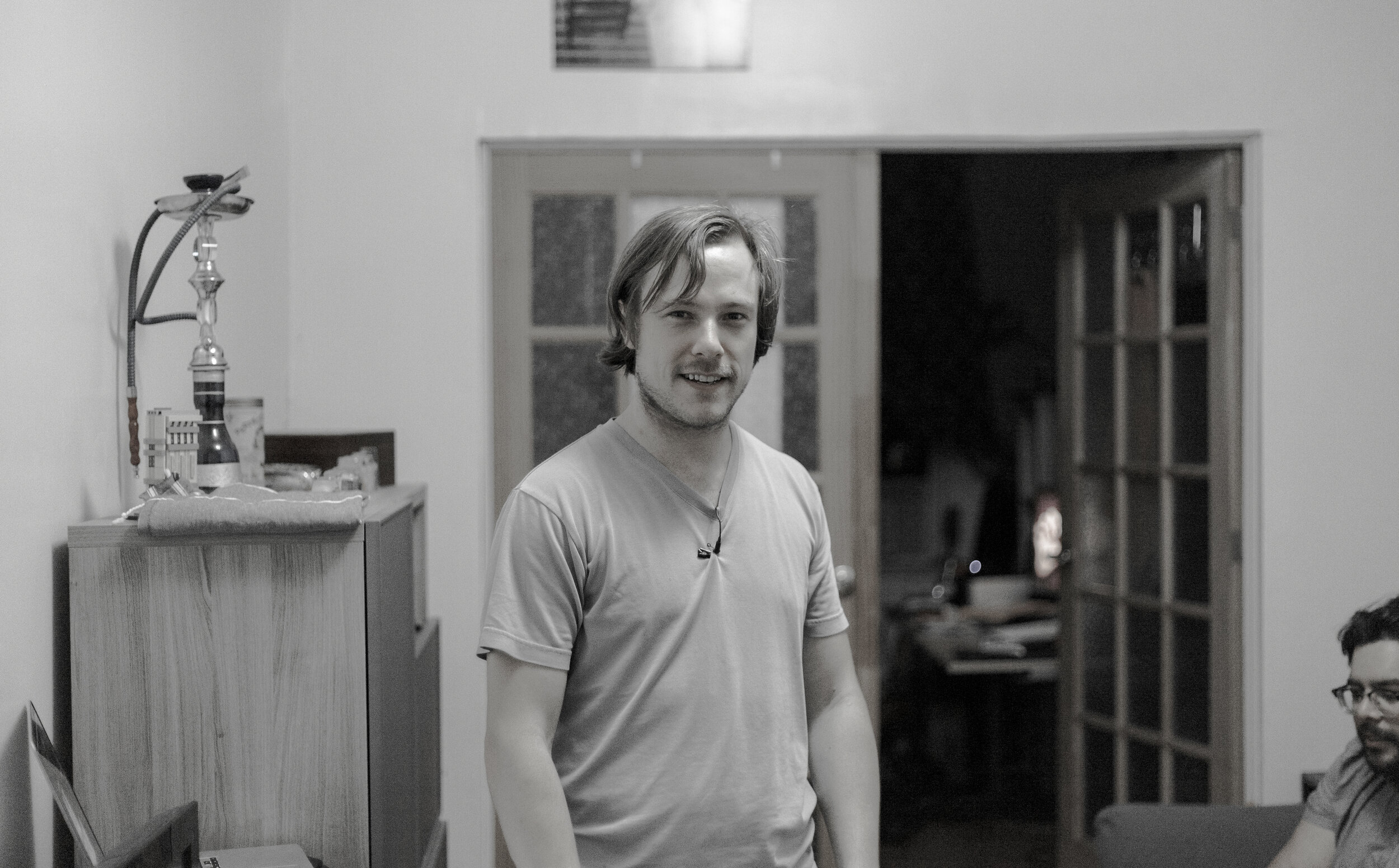
Justin Joseph Hall - Director/Editor
Transcript:
0:03 - 0:53
Daria Huxley:
Welcome to Feature & a short, monthly screening hosted by Fourwind Films, where an appointed contributor presents their chosen feature motion picture and a short movie. There's only one condition for a screening selection. The presenter must have been directly involved with one picture, but not the other. My name is Daria Huxley. I am a photographer at Fourwind Films.
Today's presenter is Justin Joseph Hall, who is the owner of Fourwind Films, and he's an editor and director. The first film he's presenting is the short that he directed called Long Distance. Long Distance is a one-minute movie. It's about a long distance relationship between a girl in Arizona and a guy in Paris. Justin was acting along with Isabel Restrepo, who is our friend who lives in L.A. After this short film, we had an even shorter discussion.
0:53 - 1:34
Justin Joseph Hall:
There was no room for titles or credits in that short. Hope you enjoyed it. I made that in 2016 and uh, this was all just shot on vacation when I was bored. I was shooting a documentary in Paris and then when I had time off, I shot this. And then like a year, two years later I shot the, the other part. It’s shot while we were waiting to go to the wedding of my friend.
And then I finished it in a week in post-production at my house at night. Obviously, that was all toned. I'm not very good at memorizing lines so the film I directed myself in had no lines in it (laughs). So, that was a fun short.
1:35 - 1:49
Daria Huxley (as narrator):
Justin's choice for the feature was the French movie called Science des rêves or Science of Sleep. It is an arthouse movie featuring Charlotte Gainsbourg and Gael García Bernal.
Justin Joseph Hall:
I feel like this movie has the same kind of feeling for it, the same sort of longing. It also happens to take place, I do believe, in Paris. It's by Michel Gondry. I don't know if you guys have seen, he’s pretty famous for his music videos.
Daria Huxley (as narrator):
During the screening of this Michel Gondry movie, we offered six-inch baguette sandwiches to our audience because they were featured in the movie as well. After the film, we had a discussion as a group.
2:13 - 2:33
Audience:
About the use of different languages was really cool, especially in the first dream sequence because everybody's talking at him but it's all French but in gibberish and none of it matches the lip flap at all. And then in the um park, the main character, he's dubbed the entire time but the flap isn’t great, so-
Justin Joseph Hall:
There was a couple of times they did it when they were speaking in-
Audience:
Yeah.
Justin Joseph Hall:
French and then they would talk in English.
Audience:
Yeah, exactly.
2:38 - 2:39
Justin Joseph Hall:
That’s but that’s right at the beginning. Yeah.
Audience:
Yeah, uh and that was interesting. I really like the mental understanding of all three languages through one person.
2:47 - 2:57
Justin Joseph Hall:
I think it’s very interesting watching it the second time too is that they really suggest something with the way they act, like at the beginning when the two lied about their job but you don't know who's telling the truth.
Audience:
Yeah.
Justin Joseph Hall:
But then they confirm it later on in the film and they did that like 5 or 8 times.
Audience:
Yeah.
3:02 - 3:11
Justin Joseph Hall:
Where they really suggest something but they don't confirm it until way later. I brought that other part up too because it reminds me of, like, The Sound and the Fury. Has anybody read that book?
Audience:
Yeah.
Justin Joseph Hall:
Yeah, you know how they don't tell you anything and then they confirm it like 60 pages later?
Audience:
(laughter)
3:18 - 3:30
Justin Joseph Hall:
To me, it's like the same thing but this is more obvious because you can see social cues that you can’t in the book. So if you guys like this; be sure to watch his music video. He's famous for his music videos. Um, but they have a lot of the animation that’s interesting.
Audience:
I'm just going to ask…
Justin Joseph Hall:
I think he did The White Stripes one.
Audience:
Yeah, I was going to say-
Audience:
Yeah.
Audience:
I definitely heard Jack White in the, in the soundtrack.
Justin Joseph Hall:
Well that was, yeah that was The White Stripes.
Audience:
Yeah.
Justin Joseph Hall:
That's the last album. Then he's done a few Daft Punk videos
Audience:
Oh.
3:44 - 3:50
Justin Joseph Hall:
and a bunch of other stuff. He also did the Eternal Sunshine of the Spotless Mind. But yeah, he doesn't do a lot of features.
3:51 - 4:05
Jasmine Szympruch:
It was nice getting lost in… Like, it took me a minute to catch on that he was acting out his dreams in real life, like. That… yeah. I felt disjointed with him which was cool.
4:06 - 4:16
Justin Joseph Hall:
Yeah, I like the dream sequence, it’s one of my favorite episodes in The Sopranos, there’s a dream sequence at the end of the season. But I just like watching how other people make it feel like a dream.
Audience:
Sensual…
Daria Huxley (as narrator):
Thank you for listening to Feature & a short. Please follow us @fourwindfilms on social media, at f-o-u-r-w-i-n-d-f-i-l-m-s. Please read our podcast on iTunes, then leave comments. Tell us what you like and what you don't like. Feel free to throw in any ideas because it helps us improve our podcast. Thanks for listening. Till the next time.
Bruce Lithimane: Échappé, Postman Blues
Episode #8 - Creative Director and Cinematographer Bruce Lithimane was the appointed contributor. From Iowa and a film buff, Bruce presents his chosen films at Fourwind Films’ headquarters in Bushwick. To see more of Bruce, follow his vision through his lens on Instagram.
For the first film of the event, Bruce presented the 2018 short Échappé, which stars Olesya Senchenko and was directed by Allison Mattox. Bruce was Second Assistant Camera and Steadicam Operator for the short which is a visually incredible Russian ballet story. In the episode, he takes us through the struggle with a camera rig and dance with ballerinas. For this film, we had Japanese alcohol, whiskey and beer.
For the second film, Bruce presented the Japanese mixed genre feature film Postman Blues (1997), directed by SABU. It is a funny and sometimes disturbing flick that Bruce wants to rewrite into a modern Brooklyn-based adaptation. During the film, we had raw fish and sashimi to consume along with the characters.
Credits:
Host - Justin Joseph Hall
Location & Production Company - Fourwind Films

Bruce Lithimane - Camera Operator/Cinematographer, photo by Daria Huxley
Transcript:
Justin Joseph Hall:
Welcome to Feature & a short where an appointed contributor chooses one feature and one short to present to an audience, one film they've been involved in, one they haven’t. My name is Justin Joseph Hall. This week, we have presenter Bruce Lithimane. Bruce Lithimane is a commercial cinematographer and creative director and a film history buff.
He enjoys great independent cinema around the world, and today he brought his foreign language narratives to watch. The first film, entitled Échappé, is a ballet film shot in the US and the main stars are Russian. Bruce was the Steadicam Operator as well as Second AC. The short movie starred Olesya Senchenko who is a Russian model who lives in New York. And here's Bruce giving us an introduction to the film.
0:52
Bruce Lithimane:
I’ll give, like, a breakdown, so I'm Bruce Lithimane. I am a commercial artist, I guess is the best term in New York. Um, I am completely self-taught. Because of my love for film, I was able to kind of translate what makes film pretty interesting into viable skill sets later on in life. So, it's all ode to film. I never studied commercials. I only studied film.
Bruce Lithimane:
So both films tonight are actually subtitled original language films. The first one we're going to watch is a film I worked on for three days called Échappé, which is a period piece shot in Jersey about two Russian siblings that are touring America, and they're getting ready to defect. This is during the Cold War in the 80s. So, really interesting movie about motivation behind, you know, loyalty and, and what you, what you love to do. And, and is that even worth it?
Justin Joseph Hall:
After watching Échappé, which was incredibly beautiful. We had a discussion, the short film and Bruce's involvement with it.
Bruce Lithimane:
So Beth Napoli was the DP. Uh, Allison Mattox is the director, writer, executive producer of it. Beth is married to someone who I believe is in R&D at RED. So we shot this on, like, a RED Epic 8K camera. It is insane.
Audience:
8K?
Bruce Lithimane:
8K. It was 8K. It would fill up four terabyte SSD’s in 40 minutes.
Audience:
Really?
Bruce Lithimane:
Yeah.
Audience:
(laughter)
Bruce Lithimane:
They finished it in 4K, not 8K just because editing an 8K, I believe, is like still quite difficult, especially when you're using Avid.
Audience:
Yeah.
Bruce Lithimane:
Right. And yeah, this was actually, you know, it was a funded short film which I love for many reasons, mainly because then you have people that work in the industry. You're not kind of throwing a ragtag crew together, even though no one had worked together previously.
But I'd never worked with a group of 20 professionals that had never met, and it was probably the smoothest experience I've had on, on set mainly because of budget. Because you have things like coffee and PAs and set designers because again, it's a period piece. But, you know, I think it turned out super beautifully. They're currently shopping it around to some distributors. Um, it's playing in Traverse City tomorrow, if not tonight.
Audience:
Oh, really?
Bruce Lithimane:
Yeah. So we got into Traverse City. We got into a couple other film festivals. I was Second AC on it, so I would help set up the camera, make sure everything is charged, passed off stuff to DIT when things were full. But, main job on this set was Steadicam Operator. So, a rig like a RED Epic is once you put a bunch of shit on it, it's like, ends up being 70, 80 pounds. And so I, you know, had this rig on my back like 4 to 6 hours a day.
And the original thought was I was going to move around and we're going to kind of edit it together as a kinetic type of music video. They decided to get rid of all that stuff and just use the static shots. But I was dancing with them for several hours when we shot this. And, and you know, I had not rehearsed with them.
Yeah, it was very insane because like, you're on a stage, you can fall off of it. There's like a eight, eight-foot drop off and I'm spinning around in circles trying to keep up with them. ‘Cause if you are working with real ballet dancers, they move incredibly quickly, incredibly powerfully,
Audience:
(laughter)
Bruce Lithimane:
and I'm trying to keep up with them.
Audience:
(claps)
Bruce Lithimane:
Funny little tidbit about that movie, everything got ADR’d afterwards, which is,
Audience:
Oh, really?
Bruce Lithimane:
Which is where you have to go into,
Audience:
Oh, they did a great job…
Bruce Lithimane:
a studio and record the lines because the, the costumes were so loud.
Audience:
Oh, really?
Bruce Lithimane:
Yeah. Like at first I thought they were crazy because I've never, ever been a part of anything where you go into a studio and overdub every line.
Audience:
Every single…
Bruce Lithimane:
Every single line.
Audience:
Well, they say most Hollywood films are 90% dubbed.
Bruce Lithimane:
Yeah, now they are. Yeah. I love Beth because she has this slew of short films, but she's also an amazing commercial DP too. Sometimes you will, like, separate both worlds, right? They say, I only do film. I don't touch commercial because it's beneath me. And I love the fact that she's like, I like making art no matter where it’s, it’s…
Audience:
Yeah.
Audience:
That’s like Bob Dylan's respect.
Bruce Lithimane:
Yeah.
Audience:
But she does dance also?
Bruce Lithimane:
No, no, that, that was a double.
Audience:
What?
Bruce Lithimane:
Yeah (laughs).
Audience:
No way.
Bruce Lithimane:
Yeah. Dude, are you saying you're confusion?
Audience:
I'm just saying.
Bruce Lithimane:
(laughs) But, like, you know, also you have to understand the scale, like. So someone like Tom Cruise, and you have a lot of time, you can afford to train him. It's kind of backwards, but it's actually cheaper to hire a double to just do it.
Audience:
Yeah, that’s an interesting-
Bruce Lithimane:
Great.
Audience:
point.
Audience:
…Wow.
Bruce Lithimane:
Yeah. Olesya is a Russian runway model in the United States. She's super successful here as a model.
Audience:
Oh, okay.
Audience:
Oh.
Bruce Lithimane:
Right.
Audience:
Yeah.
Bruce Lithimane:
They wanted Russian-speaking actors, like native Russian actors and they wanted Olesya because she was-
Audience:
They wanted her?
Bruce Lithimane:
semi-famous. They did want her because she’s semi-famous. But those two, um, dancers are, they perform at Lincoln Center I think like five nights a week. They're like legit ballet dancers. They're not just ballet people. They're like the-
Audience:
Right, they’re not,
Bruce Lithimane:
pinnacle of U.S
Audience:
uh…
Bruce Lithimane:
ballet dancers.
Audience:
starving for…
Bruce Lithimane:
No, no, no.
Audience:
It was beautiful…
Bruce Lithimane:
Yeah, go, thank you.
Stephanie Gould:
Yeah.
Akiva Zamcheck:
It’s a great thing. Like that, there was a really lovely grain to it.
Bruce Lithimane:
I'm sure they added it in post…
Audience:
???
Bruce Lithimane:
Well, well actually, I don't think so. They poorly lit stuff so that they could crank up the ISO or the grain.
Audience:
Okay.
Bruce Lithimane:
Because it's a look now.
Audience:
To give it that…
Bruce Lithimane:
Right. Exactly. Yeah.
Justin Joseph Hall (as narrator):
After the discussion, while we had already been consuming Japanese alcohol, whiskey and beer, Bruce gave us a little intro to Postman Blues. Postman Blues, that's my best Japanese, which is a very interesting comedy, independent flick. And while we were watching, raw fish was brought out, sashimi to consume along with the characters.
Bruce Lithimane:
The reason I picked this is because this is my favorite movie that is, like, artsy. Everyone talks a lot about, like, some of, like, Guy Ritchie. He's, you know, takes a crime caper, makes it suspense, makes it comedy. It's nice. He did Lock, Stock, Two Smoking Barrels.
Akiva Zamcheck:
(chuckles), that’s our favorite movie!
Bruce Lithimane:
Really, Lock, Stock?
Audience:
(chatter)
Bruce Lithimane:
Yeah, yeah! So, so, so that's a, that's a suspense crime thriller-
Audience:
(laughter) Yeah.
Bruce Lithimane:
mixed, mixed with a fucking comedy. Like,
Audience:
Yeah.
Bruce Lithimane:
you're dead on comedy.
Audience:
Like…
Bruce Lithimane:
Yeah.
Audience:
(laughter)
Bruce Lithimane:
And so this has, this has elements of that. Right. But it's just done in a different way. I typically hate fusion. I'm a purist at heart. But like, when it's done really well, it’s like amazing. Japanese cinema’s very similar to Korean cinema.
Audience:
Yeah.
Bruce Lithimane:
It's very, very methodical. The beats are very freeform and you'll notice that very quickly in this film. There's not a rhythm to it, it’s just stuff happening. Um, scenes probably go on 10 seconds too long a lot. But this film is about my favorite two things in the world, honestly, isolation and connection. Right? It tells a story about isolation and how he just feels like he doesn't understand anyone in the world and then he finds a connection.
And that's why it's, it's just a beautiful film in many ways. Not, not just a theme being told to its utmost potential but also it, its, its genre mixes. There's action, there's comedy, there's a rom com in there. It's just very beautiful and I think it has an amazing ending. Uh, I'm actually going to steal the ending. You guys will see it when, when you see it.
Akiva Zamcheck:
You're making a film?
Bruce Lithimane:
Well, I'm, I’m, I’m, actually this is called Postman Blues. I'm going to make a film called Brooklyn Blues which is based in Brooklyn but the exact same themes, themes of isolation and connection. And I'm going to make a short of it, but I'm definitely going to reference that it is inspired by this, this director whose name is SABU, goes by one name.
Stephanie Gould:
SABU?
Bruce Lithimane:
Sabu. I'll be the megalomaniac on that one. I'll be the, the director and the director of photography on it. Hopefully.
Justin Joseph Hall:
Why do you want to make the short of this movie?
Bruce Lithimane:
Because I don't think more than 100,000 people saw this fucking movie.
Audience:
And why is it important to see it?
Bruce Lithimane:
Because it's one of the coolest stories and the way it's told is one of the coolest ways I've ever seen any modern story told.
Audience:
When you watch it, what do people say to you?
Bruce Lithimane:
Oh, typically people think the movie is too slow and it's too random and there's not enough going on, which I completely disagree with. Obviously, a lot of people agree and disagree with it.
Audience:
It's true. We disagree with it.
Bruce Lithimane:
(laughs) Why, why do you disagree with it though?
Audience:
Because everything's setting up the next joke and it has a flow from-
Bruce Lithimane:
Right.
Audience:
scene to scene.
Bruce Lithimane:
And again, to me, maybe I'm just too affected by it. But when I watch it even that time with you guys laughing, to me it's like, it's not as funny to me when I watch it now. And I’ve-
Audience:
Because you know the ending.
Bruce Lithimane:
Because I know the ending and I know, like, the gravitas of, like, what they're trying to tell. And he does this, like, uh, 4, 5 shot reveal, tempo thing a lot, where typically if, if you show the beginning of an action, you have to cut to what happened at the end of the action. But he actually cuts to, like, 4 or 5 reactions before he actually shows what the fuck happened.
Justin Joseph Hall:
And sometimes he doesn't.
Bruce Lithimane:
Yeah, and sometimes he doesn’t even show the ending or the, yeah, what happened.
Stephanie Gould:
Or he shows that like…
Bruce Lithimane:
Yeah, yeah, exactly. I, I would actually want to hear like a true, true, because I, I, I'm a film nerd.
(robotic sounding voice):
Fucking Leon from the professional stream… super pretentious…
Bruce Lithimane:
Do you guys ever watch Enemy, Jake Gyllenhaal?
Faster computer voice montage:
What the fuck is that? But he was super famous in Australia…
Justin Joseph Hall:
That’s Feature & a short. If you want anything more by Fourwind Films, please follow us on social media, f-o-u-r-w-i-n-d-f-i-l-m-s on any platform. We are also premiering a short film of our own this month entitled Abuela’s Luck. The debut will be August 25th at AMC Theater, Times Square in New York City and if you want to buy tickets, please go to the New York Latin Film Festival website and you can buy them there. We will also be at the screening so come say hi. All right. Tune in next month for another edition. Thank you. Thank you very much.
Gary Jaquez: Abuela's Luck, Children of Men
Episode #7 - Los Angeles-based freelance Cinematographer Gary Jaquez was the appointed contributor. Gary works with Fourwind Films often and was the Cinematographer on our last 2 short films. To follow Gary's future set escapades, check out his Instagram for Behind The Scenes shots on his major projects. The next short film he worked on, Prologue, will be released by Fourwind Films later this year.
Our screening took place in Bushwick at Fourwind Films’ headquarters where for the first film, Gary presented Fourwind’s latest release, Abuela’s Luck (2018), directed by Ricky Rosario. He takes us through wearing multiple hats and creative decision-making on set. He also flips the table during the event discussion and asked other people present about their roles in Abuela's Luck. For this short, we had different things that you’d find in a Brooklyn bodega which included Ho Hos, Little Debbie's, fried plantains, and the beer Presidente which makes it a prominent first appearance in the film.
For the feature, Gary presented Children of Men (2006), directed by Alfonso Cuarón and shot by his hero, Emmanuel Lubezki. Gary gives us further explanation on why Lubezki is an important role model for a Latino in Hollywood. During the film, we brought out some peanuts, and we also had a whiskey and coffee mix that we enjoyed just as Clive Owen’s character enjoyed during the film in addition to some white and red wine.
Credits:
Host - Justin Joseph Hall
Location & Production Company - Fourwind Films

Gary Jaquez - Cinematographer, photo by Daria Huxley
Transcript:
00;00;03;14 - 00;00;43;06
Justin Joseph Hall:
Hi, welcome to Feature & a short, a monthly podcast hosted by Fourwind Films where our appointed contributor presents their chosen feature motion picture and a short movie. There's only one condition for the screening selection that the presenter must have been directly involved with one picture and not the other. This month, after a long hiatus, we'd like to say hello.
We went off and shot a short film entitled Prologue, and we were finishing post-production in another film, Abuela’s Luck, which happens to be the film that Gary Jaquez, our presenter this week, brought to share with us as his short. For his feature, he brought Children of Men.
Fourwind Films shot Abuela’s Luck here in Brooklyn at a bodega. And so during the event, we had bodega food scattered around the viewing area, and that included Ho Hos, Little Debbie's, fried plantains, different things that you'd find in a Brooklyn bodega. We also had the beer Presidente, which makes it a prominent first appearance in Abuela’s Luck. Gary Jaquez works with Fourwind Films often and is a director of photography.
00;01;10;21 - 00;01;27;20
We had a discussion on what it was like to shoot the film, difficulties that Gary ran through, and working with director and producer Ricky Rosario. We had a lot of people who worked on the film in attendance as this was the first private screening.
00;01;27;23 - 00;01;53;22
Gary Jaquez:
And a little backstory about the film, Ricky and I are both of Dominican descent. Both our parents are from over there, and, this is very much like a day in the life of, of, you know, going in and out of the bodega and what the bodega represents to the community. I, personally, have about 6 or 7 uncles and my grandfather who have owned their own bodegas.
00;01;53;25 - 00;02;19;10
And yeah, it's just very common.
Audience:
Here, and like here in the city?
Gary Jaquez:
Here. Two of them were in Manhattan, two were here in Brooklyn and one in Jersey. So yeah, it's, bodegas are very much like a way to success, um, in the eyes of a Dominican immigrant coming to this country. So. I, am, I've been there since, since Abuela's luck was just, you know, a Venn diagram.
Audience:
When was that?
00;02;19;12 - 00;02;40;10
Gary Jaquez:
Oh, man. Maybe, maybe a year and a half ago already. Yeah, it was quite the process. So I guess the toughest part was wearing as many hats as I had to wear. Being as, you know, Ricky and I, you know, we go way back. We've known each other since before high school. I'm a cinematographer and that's my main focus but I played many roles on this film and in doing so, you know, you spread yourself thin.
You know, I was picking up gear and shot listing and then getting something for production design. I came about a week and a half prior to principal photography, and that was the first time I saw the, the location. The interesting story is that we're on our second day of production, and it's about 1 p.m., we're scheduled to shoot till about six. And a guy shows up and he tells us, he says, hey, I own this building. Nobody's paid me for any of this. So unless you want me to show up with cops by 3 p.m., either you're all out of here or you pay me X amount of dollars. I forget exactly the figure, but it was a couple thousand. Mind you, we had already paid the, the bodega, the people who actually lease a spot.
00;03;35;19 - 00;03;53;10
But, yeah, apparently, you know, because he owns a building, he was the one who had the rights to the money. Whatever. Uh, we ended up trying to fight it a little bit, and clock was ticking, so we ended up having to find the money. We figured it out. We kept going. We pushed forward, and we got it done.
00;03;53;12 - 00;04;00;10
Justin Joseph Hall:
The film ended up. It looks very green and, like it just has a green…
00;04;00;12 - 00;04;05;05
Gary Jaquez:
Well, it’s not so much the lights. And, and I noticed even shooting just seeing like the Rec 709 on that image.
Justin Joseph Hall:
But the skintones look great.
00;04;06;13 - 00;04;29;23
Gary Jaquez:
Right? So that's, and it was shot on an Alexa, like, skintones are amazing on an Alexa.
Justin Joseph Hall:
On an Alexa, yeah. Okay, that’s…
Gary Jaquez:
So, what I chalked it up to was just the potato chip bags. And obviously a lot of that stuff is, is very poppy, it’s greens and reds and oranges. And I just, I noticed that overwhelmingly it was green. But Alexas in general don't have a green tint.
00;04;29;23 - 00;04;51;07
So I'm going to chalk that up to location. And Ricky and I both from the beginning we, we pretty much agreed that, like, we really wanted to capture the feel of a bodega. You know, like, he really wanted it poppy like that. He, he wanted, he wanted a location that was going to, every angle you look, everybody was just going to be engulfed.
Because that's, when you go to a bodega, every little corner of the bodega, there's something there that's for sale. Whether it's, you know, shampoo, deodorant, detergent, food, potato chips, salami. Like, there's everything in a bodega that you can even think of. So.
Audience:
Did you guys change out any of the lighting in the bodega itself, or did you just add to it?
Gary Jaquez:
I added to it. If it were up to me, we would have shut everything off in the bodega and just.
Justin Joseph Hall:
That’s hard, that’s hard with…
Gary Jaquez:
Right, but it’s just not realistic. So I shut them off when I could, and I supplemented that, that stuff with, I had an HMI outside, uh, an Aladdin which is small LED that’s nice on skintones.
00;05;31;17 - 00;05;50;28
We had that right behind the cash register to pretty much act as daylight. So, yeah, a little bit of both. We.
Justin Joseph Hall:
I didn't even see that.
Gary Jaquez:
Yeah, I, I did. You actually see it in the movie, but I.
Justin Joseph Hall:
Oh really?
Gary Jaquez:
I’ve asked plenty of people and nobody can tell what it is. And I'm like, it looks like just a piece of window sunlight coming in, but it's a light.
Justin Joseph Hall:
Oh. Okay
Megan Masur:
(laughs)
Gary Jaquez:
Yeah, yeah, yeah.
Gary Jaquez:
Yeah. And honestly, the whole shutting of the lights, that was never planned. That scene, what we were shooting on our second day, and we're on our way home, and I'm trying to think, like, how could we make this a little better just so it's different, just so we have a little separation? Then I'm like, okay, if I'm a thief, you know, it's the middle of the day kind of, kind of makes sense.
00;06;15;26 - 00;06;31;12
Like, hey, shut the fucking lights off. You know what I'm saying? So we ran with it. He loved it right away. We had him do it. The, the bodeguero, we had him do it in sections from where I was back there with the camera on top of that ladder. So, it just went boom, boom, boom. You know what I'm saying?
00;06;31;12 - 00;06;51;01
Just to kind of, like, guide us into what was going on. So that was kind of my idea was like, just have like the, the light or the lack of light, the lights going off, guide us to, like, the shit that’s going down, then boom, we cut right into like a slider of, of us going into to them silhouetted a bit which was just probably my favorite shot. Yeah.
Audience:
(laughter)
Gary Jaquez:
Yeah.
Gary Jaquez:
Do I get to ask any questions?
Audience:
Yeah.
00;06;57;18 - 00;07;09;21
Gary Jaquez:
Cool. All right. Justin. So, from an editing perspective, what was your favorite part to edit? What part were you editing? And you said, oh, wow.
00;07;09;23 - 00;07;21;09
Justin Joseph Hall:
Well, definitely when you have the more angles. So when we ha–, when the lights turned off, that’s probably more exciting.
Gary Jaquez:
Yeah.
Justin Joseph Hall:
The worst part, though, was when it went to the black and came up. That was a little confusing.
00;07;21;11 - 00;07;38;13
Gary Jaquez:
That actually, congrats to you guys. I didn't know that was going to happen and I thought that worked great. To be honest, he, he, he told me I want to shoot this at a higher frame rate. I want to do slow motion. When the gun comes to his head. And I fought him on that. It’s just at the time, I could not visualize it. Kudos. Kudos to you, Ricky. Kudos to Ricky,
Audience:
(laughter)
Gary Jaquez:
because I just didn't, I could not see it. Just with the sound design that you guys got going on and, and also props to the sound mixer right there. Just the music.
00;07;50;22 - 00;07;52;02
Justin Joseph Hall:
…Yeah, that's Josh Heilbronner.
00;07;52;04 - 00;07;58;05
Gary Jaquez:
The music that came in and everything was just how I'm happy to be wrong. Yeah, yeah.
Audience:
(laughter)
00;07;58;07 - 00;08;00;06
Megan Masur:
Where did the music come from?
00;08;00;08 - 00;08;08;08
Justin Joseph Hall:
Ricky had it all made. Well he licensed two, but I think, but that was from the same artist that composed it. So there was the original songs.
Gary Jaquez:
Yes. Yeah.
Justin Joseph Hall:
And then he licensed the last…
00;08;08;10 - 00;08;16;13
Gary Jaquez:
Which are very, they're, they're, they're actually a group that's very common amongst a Dominican community here in New York, New Jersey.
Justin Joseph Hall:
MaxBanda?
Gary Jaquez:
How do you know?
00;08;16;15 - 00;08;17;18
Justin Joseph Hall:
Because I edited the film.
Audience:
(laughs)
Gary Jaquez:
Oh, okay.
Audience:
(laughter)
Gary Jaquez:
Is that what you did?
Gary Jaquez:
MaxBanda, very popular amongst the Dominican community. It was very nice of them to, to, I guess, help push the culture forward. I got a question for you, Daria. What was your favorite part about the titles?
Audience:
(laughter)
00;08;37;05 - 00;08;47;10
Daria Huxley:
I like Ricky’s vision. I mean, I think he really had a clear vision on how they should look like.
Gary Jaquez:
Yeah. Yeah, he did.
Daria Huxley:
And I try to suggest, like, something else but it was very clear, so…
00;08;47;12 - 00;09;11;12
Gary Jaquez:
That's so funny, I did too. I was like, what do you mean you want bubbles, man? How old are you? But no, it came out, it came…
Audience:
(laughter)
Gary Jaquez:
It came, it came out really good, man. And stuff that people don't even catch like the radio announcer in the back.
Audience:
Yeah, that's.
Gary Jaquez:
That's my cousin, Billy.
Audience:
Oh, it's your cousin! Man.
Gary Jaquez:
That's my cousin Billy and our friend Phil who was actually the person I moved out to California with.
00;09;11;12 - 00;09;14;00
Justin Joseph Hall:
Wait, they did the pop up text, texts…
00;09;14;02 - 00;09;24;03
Megan Masur:
Oh, yeah. Those were awesome. I love when movies use that. That's an amazing way to be, to show text message.
Audience:
I think…
Megan Masur:
I hate seeing… shot the phone.
Audience:
Yeah.
00;09;24;04 - 00;09;28;15
Justin Joseph Hall:
I think, I think we used inspiration, high maintenance…
Megan Masur:
Yes! And yeah, I…
Justin Joseph Hall (as narrator):
After the discussion, Gary introduced Children of Men, directed by Alfonso Cuarón, who often works with the famous director of photography, Emmanuel Lubezki. Children of Men is especially famous for the cinematography and the, the use of long takes. There's a famous sequence in the film that is one shot. Emmanuel Lubezki did not win the Oscar for this film, but with his unique style and this was sort of the launching pad for that style, he ended up winning two Oscars in the future as the director of photography.
00;10;03;00 - 00;10;26;08
Gary Jaquez:
So, I chose Children of Men because it's actually one of my favorite films, particularly because of the cinematography on this thing. So, little backstory. When I moved to California, my first day at Panavision who's prepping for their next movie is the one, the only.
Audience:
Really?
Gary Jaquez:
Yeah.
Gary Jaquez:
So. And mind you, I was already a big fan. So I see him and I'm like, no, no way, no fucking way.
Audience:
Do you notice anything?
Gary Jaquez:
The DP is called Emmanuel Lubezki, but they call him Chivo, Chivo Lubezki.
Audience:
Oh.
Gary Jaquez:
That's his nickname. They're, they're, they're all Mexican. All three of them. They kind of grew up together, came up together. They went to film school in Mexico.
Audience:
Oh, okay.
Gary Jaquez:
Yeah. So Iñárritu, he's the one who did like Birdman and Cuarón, I think, did this one. And he also did like Gravity. But yeah, he pretty much works like, like exclusively with them. Yeah. But yeah, so I, I, I started this job at Panavision. I, you know, I was skeptical going in and then I see this guy, I'm like, okay. I'm where I need to be because this is already a guy that I study and here he is testing lenses for his upcoming movie, The Revenant. And, yeah. Like, I guess maybe I'm a little biased because there’s just not a lot of Latino cinematographers, so I'm drawn to that. But that's just a talking point because at the end of the day,
Audience:
Oh, he’s the best.
Gary Jaquez:
He's, he's awesome. He's awesome. And, and this movie that's already 12 years old will show you that, like, he's not joking around. He wasn't joking around 20... It didn't take, you know, The Revenant, you know, deciding to shoot everything in natural light and, and 12 mil lenses. It didn't, it wasn't that that made him great. Like, he's been awesome. And even before this he also, I believe he also shot Y tu mamá también. Right? Back then, he was more, more longer lens. Now, as of recent, is more wider.
Justin Joseph Hall:
Oh, okay.
00;11;50;24 - 00;12;08;22
Gary Jaquez:
Yeah, yeah, yeah, which he'll showcase in things like The Revenant. He doesn't like to do interviews. So it's kind of hard to, like, really dive into his head. Uh, but the times that he has, he's, especially in regards to the wide angle stuff, he feels it's very, uh, intimate. You're very intimate with the, with the…
Audience:
That’s what my, my directors, the directors who I work with who are also cinematographers, vérité, they say the same thing.
Gary Jaquez:
Yeah.
Justin Joseph Hall:
They live off it.
Gary Jaquez:
Yeah.
Audience:
And they, they live off of it.
Gary Jaquez:
Yeah.
Audience:
That's what they do.
00;12;16;18 - 00;12;33;27
Gary Jaquez:
Yeah. Which is interesting to me because I'm not the. I'm, like I wouldn't naturally gravitate towards that because of what wide angles does to, like, faces. You know, it really kind of like distorts the faces and whatnot. But I mean, but the proof is in the pudding. It works because he's amazing and he has Oscars to prove it. So with that said, ladies and gentlemen, let's dive.
00;12;37;15 - 00;12;58;16
Justin Joseph Hall (as narrator):
As food is pretty scarce in the world of Children of Men, during the film we brought out some peanuts, but we also had a whiskey and coffee mix that we enjoyed just as Clive Owen's character enjoyed during the film in addition to some white and red wine. After Children of Men finished, we had a quick discussion in reaction to what we just saw.
Justin Joseph Hall:
Thank you so much for listening. If you would like to see Abuela's Luck, the film that we executive produced at Fourwind Films for yourself, it is going to be playing in film festivals. To get more information, the best way is either follow Fourwind Films on our social media. It is f-o-u-r-w-i-n-d-f-i-l-m-s, so you can follow Fourwind Films. Or you can follow Abuela's Luck on Instagram. That is a-b-u-e-l-a-s-l-u-c-k. And those will have all the informations for future viewings for the short film. Please leave us a review. Wherever you listen to this podcast, we'll be broadcasting out to you. Thank you very much for listening.
Gladys Mae Murphy: Prison Terminal: The Last Days of Private Jack Hall, Pumping Iron
Episode #6 - Editor Gladys Mae Murphy was the appointed contributor. Gladys, who was a part of post-production teams on multiple Oscar-nominated documentary shorts, is an incredibly hard-working editor who dives into her projects for months. Much of her work, including Prison Terminal: The Last Days of Private Jack Hall, are featured on HBO's streaming websites. To see the latest by her, check out her website. She is currently working in collaboration on another documentary in conjunction with DCTV and HBO.
Our screening took place in Bushwick at Fourwind Films’ headquarters where Gladys presented two films linked by her mentor, legendary editor Geof Bartz. For the first film, Gladys presented the 2013 documentary short Prison Terminal: The Last Days of Private Jack Hall, directed by Edgar Barens. Prison Terminal was made by a small film team Gladys was a part of and was nominated for an Academy Award. In the episode, Gladys takes us through the director's toils of creating this film about how to handle death in prison.
For the second film, Gladys presented the 1977 feature-length documentary Pumping Iron, directed by George Butler and Robert Fiore. Pumping Iron is a look into the unique world of bodybuilding and is a fun film centered around a young Arnold Schwarzenegger in his bodybuilding prime. During this film, we brought out some greens along with some Brooklyn-breaded chicken and some hotel-fried eggs and toast.
Credits:
Host - Justin Joseph Hall.
Location & Production Company - Fourwind Films

Gladys Mae Murphy - Editor, photo by Daria Huxley
Transcript:
00;00;00;11 - 00;00;21;05
Justin Joseph Hall:
Welcome to Feature & a short. Feature & a short is a monthly screening hosted by Fourwind Films, where an appointed contributor presents their chosen feature motion picture and short movie. The only condition for screening selection, presenter must have been directly involved with one picture, but not the other. I'm Justin Joseph Hall.
Gladys Mae Murphy is our guest and she works on HBO projects all the time. All of which are amazing. She was co-editor on the Oscar-winning Crisis Hotline, which won the Academy Award for Documentary Short several years ago. The movie that we watched was another Oscar-nominated film that she worked on with Geof Bartz called Prison Terminal: The Last Days of Private Jack Hall.
00;00;45;08 - 00;01;12;02
Gladys Mae Murphy:
So Prison Terminal is a film that was shot over the course of six months by a director who wanted to experience what hospice was like in prisons where people are serving life sentences. Edgar Barens was the director. He got his certificate to be able to, you know, practice as a caretaker. He worked with the prisoners for a week just to get them used to his presence and then he brought out the camera and just followed everything for six months.
He lived in the basement across the street. He had a very depressing time. And this movie is very, very depressing and, yeah. But it's, it's about a hospice, so I'm sorry if it, yeah, we all know what the ending is going to be.
00;01;29;28 - 00;01;40;27
Justin Joseph Hall:
So after the film, we had a short discussion and Gladys had a ton of insight, not only on her process, but also the effort that the director put into creating this film.
00;01;40;28 - 00;01;46;05
Justin Joseph Hall:
For those of you who don't know Geof Bartz, he’s a very famous documentary editor.
00;01;46;12 - 00;02;11;11
Gladys Mae Murphy:
20 years at HBO as a supervising editor. And so, when there's a film that it comes into HBO that's already been cut and needs a little help, they give it to Geof. Maybe almost a decade ago, I was hired to be his assistant, and after a year of hardcore assistant work, I escaped to the country Colombia and said I wasn't coming back for six months.
And he called me. He was like, I need you back. And I was like, I'm not coming back. And I said, I want to cut soon and he gave me a scene to cut in a different movie that was hard. It was about how they kill dogs in shelters. It was that scene, and I was so excited that I was even allowed to cut for anything for HBO and so I did it, and he kept me on and one of our next projects was this Prison Terminal.
And we cut it over the winter. We both gained so much weight because it was just so depressing. And we both don't smoke cigarettes so our outlet was like, oh, let's go to the vending machine and we did that maybe like five times a day just watching the dailies. And there was one, it was shot on tape, many DVD’s, and we would watch just one tape a day, and it was a countdown to Christmas. And he said, oh, this is a tape where Jack Hall dies. Let's not start the Christmas season with this. I was like, great idea. And then so, like, I don't know, 2013, 2014 rolls in and the first tape we pop in is to watch Jack Hall die.
And, it wasn't that hard to cut. It was just hard to watch. And it's still hard to watch. I haven't seen it in years and it still brings back feelings. So, Geof Bartz cut the next film, Pumping Iron, about bodybuilding and helped Arnold Schwarzeneggerbecome a household name. And I watched that film when I was 18 in California and not knowing I was ever going to meet anyone from Pumping Iron and when I walked into Geof Bartz’s office, he had a poster Pumping Iron. I'm like, oh, that's cool. He said, yeah. And I didn't, I did not look at his entire history.
Audience:
Yeah.
(laughter)
Gladys Mae Murphy:
He has like 100 films and he's like, this is the film I cut. I said, what?
00;04;15;15 - 00;04;16;13
Justin Joseph Hall:
But you’ve already seen it?
00;04;16;20 - 00;04;44;28
Gladys Mae Murphy:
I've seen it when I was 18 and, like, a decade later, I meet Geof and he, he said. After that, like, after that film came out, there was so much buzz. He was so excited. He was a freelancer. He's like, oh, I'm now, I'm going to get the job offers. He got nothing for seven months. And his first job editing after seven months of unemployment was editing an industrial film on how to grow green beans. And he said he was so excited and… this is his inspiration. I was like, wow, you did Pumping Iron and no one hired you after that?
00;04;55;05 - 00;05;15;22
Justin Joseph Hall:
Yeah, yeah, it’s, it's cool. It, the other thing I was wondering is, like, when you got the footage, when you worked with Geof, especially on this film, there's like some of the least amount of credits I’ve seen in the film on that. It's pretty crazy. So what did Geof, if you, that you're putting this with him? Or how, what was your working relationship and how did you deal with the footage when you first got it?
00;05;20;29 - 00;05;46;18
Gladys Mae Murphy:
When we first got the footage, it was over 300 hours and we knew it was a short and we said, we doubt everything that isn't related to Jack Hall, because he did shoot other people in the hospice who weren't as dynamic as Jack. And, he gave us maybe 80 hours of tapes to go through. And what Geof likes to do is to have everyone sit in a room and watch all 80 hours.
Audience:
Everyone...
Gladys Mae Murphy:
Me, the director and Geof, and the director was the only crew member. He was sound, and, and, I don't know if you noticed, but it has this weird tint on it because he never set his white balance. And at one point, we were like, oh no, we need to make this film black and white because the color is so bad.
But everything's just desaturated on purpose because of his color balance, which, but he, yeah, it was just a one man band. Like, I was a third credit. I'm like, great.
Audience:
(laughter)
Gladys Mae Murphy:
There's parts of Jack's story that's not, that doesn't line up with what he says, but I think he's just that old, and he's been telling himself the same story over and over that he believes it. Those guys who, who take care of Jack in the hospice, the reason why they're allowed to be volunteers is because they're in good standing. You know, their bars are usually open and they do a lot of crocheting and they make wallets and stuff, but they did some really bad, bad, bad things. But these guys were maybe, like, 20 when they did it and now they're 60. So they've been in prison for a while. I don't think they're ever going to leave that prison.
Audience:
Who did Jack murder?
Gladys Mae Murphy:
He, his son was addicted to drugs and ended up killing himself. And so Jack said he murdered the drug dealer and he, so he could no longer do it again. And he got caught because he told his older son that we meet, and his son turned him in. That's how he got caught.
And our director, by the end of the six months he had gained, I don't, I don't, I don't want to say how many pounds, but all he was eating was like pizza and prisoner food. And he's like, I was just waiting for the right person. And he left after Jack left. He said, this is, this one's it.
He shot that in 2006 and we didn't cut it until 2013, meaning no one would buy it. No one bought the film and someone at HBO saw it during one of those speed dating pitches. We're like, you have like three minutes to explain it to an exec at a network. And how many years later it was bought, turned into 40 minutes.
00;08;10;08 - 00;08;13;09
Audience:
I was just glad, glad, that, Where did the show actually go on? Was it…
Gladys Mae Murphy:
When HBO tries to get something shortlisted for an Academy Award, it has to be theatrical for a certain amount of time. Has to be reviewed by certain newspapers in order to qualify for the running. And, so it was theatrical for I think four weeks or two weeks, whatever the minimum is. But in, like, small, obscure, cheap theaters.
00;08;37;12 - 00;08;38;24
Audience:
Yeah.
00;08;38;26 - 00;08;59;13
Gladys Mae Murphy:
And it's 40 minutes. It's not a good, it's not like a Saturday movie you're going to want to take the family to, you know. It was hard to make a film about something that doesn't really benefit like us people who are free and these people are in prison. And so why would everyone else care about how they treat their, their dying and the sick. And I think that was the biggest challenge.
Audience:
Do you know what the process was like for him in terms of getting access?
Gladys Mae Murphy:
He did a film about Angola? Or he helped set up a hospice at that prison. And it was more like a how to do this. And it was spread amongst the other prisons. And he wrote a letter to Iowa and said, hey, you know, I did this film and I'd like to film the hospice that you guys have.
And they said, that's funny. We based it off of your film. And so he got in and he, he studied to become a hospice volunteer. So he was able to help out for a week and gain everyone's trust. So no one was ever, like, staring at the camera awkwardly. They were just comfortable around him. And these guys are, you know, they're pretty much the honor roll of all the prisoners and all dudes who have been best friends for decades.
He had a lot of, like, great bites. He was a sound bite machine. The first thing I ever saw was that intro where he's talking about, when you just first meet Jack and it's just his big face and he's talking to camera, and I heard, that's when I knew I was like, this is going to be a good film.
00;10;14;16 - 00;10;21;21
Audience:
So interesting what you said about the correction because that bleakness made it.
Gladys Mae Murphy:
Yeah.
Audience:
You know, it really just enhanced the…
Gladys Mae Murphy:
That mood and, yeah.
Audience:
Yeah, yeah. So interesting those mistakes that actually end up being the…
Gladys Mae Murphy:
And in some of those shots were like, honestly, they were green or orange. And we were, like, Edgar. He said, oh, I had it on automatic. But actually he's one of the best verité shooters I've ever edited with. He, he's so patient. I mean, to live somewhere for six months and just capture all those hours.
And he has, he's so patient. He just observes and watches. He's not really, like, asking anyone. You know, he walked through the door again or he's, he, I wouldn't be able to know where to move the camera after but he always knew that once he moved the camera to you guys and one of you would start talking and it was just, he was really patient.
00;11;13;20 - 00;11;35;20
Tom:
I said the pattern looks kind of a bit like he's not doin’ the white balance. Almost kind of adds to it because it gives it that, like, sickly, kind of otherworldly vibe, which is kind of what the patients, They give it a shot will be if we're not to, you know, $5 million Netflix staff and kind of lose somethin’, honest.
00;11;35;22 - 00;11;38;26
Gladys Mae Murphy:
Whenever the countdown happens with hospice, day one, I'm like.
Audience:
(laughter)
00;11;40;11 - 00;12;07;17
Gladys Mae Murphy:
Because I already know how many days.
Audience:
(laughter)
Gladys Mae Murphy:
But it used to be worse, like our first screening when we presented it to Sheila Nevins and we cut back to the clock ticking. She's like all right, all right. Like we know he's going to die. Hurry it up. Because it was just so depressing. I had a screening with my friends and they're like, I don't want to party anymore, Gladys. Like, I don’t want to do (laughs).
Audience:
(laughter)
Gladys Mae Murphy:
The cuffs when he was going into the ambulance.
00;12;13;24 - 00;12;18;26
Justin Joseph Hall:
Like, you got to be kidding me. That's just what it feels like. Every time that you see that.
00;12;18;29 - 00;12;21;17
Daria:
That's probably protocol. It’s.
Audience:
Yeah.
Audience:
You have to do it.
00;12;21;17 - 00;12;27;29
Justin Joseph Hall:
It is. It's just like sad. You know, that guy can't walk, he can't run away. He’s not going to do anything. It’s just stupid.
00;12;28;06 - 00;12;41;29
Gladys Mae Murphy:
I, I cut that scene.
Audience:
(laughter)
Audience:
Oh yeah. His son said…
Gladys Mae Murphy:
Yeah, your eight wives are waiting for you. But he was a very interesting, charismatic character and.
00;12;42;01 - 00;12;50;19
Tom:
I was interested in five weeks, comforted by the thought, one punch of the Second World War and by basic math, it must be about time.
Gladys Mae Murphy:
It was filmed 2006.
Audience:
Yeah 2006…
Justin Joseph Hall:
I just watched War Torn. The same thing with it. He mentioned here, it’s mentioned in that one where they come back and they teach you how to kill every day, and if they don't teach you how to turn it off afterwards, it's like the same thing.
00;13;05;17 - 00;13;28;27
Gladys Mae Murphy:
Oh yeah, Jack Hall, when he was in Italy, I think or, it was his job to kill at least one person a day. So he had killed, I can't even tell you how many people he killed, but like with a knife, guns. And so, how do you come back to, Iowa? People anger you. He was just set up for…
Justin Joseph Hall:
Next, we ended up watching one of the most fun documentaries. A lighthearted, great time that is always a talking point after people have seen it. And it's entitled Pumping Iron. Pumping Iron was made in the 70s, and it is about bodybuilders with the one and only Arnold Schwarzenegger in his last run before he headed to Hollywood and became everything on the silver screen.
Schwarzenegger is not the only star in the film. There's also Lou Ferrigno, who ended up playing the Hulk in the 80s. It is incredibly enjoyable. You see a lot into Arthur's world and this unique world of bodybuilding with, like, an eclectic set of characters, including a character from Brooklyn. For eating, during this film, we brought out some greens along with some Brooklyn-breaded chicken, and soon after that we brought out the best that we could match, some hotel-fried eggs and toast.
00;14;23;12 - 00;14;43;13
Gladys Mae Murphy:
So when Arnold was running for governor.
(laughs)
Audience:
The whole time…
Gladys Mae Murphy:
I had to balance Prison Terminal with something.
…the closeup of her face (laughs)
Gladys Mae Murphy:
Like taking photos with one, oh! Yes. Yes.
Tom:
Oiling themselves up and thrusting their pecs.
Audience:
And Grunting.
Tom:
Yeah! (chuckles)
00;14;49;06 - 00;15;11;13
Justin Joseph Hall:
We're taking a break next week. We're shooting our short film, Prologue. We're finishing up another short film by Ricky Rosario entitled Abuela’s Luck which is in color and sound right now. And we're going to have two short films for you from Fourwind Films in the near future.
So, check those out. Check our website, check our social media. If you have questions or comments about the show, please send an email to info@fourwindfilms.com. That's info at f-o-u-r-w-i-n-d-f-i-l-m-s. Thank you for listening. Talk to you soon.