Rebecca Stern: Snowy, The Thin Blue Line

Episode #32 - Meet Rebecca Stern, a director and producer of documentary films. She has absolutely soared in her career since one of her first jobs as a Production Coordinator on the Oscar-nominated feature documentary Cartel Land. Her directorial debut Well Groomed is now streaming on HBO. Rebecca, or Becky, is open, humble, and a delight to talk with.

Our appointed contributors for Feature & a short are asked to choose one short and one feature, and they have to have been involved with one of them but not the other. Rebecca brings the sleeper success Snowy. This documentary short about a pet turtle named Snowy whose owner embarks on a journey to find what would make him happy got into Sundance after a cold submission. We discuss what it’s like to get into Sundance, funding short films, and what Rebeca thinks needs to evolve in that process.

The feature is The Thin Blue Line, a film Becky had never seen — though she has worked on films about the legal system and incarceration in the US.

Learn more about Rebecca Stern and her work on her website.

And keep an eye on a Fourwind Films short-form documentary series coming soon: Marcellus Hall: An Artist in New York City.

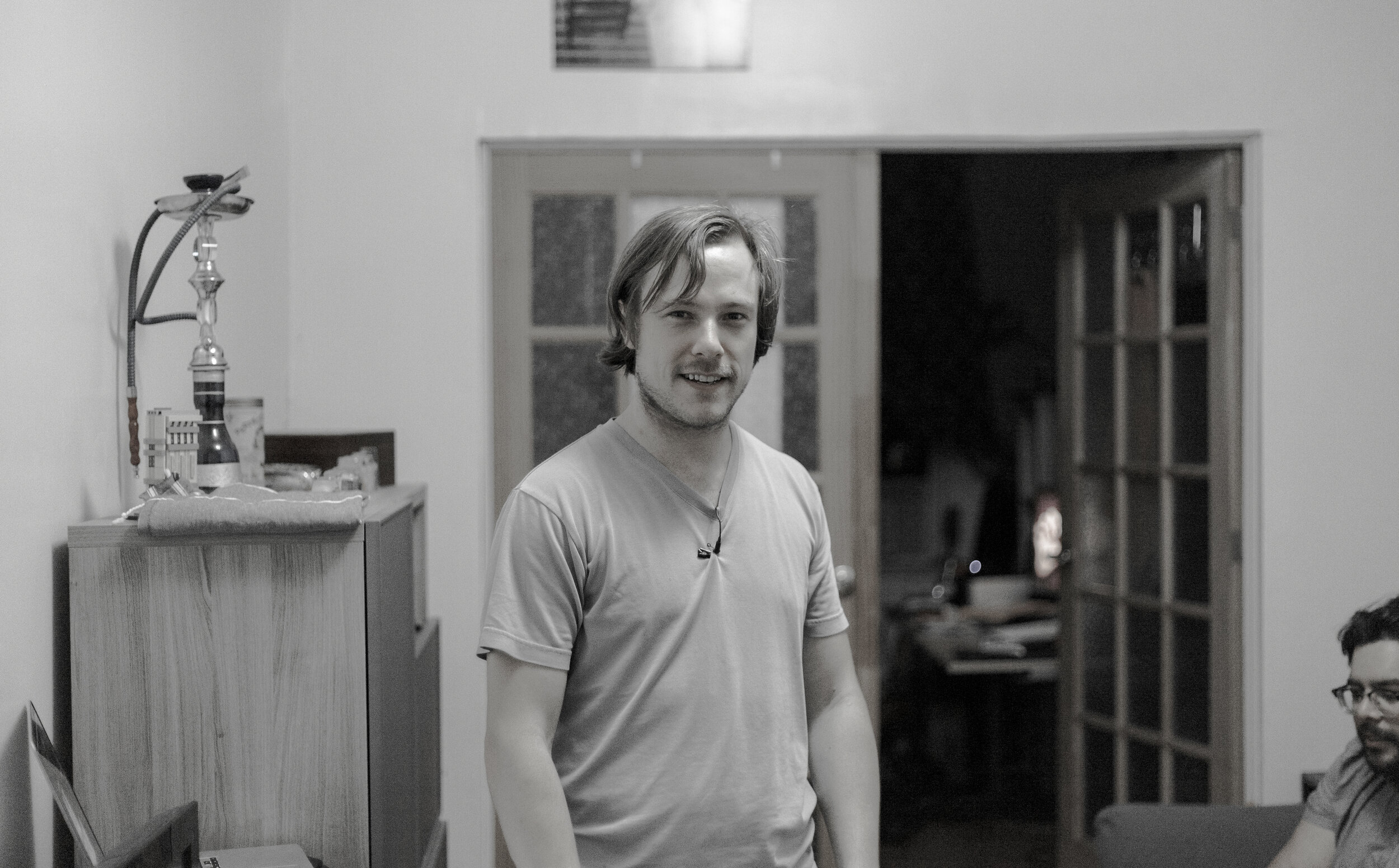
Appointed contributor, Rebecca Stern.

Appointed contributor, Rebecca Stern.

Credits for podcast:

Production Company - Fourwind Films

Appointed Contributor - Rebecca Stern

Host - Justin Joseph Hall

Sound Mixer & Additional Music - Brian Trahan

Line Producer - Laura Davi

The theme song of Season 5 is This Monster by Sun Nectar

Mack Williams: Freddie Gibbs - "Michael Jackson's Return to Gary, IN," What About Bob?

Episode #12 -  Georgia native Director and Animator Mack Williams makes everyone laugh for hours with his stories and film choices as the appointed contributor. Mack is a graceful director and animator who makes working feel like play. His versatility in the commercial world as well as on creative content is always a notch above the rest. He works on a creative level with a fine knowledge for quality post-production on lower budgets. On top of that, Mack makes an incredible drinking partner. 

Our screening took place in Bushwick at Fourwind Films’ headquarters where for the first film, Mack presented a short animated documentary that he directed Michael Jackson’s Return to Gary, IN (2013). It’s based off a true story told by Freddie Gibbs for the Pitchfork series FRAMES. Mack graces us with his knowledge of animation workflow as well as stories of creating various cartoons for Cartoon Network, Pitchfork, and Showtime.

For the feature, Mack presented “What About Bob?” (1991), directed by Frank Oz. Mack discusses Richard Dreyfuss’ role in the film and why he makes it great. During the film, we served fried chicken, corn on the cob, and mashed potatoes for everybody to enjoy.

For more info on Mack, check out the Facebook page for his company Pig Apple.

Additional music credits to Sun Nectar. Theme music by Salitros’ Riding Rainbow.

Credits:

Host - Justin Joseph Hall

Location & Production Company - Fourwind Films

Mack Williams Director/Animator & Simon

Mack Williams Director/Animator & Simon

Transcript:

00;05;00;00 - 00;41;00;00

Justin Joseph Hall:

Hi, my name is Justin Joseph Hall, owner of Fourwind Films. This is Feature & a short, which is a monthly screening hosted by Fourwind Films, where an appointed contributor presents their chosen motion picture and a short movie. There is only one condition for the screening selection. The presenter must have been directly involved with one picture, but not the other.

This week, our presenter is Mack Williams, a director and animator who is currently working on Our Cartoon President. Mack is the most gracious and easy person to work with who always finds a solution and makes your product better than you thought it could be.

00;41;00;00 - 00;44;00;00

Mack Williams:

Yeah. I, I'm, I’m Mack. Hey, I like your shoes.

00;44;00;00

Audience:

(laughter)

00;46;00;00

Audience:

Actually, me too. 

00;47;00;00 - 00;56;00;00

Mack Williams:

It was kind of a weird situation, as like, I went to school to study and studied animation and then I immediately got a job out of college being an animator and then I’ve done that ever since, so.

00;56;00;00

Audience:

(laughter)

00;56;00;00 - 00;01;18;00

Mack Williams:

I'm very weird in that way. I started out, uh I worked for a show on Adult Swim called uh Sealab 2021 and then we worked on a show called Frisky Dingo for Adult Swim. And then I was on the creative team that developed Archer and then I directed the first season of Archer. Archer started in a house that was about twice as big as the apartment we're in right now.

00;01;18;00

Audience:

(laughter)

00;01;19;00 - 00;01;25;00

Mack Williams:

And there was like six of us that made the pilot uh and then I moved to New York and became a freelancer.

00;01;26;00 - 00;01;30;00

Maggie Adelaye:

Since you're background in anima-animation or is it, it just like in production but you ended up in animation?

00;01;31;00 - 00;01;56;00

Mack Williams:

I've done a little bit of, like, live action production here and there. Um, but my background is almost totally like comedy, adult-oriented animation. And then when I moved to New York, I actually ended up doing like tons and tons of motion graphics and things like that, just because that's what the freelance market here is more like. Animation in New York is actually, there's a lot of preschool shows here and there's a few, like, comedy shows, uh, I saw in L.A. mostly and then Atlanta.

00;01;56;00

Audience:

Archer’s…

00;01;57;00 - 00;01;58;00

Mack Williams:

Archer's in Atlanta. Yep.

00;01;58;00 - 00;01;59;00

Audience:

Are you from, from Atlanta or are you?

00;01;59;00 - 00;02;01;00

Mack Williams:

Yeah, I'm from Georgia. I grew up about four hours south-

00;02;01;00 

Audience:

I was born in Atlanta

00;02;02;00

Mack Williams: 

of Atlanta.

00;02;02;00

Maggie Adeleye:

I’m from Still Mountain.

00;02;03;00 - 00;02;04;00

Mack Williams:

Oh, okay. All right.  You should go sign my petition because it's got a lot of signatures, like 50,000 signatures. It's to add Outkast riding in a Cadillac next to the Confederate generals.

00;02;14;00

Audience:

(laughter)

00;02;16;00

Mack Williams:

It's like, I just strive to bring balance to the force.

00;02;20;00 - 00;02;25;00

Mack Williams:

But, but yeah, no. Or, or destroy it; or destroy it. It's fine with me too also.

00;02;25;00

Maggie Adeleye:

Either way.

00;02;26;00

Audience:

Yeah.

00;02;27;00 - 00;02;41;00

Justin Joseph Hall (as narrator):

Mack brought a short film he did a while back for Pitchfork in a series called FRAMES where they interviewed a few artists. The particular picture that he brought was an interview of Freddie Gibbs, and it's entitled “Michael Jackson's Return to Gary, Indiana.”

00;02;41;00 - 00;03;45;00

Mack Williams:

I did a series of uh shorts for Pitchfork, the music website, and uh all of them are, uh, mostly storytelling shorts where a musical artist comes on and tells a brief, very funny story about something that happened to them. And this is just like an animated version of this, and this one is uh the rapper Freddie Gibbs. He's talking about um, he's from Gary, Indiana, which is the hometown of The Jackson 5 and Michael Jackson grew up there. Uh, and so this is a story about a time that Michael Jackson came back to Gary, Indiana, to visit. And this was a huge, huge event in the community. 

The storytelling animated thing, like, that's like a real go-to quick content idea that you can see on, like, tons of websites and so Pitchfork was getting into that. And so when I'm directing shorts like this, I usually have my hand in little bit of all of it, but then I, you know, I try to hire freelancers who are better than me at their given task so that it improves the total product. They always provided me the audio uh

00;03;45;00

Audience:

Okay.

00;03;46;00 - 00;04;59;00

Mack Williams:

first, like there was never a written version. I would just edit it further without telling them usually, I don't, because I would, like, cut it unnoticeably tighter, like, to them, but I was, like, saving me 20 seconds of animation or something. And they just like doing with hip-hop artists better, because they felt like hip-hop artists told better stories and based on the ones they did, I think that's unquestionably true.

Like I did one with Danny Brown that’s really, really funny. And I did one with the GZA, which was more about like the birth of hip-hop in the Bronx.  So that one was really interesting. Actually if you go on YouTube, my username is macklikeatruck, and I have a playlist with all of them but I sent Justin a few of them to pick which one he liked best because they all are kind of special to me.

These are like my very favorite things I've worked on, I think, because I got to do them, not by myself, but like I was coming into my own as a director where I wasn't really supervised by anyone because, um, the guy who produced all these is a guy named R.J. Bentler, who actually isn't with Pitchfork any longer but he was sort of their Head of Video, and he's one of my very favorite people I've ever been fortunate enough to work with. But anyway, they paid for me to go to Sundance and, like, show my short that I made. It was sponsored by Dell, so I had to make it on a Dell computer

00;04;59;00

Audience:

(laughter)

00;05;00;00 - 00;05;10;00

Mack Williams:

and I'm a hardcore Apple guy. Then, I got to show my short that I made and, like, give a brief presentation about how cool it was I made it on a Dell computer.

00;05;11;00

Audience:

(laughter)

00;05;12;00 - 00;05;15;00

Mack Williams:

Um, and then I got to keep the computer. And I gave it, I gave, it to my sister. And so I had a really, really great run with Pitchfork. I don't know if, when I'll get to do those again.

00;05;23;00 - 00;05;26;00

Justin Joseph Hall:

What do you actually, like, when you go into it, do you get the audio for everything?

00;05;26;00 - 00;05;34;00

Mack Williams:

After I listen to it, I would think about what I, what I wanted to do and then when I have a conversation with R.J., the producer, and talk about, like, what he kind of was already thinking about

00;05;34;00

Audience:

Oh, okay.

00;05;34;00 - 00;06;26;00

Mack Williams:

because he had really great ideas also. And so, a lot of times he would kind of steer my direction. But one of the things especially, I did a run of like 3 or 4, and if you look at them visually they're all very different. They look very different. That was intentional because I felt like this was an opportunity for me to really come into my own as a director, and I wanted them to all look different and to be animated in a different way or different style so that I could like- well, two things, one so I could show what I could do, but also so I could play around and see what I like to do. 

I think I sent you one that was Danny Brown, and that one's just like a straight-up parody of Hanna-Barbera cartoons with like, where the characters are all cats and dogs and stuff, and uh it was it, it was like a parody of Top Cat which was a very terrible Hanna-Barbera cartoon that was like a third-rate Snagglepuss-type character. I’m kind of throwing Top Cat shade, but that’s fine.

00;06;27;00

Audience:

(laughter)

00;06;27;00 - 00;07;00;00

Mack Williams:

Um, and then I did one where, with Waka Flocka Flame that was a parody of, like, the old Peanuts animated specials. Um and then like, you saw the Melvins one which was, you know, just black and white, more like. It was, the idea of it was like, it’s written, it was like doodles on your school paper in high school was sort of like my aesthetic idea for that one. And they all, and like the Freddie Gibbs one, it looks different than all those ones I just mentioned. Um and that was, that was intentional and that was very much R.J., he was very, very supportive of, like, me doing things a little different.

00;07;00;00 - 00;07;04;00

Justin Joseph Hall (as narrator):

We watched “Michael Jackson’s Return to Gary, Indiana,” and then we had a quick discussion.

00;07;05;00 - 00;07;17;00

Justin Joseph Hall:

Like, your animation is, is, it's not natural world movements. It's, it's a little cartoony and I always like, like, sort of has a joke and just the, just the movements that they have. What makes you steer away a little bit from realism?

00;07;18;00

Mack Williams:

Oh.

00;07;18;00 - 00;07;20;00

Justin Joseph Hall:

And what makes you go more towards it?

00;07;20;00 - 00;07;28;00

Mack Williams:

I have a very good answer for why I avoid doing more animation like what you're talking about and it’s, and it’s talent. It's that I would be really shitty at it.

00;07;28;00

Audience:

(laughter)

00;07;29;00 - 00;09;02;00

Mack Williams:

Um I mean, I, my, my, everything you guys saw that I did is, is all done in uh After Effects and there's some traditional, like, 2D frame-by-frame animation in there but very little. For the most part, I do what's called limited animation, which means that um I'm trying to do things on a low budget quick turnaround quickly and get the most I can out of like the fewest number of drawings that I have to make. Um, and that's sort of what I started my career doing because Sealab was totally in After Effects, Frisky Dingos totally in After Effects. 

Archer now is, like, four different types of software that they put all together but when we started, it was just After Effects. Um, on Our Cartoon President now that I'm working on directing, we actually have quite a lot of traditional 2D-animated uh stuff, but it's mostly um, uh hand gestures and more brief actions. The reason we are able to use more hand-drawn animation is we have tons and tons of super amazing, talented animators that work with us. 14 now.

If you're talking about like, like Rick and Morty or something like that where they ship the animation overseas to Canada or to Korea or something like that, like, I mean it's, I don't know, dozens and dozens of, of traditional hand-drawn animators. But uh for, for me, in the shows that

I've worked on which are limited to have 14, that's like amazing. You know, 12, you're drawing 12 frames a second or 24 in some cases. Um, our shows, we uh, do at 12. All the Looney Tunes and stuff that you watched as a kid, like those are all 12 frames a second.

00;09;03;00

Audience:

Oh really?

00;09;03;00 - 00;09;07;00

Mack Williams:

Yeah, yeah, yeah. Lots of people do stuff on like, uh, threes or fours. Like we call

00;09;08;00

Audience:

Oh, okay.

00;09;08;00 - 00;09;13;00

Mack Williams:

it on, like, like we say on two, “on twos” means like every 2 frames of 24,

00;09;14;00

Audience:

Yeah.

00;09;14;00 - 00;09;48;00

Mack Williams:

there is some motion. Depending on what you're doing, you do stuff on threes, do stuff on fours, and also that's like if you were doing like a really low budget independent short that you wanted to do it, uh, you know, 8 frames a second or whatever, it's still look really fucking cool if you did it well. It doesn't, animation is very very forgiving in that way. It's absolutely a stylistic choice. Um, the first season of Cartoon President, a lot of it is on 24 frames because we're using this new software that didn't really play well with 12 frames. Um, but now we've, we've kind of got it figured out and all the character stuff is 12 frames.

00;09;48;00 - 00;09;53;00

Maggie Adeleye:

As far as I know that the, the, the Cartoon President they started on, uh, (unintelligible) show.

00;09;53;00

Mack Williams:

Yup.

00;09;54;00

Maggie Adeleye:

But the night one.

00;09;55;00 - 00;10;37;00

Mack Williams:

This new piece of software, Adobe Character Animator came out and they got the idea somehow, hey, let's do an interview with an actual cartoon character because the whole idea behind uh Character Animator is to do, you could do like live streaming animation. You build the puppets and then you sit in from a we- a webcam and animate the puppet that way, and you can make it do certain things, you preset animations. And so they started doing that uh on The Late Show and Colbert was interviewing Cartoon Trump. And then at some point someone uh said, well what if we made this into its own show? And uh Tim was like, no, that's impossible, we can't do that. Uh (laughs) and they were like, too late, we just sold it to Showtime.

00;10;37;00

Audience:

(laughter)

00;10;39;00 - 00;11;29;00

Mack Williams:

And, uh, so then I was brought in with, uh, by Tim with another director, Steve Connor, uh, our director, Karyl Goretzki, and a whole bunch of other people to figure out how to make a half-hour animated show in 11 weeks with this brand new piece of software no one's ever used before. And we were like, you guys have Slack?  Like, you guys like Slack? So we had like, yeah so we’re, we’re, we’re, I'm like in a Slack channel literally chatting with, like, the people who invented Adobe After Effects who also invented this software and telling them, like, what's wrong with their software and what features we need. We would run into issues with the software where we're trying to do something and it just won't do it. And like, we can tell them about these things and they'll be like, okay, well hold on, we just wrote a script that does all of that for you with a push of a button.

00;11;29;00

Audience:

Yeah.

00;11;29;00 - 00;11;42;00

Mack Williams:

Okay, now, okay, there's a bug that does this. Okay, well, give us two days. All right, now the bug is fixed and it doesn't do that anymore. Adobe wants to be associated with hit shows. It's a mutually beneficial relationship for sure.

00;11;43;00 - 00;11;48;00

Justin Joseph Hall:

I guess the other question is like, what do you see as a trope that gets annoying when you see other people do? Because you say that, um.

00;11;48;00 - 00;12;09;00

Mack Williams:

I don't know that there's anything in particular that annoys me. I will say that um, let's say you're animating a series like I'm on now, like Our Cartoon President. Well, the Cartoon President lives in the White House and he works in the Oval Office, and we get to reuse those backgrounds every episode and we reuse all the gestures and the facial expressions

00;12;09;00

Audience:

Yeah.

00;12;10;00 - 00;12;26;00

Mack Williams:

he does every episode. When you're doing a series of these storytelling things, every single bit of it is brand new and used only once every time you do this. And so guess what? It costs more per episode

00;12;26;00

Audience:

Yeah.

00;12;27;00 - 00;12;32;00

Mack Williams:

than like a ten episode animated series about the same characters would cost per episode.

00;12;33;00 - 00;12;43;00

Justin Joseph Hall:

But you also do the, the video editing afterwards, right? Like, like you do the animations and I assume that they're, they have handles on them and then you edit it a little bit?

00;12;43;00 - 00;13;06;00

Mack Williams:

In animation, it's very expensive. If you want to add two-second handles to every single shot, that can add up to a lot of work and time. So you really do your editing in the animatic stage. So you have a storyboard, you cut that storyboard to the audio. In an ideal world, although I've rarely ever worked on a project where it worked out this way, that's where you lock, lock your edit. Um, lock.

00;13;06;00

Audience:

(laughter)

00;13;07;00 - 00;13;15;00

Mack Williams:

Um, I'm making quote fingers for the podcast audience. Certainly there are sometimes more edits made, but usually, like, it's what it is by that point.

00;13;16;00 - 00;13;30;00

Justin Joseph Hall (as narrator):

Mack’s second film that he brought was his favorite film which is What About Bob?, one of the most iconic performances by Bill Murray in his entire career. It is really goofy and they used to play it on television all the time.

00;13;31;00 - 00;13;38;00

Mack Williams:

This is 100%, this is legit not a joke, my very favorite movie. And it's because I've watched it a numerous times on TBS.

00;13;39;00

Audience:

(laughter)

00;13;39;00 - 00;13;47;00

Mack Williams:

as a kid, seriously. Like, me and my friend Joey in um middle school in, like, high school. Like, I don't even know how many times I've watched this movie.

00;13;48;00 - 00;14;17;00

Justin Joseph Hall (as narrator):

Coincidentally, the two films that Mack brought featured the same food which was fried chicken. So while we were showing What About Bob?, we brought out fried chicken, corn on the cob, and mashed potatoes for everybody to enjoy. This was the first time that there was no alcohol served in either of the films shown on Feature & a short, but we had libations around anyway. After the viewing, there was a small discussion on Bill Murray versus Richard Dreyfuss.

00;14;17;00 - 00;14;23;00

Mack Williams:

It's one of the few Bill Murray movies where Bill Murray is not the most funny person in the movie, in my opinion.

00;14;23;00 - 00;14;24;00

Justin Joseph Hall:

You don't think so?

00;14;24;00 - 00;14;27;00

Mack Williams:

Richard Dreyfuss, this was Richard Dreyfuss’ finest performance.

00;14;28;00 - 00;14;30;00

Justin Joseph Hall:

I, uh, just say, tell us what I tell you the other day.

00;14;31;00 - 00;14;32;00

Thomas Kelsey:

Scene was terrible.

00;14;33;00 - 00;14;36;00

Mack Williams:

No, I love it. It's so, he's so over-the-top.

00;14;36;00

Audience:

(laughter)

00;14;37;00 - 00;14;44;00

Mack Williams:

Everything about Richard Dreyfuss in this movie is so ridiculously over-the-top and outrageous and I love it.

00;14;44;00 - 00;14;50;00

Justin Joseph Hall (as narrator):

After, the discussion got pretty lively and called it night.

00;14;50;00

Mack Williams:

Showtime rules.

00;14;51;00

Mack Williams (robotic voice):

but HBO sucks.

00;14;52;00

Audience:

(laughter)

00;14;54;00

Mack Williams (robotic voice):

Showtime rules, but HBO sucks.

00;14;56;00

Audience:

(laughter)

00;14;59;00

Mack Williams (robotic voice):

Showtime forever.

00;15;00;00

Audience:

(laughter)

00;15;01;00

Mack Williams (robotic voice):

Um, that was…

00;15;04;00 - 00;15;33;00

Justin Joseph Hall (as narrator):

Thank you for listening to Feature & a short. We have a great guest for you again next month. If you have any comments and want to write us or figure out how to come to a live taping of this show, just hit us up on social media and that is @fourwindfilms. That is f-o-u-r-w-i-n-d-f-i-l-m-s. We'll speak to you again shortly. Peace.

Shonali Bhowmik: The Hike, Valley Girl

Episode #11 - Nashville native Shonali Bhowmik graces us with her humor and interesting stories as the appointed contributor. As an Actress, Director and Producer, she’s one of the most charismatic people you will ever meet and is always working on various artistic endeavors. She’s incredibly thoughtful. She also has an incredible network of friends and collaborators that surround her at all times. 

She’s a frequent collaborator with us for the live podcast she hosts with Christian Felix called We Don’t Even Know, and is the director, lead actor, writer and producer of Sardines Out of a Can, a short movie Fourwind helped create before Fourwind was even a company. 

Shonali is also well known in the internet comedy world for the group Variety SHAC which began as a comedic quartet consisting of Shonali, Heather Lawless, Andrea Rosen, and Chelsea Peretti. Our screening took place in Bushwick at Fourwind Films’ headquarters where for her short picture, Shonali presented the SHAC’s latest release, The Hike (2018), which explores the SHAC members meeting up to go on a hike after not seeing each other in a while. During the discussion Shonali celebrates women in film, and sheds light on Variety SHAC’s influences on various comedians in the industry.

For the feature, Shonali presented the Martha Coolidge film Valley Girl (1983). She discusses the casting process for the film that lead to Nicolas Cage playing the lead male. During the film, we had American food which included hot dogs, corn dogs, sushi with peanut butter, and we topped it all off with some prom punch. The episode is a laugh riot and full of references to movie inspired snacks.

Episode hosted by Justin Joseph Hall.

Shonali Bhowmik - Actress/Director/Producer

Shonali Bhowmik - Actress/Director/Producer

Credits:

Host - Justin Joseph Hall

Location & Production Company - Fourwind Films

Soundtrack - Salitros Ridin’ Rainbow

Transcript:

00;00;07;25 - 00;01;02;28

Justin Joseph Hall:

Welcome to Season 3 of Feature & a short, where an appointed contributor presents their chosen feature motion picture and a short movie. There's only one condition for the screening, presenter must have been directly involved with one picture, but not the other. This is Justin Joseph Hall, owner of Fourwind Films. 

To kick the season off, our presenter is Shonali Bhowmik, someone who Fourwind Films works with a lot, specifically on the other podcast that we're involved with called We Don’t Even Know that we also have done monthly and for a much longer time. Listeners here, if you guys enjoy this, you should definitely check that out. 

On top of that, before Fourwind was a company, Shonali created a movie that she happily let us be a part of called Sardines Out Of A Can. So we were overjoyed to have her here to talk about some of her other amazing accomplishments, including Variety SHAC for her short picture. And so she decided to present The Hike.

00;01;03;01 - 00;01;38;00

Shonali Bhowmik:

You guys, this is a short film by my comedy group. The SHAC is Shonali, Heather, Andrea, Chelsea. Shonali Bhowmik, Heather Lawless, Andrea Rosen, Chelsea Peretti. The three of them are amazing stand-ups and talents in their own right. Together, we are Variety SHAC. I mean a few years after I moved to New York City, I remember noticing that they always would have one-woman show which is actually good by today's standards even. But I noticed there wasn't a gathering where women were leading the evening, and we used to actually just dance together at the end of the night. It started as a dance group, actually.

00;01;38;00 - 00;01;40;00

Audience:

(laughter)

00;01;38;00 - 00;02;15;26

Shonali Bhowmik:

And then, we just started to make short films. 

In the New York City comedy scene, we did really well. We won like a Village Voice award, we were in Time Out and we eventually got some TV pilots. But they live in California, in L.A. I live here. So this past November, after like 5 or 6 years of not making shorts, we got together because we realized we missed each other and still to this day, we don't feel like anyone's making what we made. And um, um, but the main reason I'm sharing this film is because I want to encourage everyone to, to make films on your own.  And this was like very DIY,

00;02;15;26 - 00;03;00;00

Shonali Bhowmik:

we got friends to shoot, friends to edit. Um, another thing that I think is important about this group and it needs to be made clear, these are four women that have now been doing comedy and music and film for a long time. But I think one of the biggest and most important things about sharing our work is that we still keep continuously honoring men and their talent, and there is no part of me that believes there weren't amazing women throughout history that were also leaders in all of these movements of art, and we need to start celebrating these women. So I'm celebrating even though I'm, I'm a member, I'm going to celebrate Variety SHAC with you guys. That's a big reason why I wanted to bring this to you. Yeah. Go ladies!

00;03;00;00 - 00;03;02;00

Audience:

(claps and cheers)

00;03;03;05 - 00;03;08;00

Justin Joseph Hall (as narrator):

After watching The Hike, which easily got the most laughs of any showing

00;03;08;00 - 00;03;11;00

Audience:

(laughter)

00;03;09;00 - 00;03;13;29

Justin Joseph Hall (as narrator):

that we've had here on Feature & a short, we had a quick discussion about it.

00;03;14;04 - 00;03;19;00

Shonali Bhowmik:

This only took, really only took an hour and a half.

00;03;20;00

Audience:

Wow. 

00;03;20;00 - 00;03;26;00

Shonali Bhowmik:

To me, that's what's crazy is just like the headspace of like, oh, we're just going to go and get it done and whatever happens, happens.

00;03;27;00

Audience:

Yeah.

00;03;27;00 - 00;03;40;00

Shonali Bhowmik:

And that in a way, lack of pressure is why it's so fun, you know? You're not overthinking. We stop and we evaluate what we just did. And then we, we might do it over to get reaction shots or whatever, right?

00;03;40;00

Justin Joseph Hall:

Okay.

00;03;40;00 - 00;03;51;00

Shonali Bhowmik:

But there's a lot of jump cuts and, like, obvious, like, moments where Heather took off her jacket and, like, she has on a different ja- that’s like, who care- like, it's not about continuity and being perfect

00;03;51;00

Audience:

Yeah.

00;03;51;00 - 00;03;55;00

Shonali Bhowmik:

where the placement of, it's about having fun with your friends.

00;03;54;00

Audience:

Yeah.

00;03;56;00 - 00;04;00;00

Shonali Bhowmik:

The editing process is tough, but it's only, like most of our shorts were six minutes.

00;04;01;04 - 00;04;03;00

Audience:

Sorry, how did the four of you edit it together? 

00;04;03;00 - 00;05;19;00

Shonali Bhowmik:

So there's such a learning curve with this. When it first started, we all four would be in a room with an editor, and that was so intense to have four, five editors? Like, I can't believe now that the editors let us do that. Then, then, then we started getting one lead person from us to sit with the editor and that person would pick clips that were the best and then the other three would come in, and then finally it was each one of us would take turns, then we would write notes.  You know, and, and at the time we were making a short a month and we would share a new short at every one of our live shows at the UCB. 

So we were not just having a live show we had to prepare for, we were also doing this. I mean, that's a lot. We wouldn't even write a script, we would just do beats. But the thing that's so beautiful about working with them is we know each other so well, who precisely is not going to be comfortable, who's going to be angry, who's- it just happens. Even though we're all very uniquely different, we do come from the same place of silliness, absurdist, sort of take, and also like, real talk. So, that's what I'm so proud of, uh, the Variety SHAC for.

00;05;19;00 - 00;05;26;00

Maggie Adeleye:

Uh, you mentioned Fred Armisen and part of some of the like, like y’all’s deadpan and how that, it would like just drop really quickly, really reminded me of Portlandia (chuckles)

00;05;27;00

Shonali Bhowmik:

Yeah!

00;05;27;00

Audience:

So (laughs).

00;05;28;00

Shonali Bhowmik:

Yes!

00;05;28;00 - 00;05;29;00

Audience:

I really, I really liked that.

00;05;29;00 - 00;06;13;00

Shonali Bhowmik:

Thank you. And he, he literally uh texted me months ago and said, you know I'm binge- I'm binge-watching Variety SHAC videos this weekend and I realize how much your work is influenced Portlandia. And I'm like, yeah!  Um, and then Michael Luciano, he’s put this on Twitter recently. He's like, I just wish everyone could see this DVD.

He goes, I was a kid. I think he was a teenager at that time. And he said, I would go to their shows and they really taught me everything about how to make art and to do comedy shows. I started doing it with my friends and now he has an animated show on HBO called Animals. 

00;06;14;00

Shonali Bhowmik:

Paul…

00;06;14;00

Audience:

Paul Scheer?

00;06;15;00 - 00;06;16;00

Shonali Bhowmik:

Paul Scheer.

00;06;16;00

Audience:

Yeah.

00;06;16;26 - 00;06;25;00

Shonali Bhowmik:

So Paul Scheer, I just found an email from Paul Scheer, uh, trying to buy Variety SHAC V- DVD, VD, DVD

00;06;25;00

Audience:

Oh, really?

00;06;26;00 - 00;06;28;00

Shonali Bhowmik:

like, five times and I didn't see it.

00;06;28;00

Audience:

(laughter)

00;06;29;00 - 00;06;30;00

Audience:

Oh, really?

00;06;30;00 - 00;06;36;00

Shonali Bhowmik:

And I, he had to get his money back, I felt so bad. I haven't talked- I mean, this is years. Like, I just noticed this now.

00;06;35;00 - 00;06;36;00

Audience:

Oh, wow.

00;06;36;00 - 00;06;39;00

Shonali Bhowmik:

He tried to purchase it like five years ago.

00;06;39;00

Audience:

(laughter)

00;06;39;25 - 00;06;42;00

Shonali Bhowmik:

And I kept seeing, that's Paul Scheer! He’s trying to buy…

00;06;43;00

Justin Joseph Hall:

He really needs…

00;06;43;00

Shonali Bhowmik:

Variety-

00;06;43;00 - 00;06;44;00

Justin Joseph Hall:

He really needs the money back.

00;06;44;00 - 00;06;45;00

Shonali Bhowmik:

SHAC DVD.

00;06;45;00

Audience:

(laughter)

00;06;46;00 - 00;06;53;00

Shonali Bhowmik:

He got his money back, like they’ll instantly give it to you like, he never got it. But I was like, oh my god we're not even, not even able to, like, sell DVDs

00;06;52;00

Audience:

(laughter)

00;06;53;00 - 00;07;19;00

Shonali Bhowmik:

to like famous comedians and movie stars. But um there's only a few people today that, that will celebrate us to the world out like John Early, Kate Berlant, they always, they will say to the world, you guys are our influences. And, and the thing is we don't, you know, we just put it on YouTube and that's the beauty of social media. Like right away, it was like, oh my god, you're back! Thank God,

00;07;19;00

Audience:

(laughter)

00;07;19;00 - 00;07;44;25

Shonali Bhowmik:

this is my best day. This is my- the SHAC is back! You know, it was like, so beautiful to see this build of a fanbase that hasn't seen us do something new in five years, you know? That's the beauty of, of making films on your own, of being around good people that have good energy that want to make something.  It's, that’s what's beautiful about art. It’s so beautiful. Guys, I'm gonna cry.

00;07;44;28 - 00;07;49;25

Justin Joseph Hall (as narrator):

After, we got to watch Valley Girl, a romantic comedy from 1983.

00;07;49;29 - 00;07;57;00

Shonali Bhowmik:

I'm so excited to watch this with you guys. This is one of my favorite movies and if you don't like it, just don't tell me. Um,

00;07;57;00

Audience:

(laughter)

00;07;58;00 - 00;08;01;00

Shonali Bhowmik:

because I seem to only like people that like this movie.

00;08;01;00

Audience:

(laughter)

00;08;02;00 - 00;09;29;00

Shonali Bhowmik:

Um, this is done in 1983 and at the time Frank Zappa had just released his song with his daughter called Valley Girl. And this script came into the hands of this director, Martha Coolidge. So she is a female director who went to art school here in New York and this script was called Valley Girl and Frank Zappa did not want it to be produced without his approval, but it didn’t work out. Valley Girl got made. This movie also was the launching pad for Nicolas Cage’s career, and quick story about that because it's so cool, is that when she was casting this movie, she was like, I'm so tired of seeing all the pretty boys.

So she went to the rejection pile headshots. And side note is that Martha Coolidge had been for three years working with Francis Ford Coppola. Uh, he had a film production company called Zoe, Zoetrope, so she knew him well. She finds this one, it says Nic Cage, and she goes, we need somebody like this please, like just get him to come in. And so she says the minute she saw him, you know, she was like, oh my god, he's got to be it. When she asked him to be the lead of this movie, he said, no, I'm sorry, I can't do it, I'm doing this other film named Rumble Fish, I have this small part in this other film. And uh she, she was like, listen Nic, I'm going to make you a star.

00;09;30;03 - 00;09;55;00

You need to be the lead in my movie, I actually am friends with Francis Ford Coppola and I could call him. So she calls Francis Ford Coppola’s production company and she's saying, do you know that you have this guy, Nic Cage? I need to work out his schedule, I want him to be in my movie. She calls a casting person and he's like, we don't have a Nic Cage in Rumble Fish. And uh, and then finally the guy goes, well we have a Nicolas Coppola.

00;09;56;00

Audience:

(laughter)

00;09;56;00 - 00;09;57;00

Shonali Bhowmik:

And she was like, what?

00;09;58;00

Audience:

(laughter)

00;09;58;00 - 00;10;33;00

Shonali Bhowmik:

And she goes, oh that's Francis’s nephew, you didn't know that? So that was the first time he had sent out Nic Cage to just try to avoid being known as Francis Ford Coppola's nephew and so he got cast without that being known. And this is the launchpad for his career. But this is such a sweet movie. Captures the 80’s, like, so beautifully. And the music, I think, the reason Modern English’s I Melt With You is a song we all know it’s because of this movie. She had no budget, she had $300,000 and they made $18 million off of this movie.

00;10;33;00

Audience:

Wow.

00;10;34;00 - 00;10;37;00

Shonali Bhowmik:

Ugh, the clothes, the music, young love, it's just like.

00;10;37;00 - 00;10;38;00

Audience:

Let’s we just watch it?

00;10;38;19 - 00;10;40;00

Shonali Bhowmik:

Yes, let's watch it!

00;10;40;00

Audience:

(laughter)

00;10;41;00

Shonali Bhowmik:

Let’s watch it…

00;10;41;00 - 00;10;50;00

Justin Joseph Hall (as narrator):

As we've been doing this, we are now on our 11th episode. And as we review the films beforehand, I've never seen a film with so much food in it.

00;10;51;00 - 00;10;56;00

Audience:

Did you watch the Valley Girl prepped with like a notepad and like, they take like food and snacks?

00;10;56;00

Shonali Bhowmik:

Yeah. 

00;10;56;00 - 10;57;00

Audience:

That's amazing you did that!

00;10;58;00

Audience:

It was like a very…

00;10;58;00 - 00;10;59;00

Audience:

If you watched it

00;10;59;00

Audience

No, I just guessed.

00;11;00;00 - 00;11;01;00

Audience:

Yeah, but you watched it.

00;11;01;00

Audience:

Like.

00;11;01;00

Audience:

(laughter)

00;11;03;10 - 00;11;15;00

Justin Joseph Hall (as narrator):

So, we have a ton of American food. Hot dogs, corn dogs, sushi with peanut butter, and we topped it all off with some prom punch in order to imbibe a little bit during the screening.

00;11;15;00 - 00;11;18;00

Shonali Bhowmik:

Even like the second round, I was like okay, that’s done, they’re done. And then you’re just like, wait…

00;11;19;00

Audience:

Yeah!

00;11;19;00 - 00;11;21;00

Audience:

I would never have noticed how much food they ate.

00;11;21;00

Audience:

(laughter)

00;11;22;00 - 00;11;23;00

Audience:

Right in front of me at the same time-

11;23;00

Shonali Bhowmik:

I’m probably… I noticed…

00;11;25;00

Shonali Bhowmik:

In movies…

00;11;26;00 - 00;11;28;00

Justin Joseph Hall (as narrator):

After, we talked a little bit more about Valley Girl. 

00;11;28;00 - 00;11;33;00

Shonali Bhowmik:

Guys, thank you for this. This was amazing to realize there was all this food in this…

00;11;33;00

Audience:

Yeah, guys…

00;11;34;00 - 00;11;35;00

Audience:

I’ve never seen it.

00;11;35;10 - 00;11;36;00

Shonali Bhowmik:

Can you take a picture of this?

00;11;37;00 - 00;11;38;00

Shonali Bhowmik:

And we ate the sushi!

00;11;38;00 - 00;11;39;00

Shonali Bhowmik:

That was so awesome.

00;11;40;00 - 00;11;42;00

Shonali Bhowmik:

And now we need to spike this.

00;11;42;00

Audience:

(chatter)

00;11;43;00

Audience:

(laughter)

00;11;48;00 - 00;11;50;00

Shonali Bhowmik:

It’s so dumb, it’s so great.

00;11;50;25 - 00;12;13;08

Justin Joseph Hall (as narrator):

So thanks again for listening to Feature & a short. If you want to attend or be a part of the podcast, please just go to our website and shoot us an email. Otherwise, follow us on social media and you can on any social media platform @fourwindfilms, that's at f-o-u-r-w-i-n-d-f-i-l-m-s. I'll talk to you soon. Peace!

Justin Joseph Hall: Long Distance, The Science of Sleep

Episode #9 - Director and Editor Justin Joseph Hall was the appointed contributor. Justin is an independent film director and editor, and the owner of Fourwind Films. He's currently in post-production for his first documentary feature, Frames of Reference, a multi-continental effort that explores localized education across the globe and a short narrative, Prologue. Keep up with him and visual themes on Instagram.

Our screening took place in Bushwick at Fourwind Films’ headquarters where for the first film, Justin presented Long Distance, a one-minute short he directed and released in 2016. The short features Isabel Restrepo and himself as a couple in a long distance relationship. He shares his choice behind excluding dialogue (hint: it has to do with him co-starring in it) and the spontaneity of its origins. 

For the feature, Justin presented La Science des Rêves or The Science of Sleep (2006), directed by Michel Gondry. Discussion centers around the use of foreshadowing and dream sequences in the film, as well as Gondry's other work. During the film, we served six-inch baguette sandwiches which were also featured in the film.

Credits:

Host - Daria Huxley

Location & Production Company - Fourwind Films

Justin Joseph Hall - Director/Editor

Justin Joseph Hall - Director/Editor

Transcript:

0:03 - 0:53

Daria Huxley:

Welcome to Feature & a short, monthly screening hosted by Fourwind Films, where an appointed contributor presents their chosen feature motion picture and a short movie. There's only one condition for a screening selection. The presenter must have been directly involved with one picture, but not the other. My name is Daria Huxley. I am a photographer at Fourwind Films.

Today's presenter is Justin Joseph Hall, who is the owner of Fourwind Films, and he's an editor and director. The first film he's presenting is the short that he directed called Long Distance. Long Distance is a one-minute movie. It's about a long distance relationship between a girl in Arizona and a guy in Paris. Justin was acting along with Isabel Restrepo, who is our friend who lives in L.A. After this short film, we had an even shorter discussion.

0:53 - 1:34

Justin Joseph Hall:

There was no room for titles or credits in that short. Hope you enjoyed it. I made that in 2016 and uh, this was all just shot on vacation when I was bored. I was shooting a documentary in Paris and then when I had time off, I shot this. And then like a year, two years later I shot the, the other part. It’s shot while we were waiting to go to the wedding of my friend. 

And then I finished it in a week in post-production at my house at night. Obviously, that was all toned. I'm not very good at memorizing lines so the film I directed myself in had no lines in it (laughs). So, that was a fun short.

1:35 - 1:49

Daria Huxley (as narrator):

Justin's choice for the feature was the French movie called Science des rêves or Science of Sleep. It is an arthouse movie featuring Charlotte Gainsbourg and Gael García Bernal.

Justin Joseph Hall:

I feel like this movie has the same kind of feeling for it, the same sort of longing. It also happens to take place, I do believe, in Paris. It's by Michel Gondry. I don't know if you guys have seen, he’s pretty famous for his music videos.

Daria Huxley (as narrator):

During the screening of this Michel Gondry movie, we offered six-inch baguette sandwiches to our audience because they were featured in the movie as well. After the film, we had a discussion as a group.

2:13 - 2:33

Audience:

About the use of different languages was really cool, especially in the first dream sequence because everybody's talking at him but it's all French but in gibberish and none of it matches the lip flap at all. And then in the um park, the main character, he's dubbed the entire time but the flap isn’t great, so-

Justin Joseph Hall:

There was a couple of times they did it when they were speaking in-

Audience:

Yeah.

Justin Joseph Hall:

French and then they would talk in English. 

Audience:

Yeah, exactly.

2:38 - 2:39

Justin Joseph Hall:

That’s but that’s right at the beginning. Yeah.

Audience:

Yeah, uh and that was interesting. I really like the mental understanding of all three languages through one person.

2:47 - 2:57

Justin Joseph Hall:

I think it’s very interesting watching it the second time too is that they really suggest something with the way they act, like at the beginning when the two lied about their job but you don't know who's telling the truth.

Audience:

Yeah.

Justin Joseph Hall:

But then they confirm it later on in the film and they did that like 5 or 8 times. 

Audience:

Yeah. 

3:02 - 3:11

Justin Joseph Hall:

Where they really suggest something but they don't confirm it until way later. I brought that other part up too because it reminds me of, like, The Sound and the Fury. Has anybody read that book?

Audience:

Yeah. 

Justin Joseph Hall:

Yeah, you know how they don't tell you anything and then they confirm it like 60 pages later?

Audience:

(laughter)

3:18 - 3:30

Justin Joseph Hall:

To me, it's like the same thing but this is more obvious because you can see social cues that you can’t in the book. So if you guys like this; be sure to watch his music video. He's famous for his music videos. Um, but they have a lot of the animation that’s interesting.

Audience:

I'm just going to ask…

Justin Joseph Hall:

I think he did The White Stripes one.

Audience:

Yeah, I was going to say-

Audience:

Yeah.

Audience:

I definitely heard Jack White in the, in the soundtrack.

Justin Joseph Hall:

Well that was, yeah that was The White Stripes.

Audience:

Yeah.

Justin Joseph Hall:

That's the last album. Then he's done a few Daft Punk videos

Audience:

Oh.

3:44 - 3:50

Justin Joseph Hall:

and a bunch of other stuff. He also did the Eternal Sunshine of the Spotless Mind. But yeah, he doesn't do a lot of features.

3:51 - 4:05

Jasmine Szympruch:

It was nice getting lost in… Like, it took me a minute to catch on that he was acting out his dreams in real life, like.  That… yeah. I felt disjointed with him which was cool.

4:06 - 4:16

Justin Joseph Hall:

Yeah, I like the dream sequence, it’s one of my favorite episodes in The Sopranos, there’s a dream sequence at the end of the season. But I just like watching how other people make it feel like a dream.

Audience:

Sensual…

Daria Huxley (as narrator):

Thank you for listening to Feature & a short. Please follow us @fourwindfilms on social media, at f-o-u-r-w-i-n-d-f-i-l-m-s. Please read our podcast on iTunes, then leave comments. Tell us what you like and what you don't like. Feel free to throw in any ideas because it helps us improve our podcast. Thanks for listening. Till the next time.