
I’m not one who really follows a lot of movie composers, as I know they often work pretty fast, sometimes in a rush being pushed by lots of decision makers who want to put their thumbprint into the music, which I think can affect the quality. It’s the reason I tend to license songs rather than hire a composer, despite usually slightly higher costs.
Then again, some people are just amazing at that workflow and can make something great. To me, there’s no grander example of this than Bernard Herrman, Alfred Hitchcock’s composer who made the incredibly well-known Psycho. What makes him extraordinary is he can do three things that I think most composers are usually good at one or two of these tasks:
Set a tone for any scene. The main idea for any score is to enhance a scene without intruding or overtaking what’s already created, it’s like the opposite of a music video, where visuals are meant to enhance a song.
Unifies the film by creating unique sounds with some sort of motif that establishes itself as an entity while distinguishing it from other films that enhance a similar mood. Herrmann has a distinct sound, but it’s not the same repetitive big drums or pulsing drones or whatever trend seems to be of the day.
Create music with a catchy melody. Something Herrmann does better than anyone else. I really enjoy listening to his scores without seeing the movie along with it.
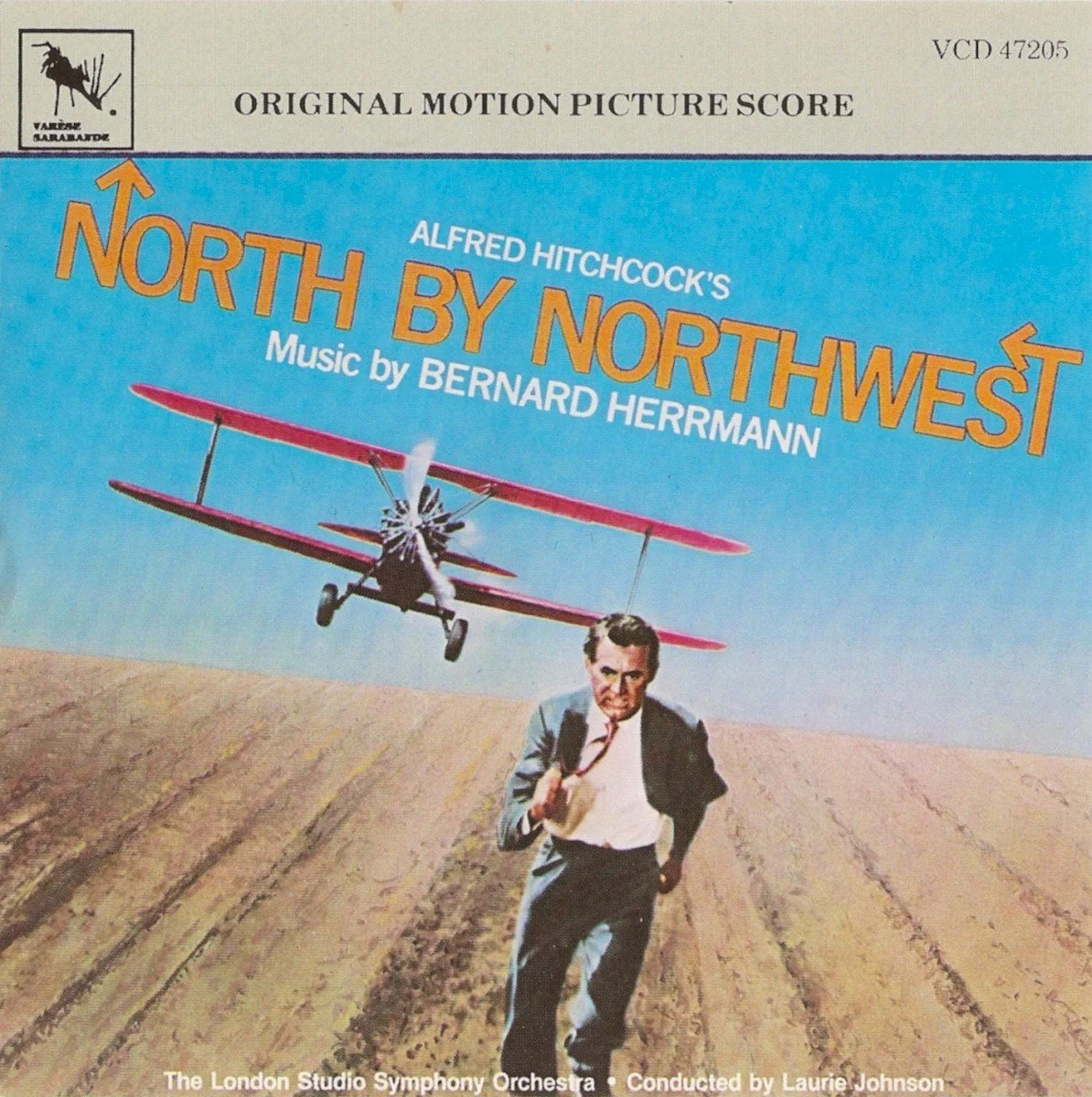
North by Northwest is the ultimate example of all of these points for me, as it is super catchy, enhances scenes, and it’s just as enjoyable without the film to blend into. I really liked North by Northwest the film, but honestly, I don’t remember much of the plot, I more remember the famous shot near the end of the movie with the plane coming for Cary Grant. The score on the other hand I’ve listened to over and over again. It’s great as I can pay attention to it in the foreground, but there are also no lyrics, so I can work with it on.
For example, when you listen to the differences between The Streets, an almost bouncy pulse of wind instruments to The Doors, a more beautiful classical song that still holds a melody. Then you go to the thriller sections like Wild Ride, where it feels like a carnival flying all over the place and a sense of dread that something will go wrong. Car Crash comes after and seamlessly is led with the bounciness of the upbeat songs previously established, but ends in the more classical stringed beauty of the wild ride.
The Knife precedes my favorite melody with its own spinning tune that goes into high pitched instruments falling. Then in the Interlude you finally hear that song that has been stuck in my head so many times, a clarinet that glides down melodically like a feather in a slight breeze. This theme comes back again and again, and it’s a melody that feels fitting for anytime in life, as a Gymnopedie by Erik Satie, a melancholic piece that emotes.
I’m in general a sucker for reed instruments, as I love how it makes it sound so natural and at home. This score is full of Oboes driving the rhythm.
Throughout the grand piece, Herrmann uses more of the wind instruments to bounce and be more unpredictable, whereas the strings stay smooth and in place. Herrmann is able to create drama through harmonic tensions no matter the rhythms he uses. The dynamics within each note or even string crescendos and decrescendos are all dramatic in itself as this thriller never really stops moving.