

Why diversity is important on set and in Post-Production

Diversity is important when making any complex decision.  An artform like making movies is complex in that we really work with three mediums: visual, audio, and time.  Paintings only use visual, music uses audio and time.  It’s that diversity of three different variables that makes movies so effective in my opinion.  You can also add in taste and smell as theatres (and our own podcast Feature & a short) have started to bring what you see in the movies into your mouth and nose to taste what you’re seeing on screen.
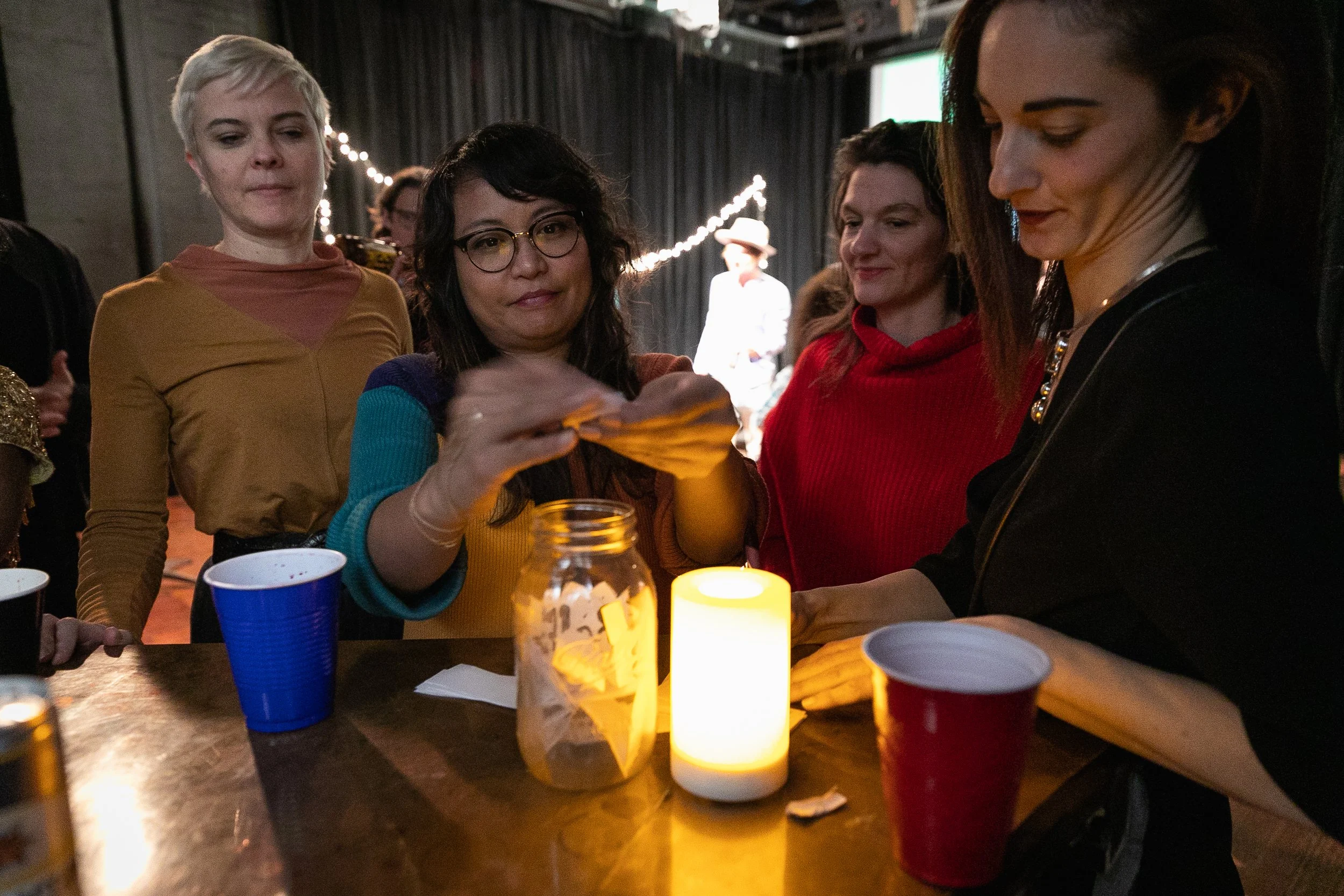
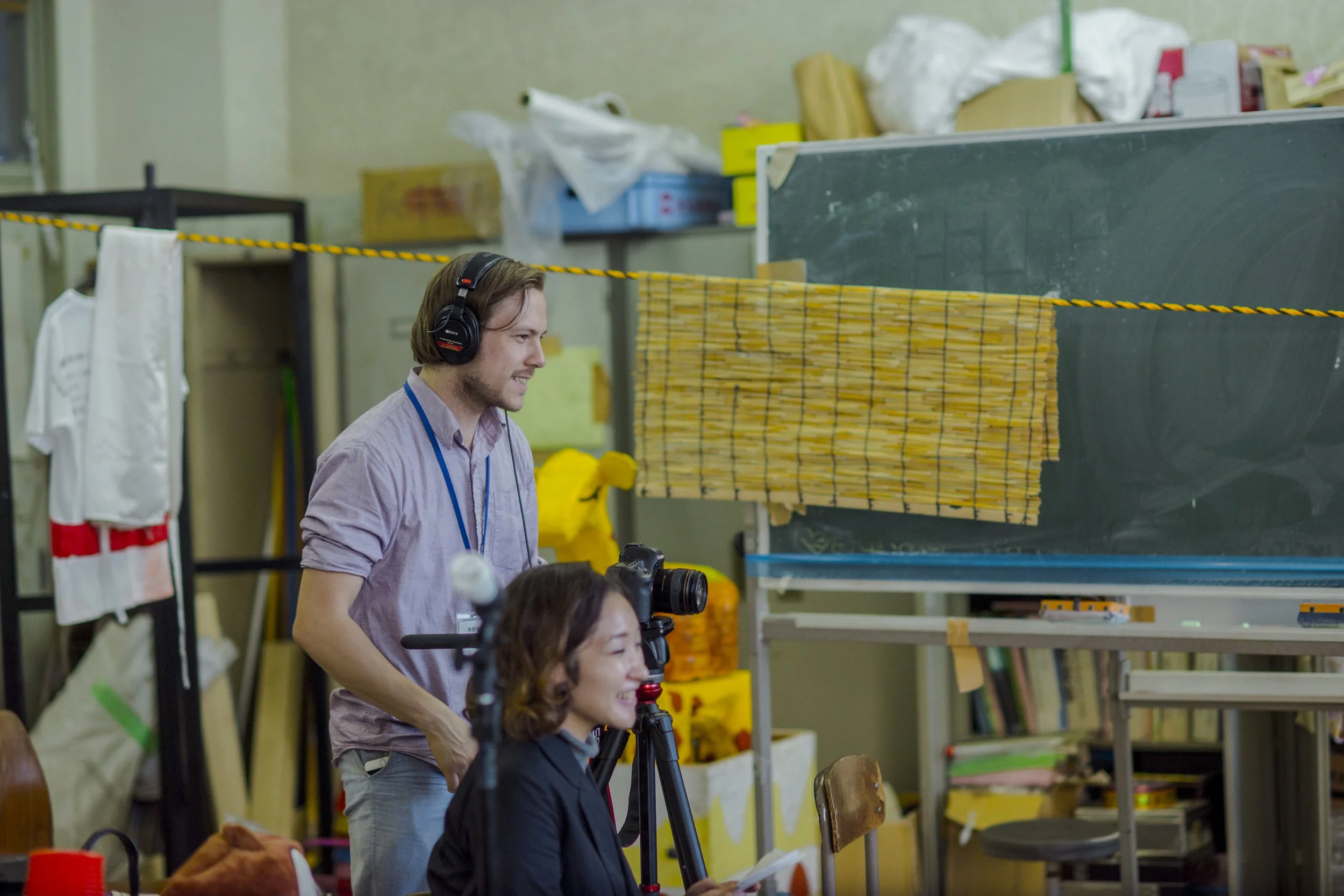
Fourwind Films’ Holiday Mixer V
photo by Daria Huxley

In general I have a similar view in life as my approach to art.  The more ways we can view a story, a problem, the more effective it can be.  Diversity shows us more possibilities in what we understand.

There’s the simple parable about the Blind Women and an Elephant that is found in early Buddhist texts and likely a folk story: A group of blind women who never had encountered a new object they came across. Out of curiosity, they inspected it by touch.  The first person, whose hand landed on the trunk, said, "This being is like a thick snake." For another one whose hand reached its ear, it seemed like a kind of fan.  Another, whose hand was upon its leg, said it’s a tree trunk. The blind woman who placed her hand upon its side said the elephant, "is a moving wall."  One woman who felt its tusk, stated the elephant is hard and smooth like a spear.  Finally, the last person felt the elephant’s tail and said, “It’s a rope.”

I think of this all of the time.  There are 8 billion people in the world.  We may only encounter maybe a maximum of 3 million people in our lifetime by sight, that’s not even getting to know them.  No matter how much we study, there are over 100 million books in the world (maybe more)!  There are over 1 million movies made.  

Just imagine, all of these artworks are so many experiences rolled up into a summary.  That is art.  We bring collected beauty, or emotion, or experiences and condense it to let others experience what we know.  It’s a way of sharing knowledge.  Because as a human race, that is something we’re wired to crave.  Just like the bees work together as a hive and a colony, we are bound to work together as human beings.  Art is the rapid way in which we can do that.  Most importantly, art can make us have shared experiences and gain trust, and most of all, empathy for one another.

Humans are designed/hard-wired to live in tribes, to find those that help us live.  We can distinguish those like us by sight, sound (language, accent), taste & smell (cuisine), and touch (imagine the possibilities).  That hard-wired drive to stay with familiarity can keep us from unifying into a larger tribe and working together to make the world a better place for everyone in our human colony on this earth.
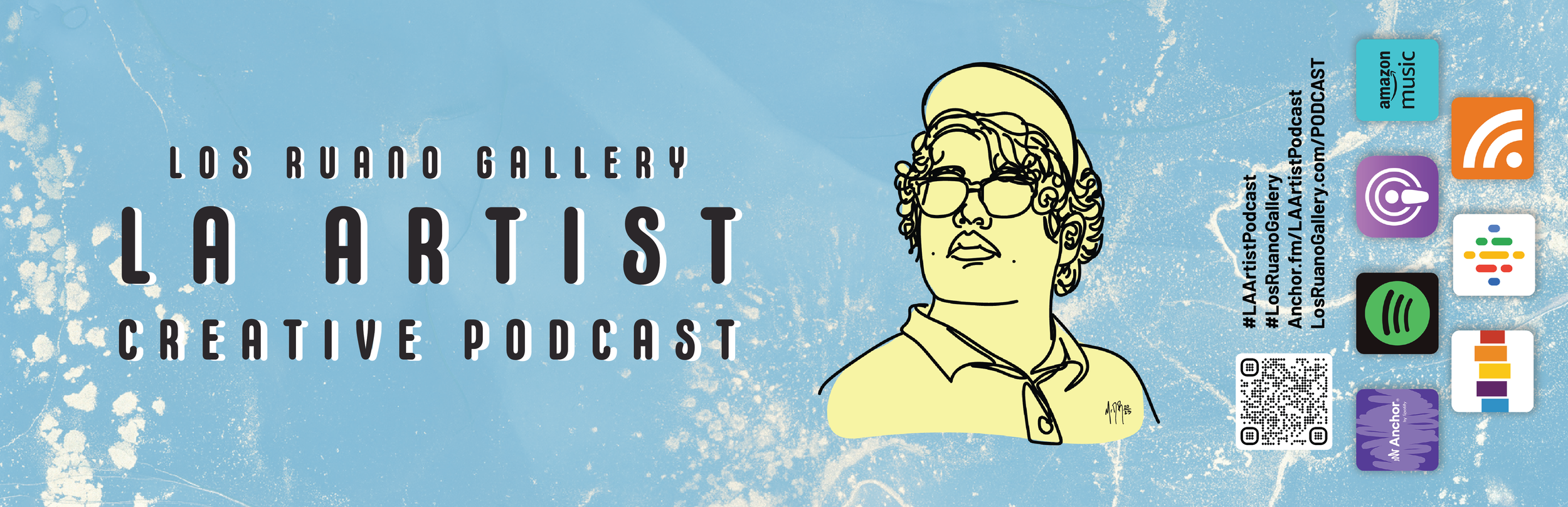
Artist podcast by our good friends at Los Ruano Gallery

Through art, we can teach ourselves to accept and appreciate each other more.  As we are already connected globally and interracially.  That’s just a fact.  But some of our old hardwiring is preventing us from all working together to use all of our resources the best we’re able.  Again, that’s where art comes in to help communicate in a quick and efficient way.  The way that we can help us live together is to show to others those they’re not familiar with, those who they haven’t had the experience of relating to.

In order to do this we need diversity to make new art that communicates in our global world.  By working by including diversity in making movies, or other art, you are creating art that is fresh, that is advancing society, that is making something new.  It’s this blend that the art world calls “post-modernism” where blending of styles and ideas has really come alive.

Post-modernism was an idea just combining styles, like Rap/Rock music.  Andy Warhol’s pop art mixing with fine art, or fusion of Latin music and jazz, Hong Kong cinema featuring French music in their films.  All of this is post-modernism is style that cross pollinates cultures.  This brings appreciation and which leads to empathy I often talk about.

Postmodernism brings cultural diversity just as sex brings genetic diversity.  The same reason why we look down on incest is the same reason why we don’t want to be making art with people with our same background all the time.  Diversity is what advances and gives us new creations.  We will improve as a society and as a people by implementing diversity in our creation.  That I stand behind and am always thinking about in my work.

Outtake from Sardines out of a Can, written by Shonali Bhowmik, starring Shonali Bhowmik & Adam Wade

Top 9 Reasons Diversity in Media Matters

By Jessica W. Chen

Actor/Writer/Dancer Craig Fishback on the set of the short film It’s Who You Know in Los Angeles. Photo by Adrian Gutierrez.

Actor/Writer/Dancer Craig Fishback on the set of the short film It’s Who You Know in Los Angeles. Photo by Adrian Gutierrez.

According to the Brookings Institute, four out of ten respondents to the U.S. Census reported being of a race or ethnicity other than white in 2020. These statistics prove that it’s time to update America’s media output. Since Hollywood’s inception, whiteness has been considered the “default.” You have probably noticed that TV and film often feature predominantly cis, white, upper-middle-class, straight, and/or non-disabled characters, and contain troubling portrayals of characters who don’t fit into these descriptors. It’s time to move away from default whiteness to better represent our society. 

As the producer of projects such as the Re-Casting the Movies podcast, and a queer reading of Alexander Utz’s Frankenstein play, I’m always thinking about how diverse casting and media affect audiences and society at large. After some introspection, I thought I’d share why this cause is so near and dear to my heart. Here are my top nine reasons why diversity in media matters:

1. It better reflects the society around us

New York often makes “most multicultural cities” lists, highlighting just how strange Hollywood's tendency towards “default whiteness” is in many films and TV shows set in New York, such as Breakfast at Tiffany’s and Girls.

Some of this lack of diversity can be explained by the homogeneity of writers’ rooms since 91% of Hollywood showrunners are white and 86.3% of writers in Hollywood writers’ rooms are white, according to a Color of Change report. With mostly white writers offering their experiences, it’s easy for them to “write what they know,” and centering their stories on their friends, family, and communities. 

However, casting also plays a big part. With so many white writers and executives, there’s an unspoken assumption that characters are white. With the very rare exception, roles that aren’t explicitly written for non-white characters don’t usually end up casting Black or brown actors. Although TV and film have been getting better at depicting our multicultural society, non-diverse casts broadcast a representation of the U.S. that erases certain communities to audiences. This leads to wrongful impressions of American history and society that deny its cultural richness.

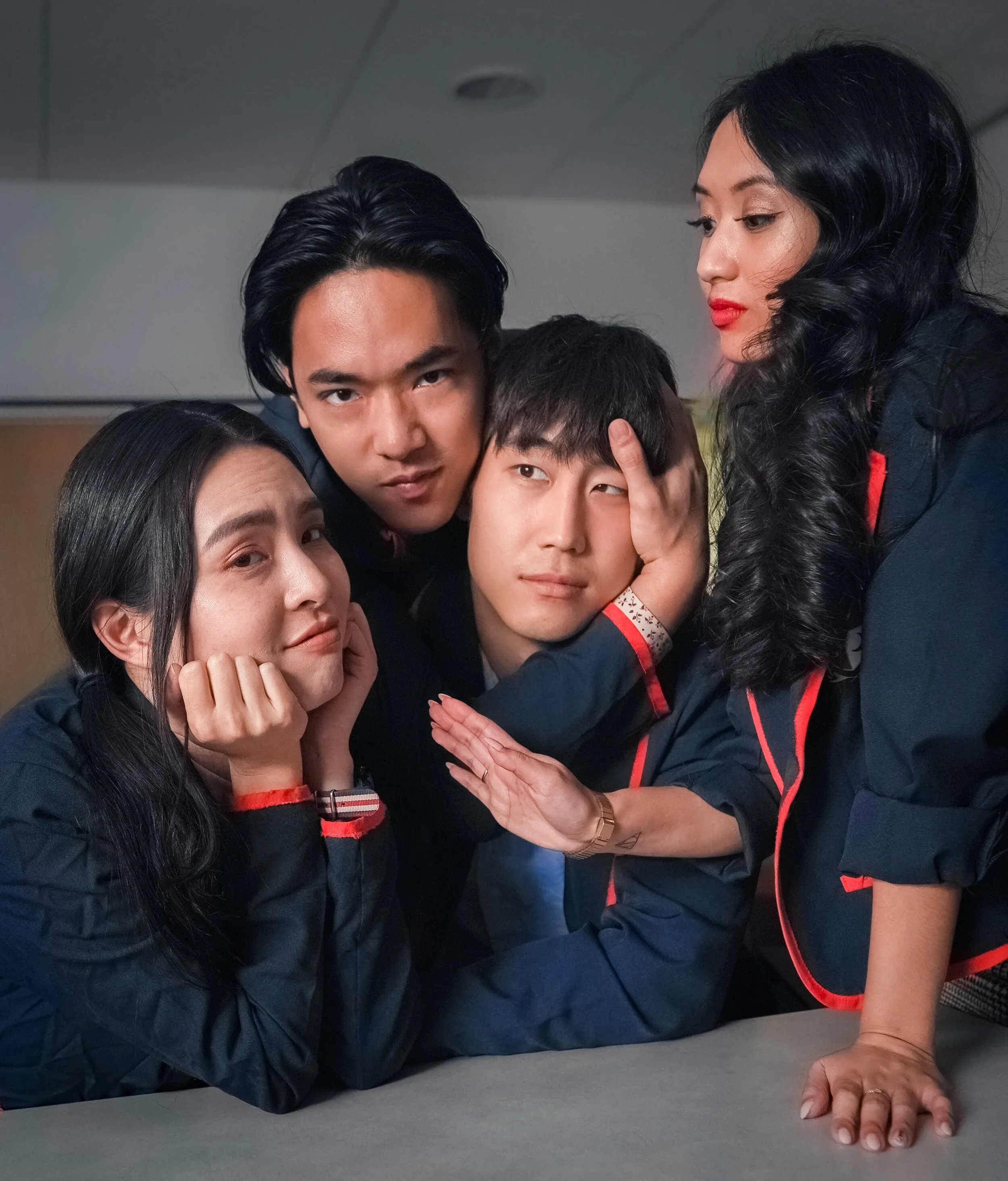
The cast of Drama High, a romantic comedy series created by Jessica W. Chen that takes place in NYC. From left to right: Jessica W. Chen, Jordan Mahr, Young Mazino, Lex Bolisay. Photo by William Loo.

The cast of Drama High, a romantic comedy series created by Jessica W. Chen that takes place in NYC. From left to right: Jessica W. Chen, Jordan Mahr, Young Mazino, Lex Bolisay. Photo by William Loo.

2. It creates role models for new generations

When Barack Obama became the 44th President of the United States, the possibilities of what was possible suddenly opened up for Black communities. With his election, President Obama became a role model and symbol of Black excellence and inspired many young people to strive for their dreams

Diverse media also has the power to open up the gates of possibility for young people from communities made marginalized. In recent years, audiences have begun documenting how diverse casting affected themselves or their families, such as the viral response a Mexican father had to Diego Luna’s natural Mexican accent when he played Captain Cassian Andor in Rogue One: A Star Wars Story

These touching stories reveal how audiences from underrepresented communities feel seen after observing films portray characters with their backgrounds as heroes. Diverse media that creates a wide range of role models helps make previously unimaginable dreams accessible, especially after growing up with media that inadvertently tells young people that if they don’t fit into society’s default whiteness, then they have no worth outside of being the protagonist’s best friend or sidekick.

3. It normalizes our differences and lays bare what makes us relatable

Recently, when the Re-Casting the Movies team spoke with Philip LaZebnik, one of the screenwriters for Mulan (1998), we asked him how he approached writing characters with a different cultural background than him. While he acknowledged that research and speaking with people from the community is of utmost importance, he also emphasized that certain dynamics, such as family dynamics, ring true across cultures. 

Often, due to ignorance, we otherize people who don’t resemble us by pointing out differences. However, if more diverse media exposed people to communities they weren’t familiar with, it would help normalize cultural specificities. These stories would show audiences that we all go through universal and relatable human struggles, leading to greater understanding and empathy across communities.

4. It reminds us not to abide by age-old stereotypes or succumb to bigotry

In addition to having diverse representation in media, it’s also crucial to push for accurate and varied representation. With the near-ubiquitous representation of white protagonists, you don’t find many age-old stereotypes about white people because there are simply more experiences to draw on. There are a plethora of stories featuring white characters with nuance and depth.

However, those from underrepresented communities aren’t afforded that luxury. Due to not having much media representation, Black and brown characters are few and far between. And, if the representation that does exist is inaccurate or narrow, it’s the perfect setup for conveying faulty messages or sowing bigotry about certain communities. 

An example of how diversity without variety can be harmful is with the sudden proliferation of reality shows starring affluent Asians, such as Bling Empire and House of Ho, after the popularity of Crazy Rich Asians. (And before you think I’m drawing my own conclusions, multiple publications tie these shows to the hit 2018 romantic comedy film.) While it’s nice to see Asian wealth being celebrated, this media narrative obscures how income inequality is rapidly rising in Asian communities in the U.S. and leads to those unfamiliar with these statistics to assume that Asians are universally well-off. 

Actor Manny Ureña on the set of Abuela’s Luck, set in an NYC bodega.

Actor Manny Ureña on the set of Abuela’s Luck, set in an NYC bodega.

5. It guards against self-hate and shame

Being depicted as the hero matters a lot more than one may expect, especially if you’re used to regularly seeing someone with your experience on screen. Although this may not be true across the board, I admit that years of not having heroes of my background represented conditioned middle school me to feel a certain degree of self-hate and shame towards being Asian because I never saw someone who looked like me depicted in an empowering way. 

When you never see yourself as the hero, you begin to believe that you’re not worthy of or don’t have the ability to be one. This programming conveys society’s expectations (or non-expectations) toward you and your community. Lifting this assumption by creating diverse protagonists in TV and film legitimizes and celebrates marginalized communities who aren’t used to seeing themselves depicted in such powerful and positive ways. 

A clear example of this is with Black Panther and the cultural phenomenon that erupted from it. The cultural impact of Black Panther displayed the jubilation that Black communities felt after witnessing the tentpole release of a film with an African hero at its center. That feeling of being seen and lionized makes a huge difference to young people and helps build self-love and pride. 

6. It gives actors chances to be seen in roles they normally wouldn’t be considered for

Besides creating diverse heroes, diversity in media also needs to extend to casting practices. When productions ask casting directors to find actors for specific roles, pre-established biases often affect who gets called into the audition room. 

For instance, if the role calls for a counselor, even if the casting call doesn’t specify race, a casting director may pass on giving actors of color a chance to audition, if unconscious biases suggest that an actor of color would be “unconvincing” or “isn’t the right type” to play a counselor role. 

However, if more casting directors were aware of possible bias and considered all races of actors for roles where there are no specific character requirements, then we may get TV and film roles that open up the possibilities for Black and brown actors regarding who they can play. Over time, this new world of casting may wear away societal stereotypes and expectations towards what groups of people are capable of or are suited to do.

Another shot from the set of Drama High, a romantic comedy series created by Jessica W. Chen that takes place in NYC. From left to right: Young Mazino and Jordan Mahr. Photo by William Loo.

Another shot from the set of Drama High, a romantic comedy series created by Jessica W. Chen that takes place in NYC. From left to right: Young Mazino and Jordan Mahr. Photo by William Loo.

7. It gives value to everyone’s experiences

When diverse stories are finally given a chance to be told, casting needs to also catch up to reflect the experience being conveyed. Having actors who match the experiences they’re portraying is the best way to give value and authenticity to stories. 

For instance, having Eddie Redmayne, a cis man, play Lili Elbe, a trans woman and one of the first recipients of sex reassignment surgery, undermines the experiences of people in the trans community. By perpetuating the idea that trans women are just men in dresses, the movie does more harm than good, despite spotlighting a pioneering trans story. Eddie Redmayne may be talented, but casting him sends the message that trans actresses’ life experiences aren’t valuable and can be easily adopted through a combination of research and costuming.

8. It prevents us from being written out of stories

Conscious casting also prevents people from communities made marginalized from being written out of their own stories. People from underrepresented communities played many important roles in history, but often, mainstream movies lead to misconceptions of how homogenous society and historical heroes were. 

An example of this is Argo (2012), where Ben Affleck plays the protagonist, Antonio Mendez. Based on a true story, casting Affleck effectively erases Mendez’s Mexican heritage, which is regrettable since he led a daring and heroic historical event. If Mendez had been represented by a Latino actor, the movie could inspire and remind young people in the Latinx community that they’re a crucial part of the fabric of American history, too.

For more instances of whitewashing, check out Re-Casting the Movies’ excellent list of whitewashed movies, one for each year of the 2000s.

9. It brings new American stories to the table 

When productions cast consciously, there’s a greater chance that new American stories can see the light of day. For decades, American TV and films have focused on telling stories about cis, white, upper-middle-class, straight, and/or non-disabled casts, which has built up over time a fixed idea of what constitutes an American story. 

This narrow definition of American stories leads to controversies, such as prestigious film awards designating The Farewell and Minari as foreign or foreign language films, even though both movies were made by U.S. production companies. Characterizing these movies as “foreign” feeds the American perception of Asians as perpetual foreigners or immigrants, despite how many Asian families having been in the U.S. for generations.

As you can see, such a limited view on American films simply doesn’t work anymore. A society as diverse as America deserves media that celebrates its nuances and richness. After reading this article, I hope it’s clear why changing the paradigm of who and whose stories are considered American through informed casting and media creation is a shift that is long overdue.

Find out more about Jessica W. Chen and her work at her website. Or, follow Jess on Instagram, Facebook, and Youtube.

If there are other questions you want to be answered in a blog post, let us know at info@fourwindfilms.com or visit our website at www.fourwindfilms.com. Also, we work with a large, diverse community of crew and artists working in most aspects of the filmmaking process and are always happy to help make connections. And we are always building our community! Send us your work for review or feedback.